Author: Peiman Daneshgar
Email: daneshgar781@gmail.com
Table of contents
- 1. The Reality of Saving on Low Income
- 2. Why Traditional Saving Advice Fails
- 3. Step One: Stabilize Before You Save
- 4. The 3‑Bucket Survival Budget
- 5. How to Save When There’s “Nothing Left”
- 6. Cutting Costs Without Cutting Dignity
- 7. Increasing Income Strategically
- 8. Building a Starter Emergency Fund
- 9. Avoiding the Debt Trap
- 10. Free Tools That Actually Help
- 11. Psychological Strength on a Tight Budget
- 12. Frequently Asked Questions
- 13. Conclusion
1. The Reality of Saving on Low Income
Saving money on low income is not a simple math problem. It is a stress problem.
When income barely covers rent, food, transportation, and utilities, saving can feel unrealistic. Every expense matters. Every unexpected bill hurts.
But saving on low income is not impossible.
It requires a different strategy.
Instead of focusing on investing, luxury budgeting apps, or aggressive financial goals, the focus shifts to stability, protection, and small consistent wins.
The goal is not wealth at first.
The goal is breathing room.
2. Why Traditional Saving Advice Fails
Most financial advice is written for middle‑income households.
It says:
- Save 20% of your income.
- Invest aggressively.
- Max out retirement accounts.
If you earn a low income, that advice feels disconnected from reality.
The truth is:
When income is tight, survival comes first.
You cannot invest what you don’t have.
You cannot save 20% if 100% is already committed.
Saving money on low income requires customized strategies built around flexibility and control.
3. Step One: Stabilize Before You Save
Before building savings, stabilize your monthly cash flow.
Ask three questions:
- Is my housing cost sustainable?
- Is my transportation draining too much money?
- Are my fixed bills optimized?
Housing should ideally stay under 30–40% of income. If it exceeds that, long‑term stability becomes difficult. Consider shared housing, relocation, or renegotiation when possible.
Transportation often becomes a hidden burden. Car payments, insurance, gas, and maintenance add up quickly. Public transit, carpooling, or a lower‑cost vehicle may significantly reduce pressure.
Call service providers and negotiate:
- Internet
- Phone plans
- Insurance
- Utility payment plans
Even small reductions free up cash for saving.
Stability creates the foundation for everything else.
Better Money Habits vs Khan Academy

4. The 3‑Bucket Survival Budget
Instead of complicated budgeting systems, use three categories:
1. Essentials
Rent, utilities, groceries, transportation, insurance.
2. Minimum Debt Payments
Credit cards, loans, medical bills.
3. Flexible Spending
Everything else.
When income is low, complexity creates stress. Simplicity creates control.
If money runs short, flexible spending is the first to adjust — not essentials.
This system keeps decision-making clear and manageable.
5. How to Save When There’s “Nothing Left”
Many people say, “There’s nothing left to save.”
Often, that is emotionally true.
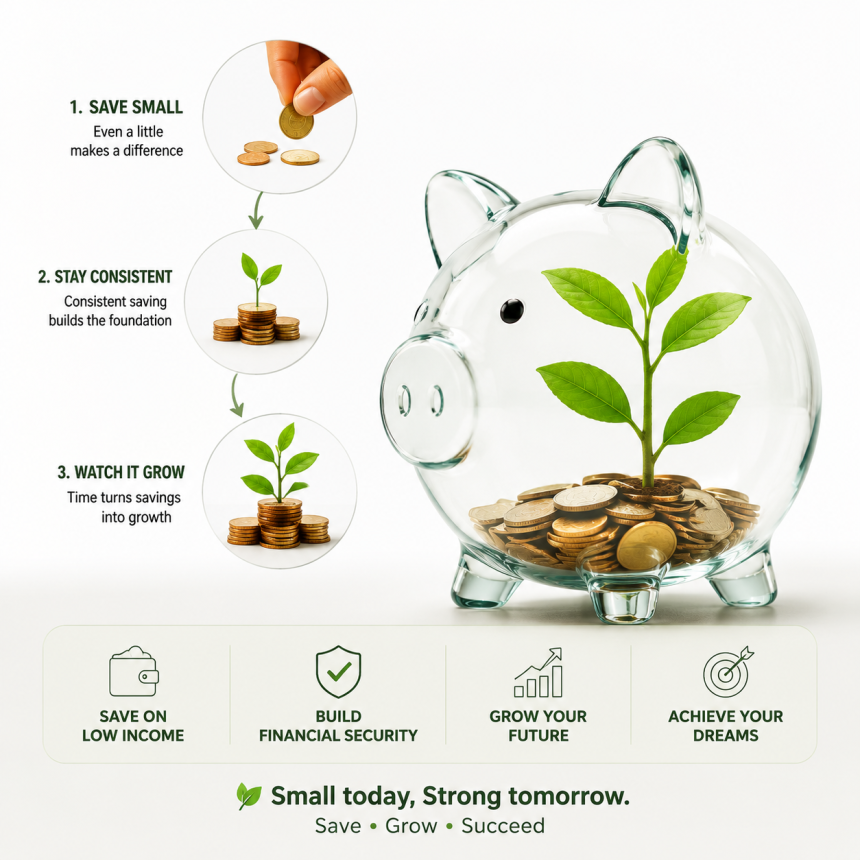
But small amounts matter more than they appear.
Start with:
- $5 per week
- $10 per paycheck
- Spare change transfers
The size does not matter.
The habit does.
Saving $10 per week equals $520 per year. That can cover an emergency car repair or medical expense.
Consistency builds momentum. Momentum builds confidence.
6. Cutting Costs Without Cutting Dignity
Saving money on low income should never mean living in constant deprivation.
Focus on high-impact areas:
Food
- Meal planning reduces impulse grocery spending.
- Buying staples in bulk lowers cost per meal.
- Cooking at home prevents expensive last-minute takeout.
Subscriptions
Cancel anything unused or unnecessary.
Energy Usage
Simple habits like turning off unused lights, washing clothes in cold water, and adjusting thermostats reduce monthly bills.
Community Resources
Many communities offer:
- Food assistance programs
- Utility assistance
- Rent relief programs
- Free financial counseling
Using available resources is smart financial management, not failure.

7. Increasing Income Strategically
When income is low, cutting expenses has limits.
Income expansion may be more powerful.
Options include:
- Freelancing skills online
- Part-time or weekend work
- Selling unused items
- Learning high-demand skills
- Asking for additional shifts
Even temporary income increases can accelerate savings goals.
If you earn an extra $200 per month and save half, that’s $1,200 per year in savings.
Small increases create real change.
How “Revenge Spending” Is Destroying Your Savings
8. Building a Starter Emergency Fund
If you live on a low income, your first goal is not $10,000.
It is $500 to $1,000.
This starter emergency fund protects against:
- Minor car repairs
- Medical co-pays
- Utility spikes
- Unexpected bills
Without savings, emergencies turn into debt.
With even a small buffer, stress decreases significantly.
Security comes before growth.
The “Loud Budgeting” Trend Explained: Why Gen Z Is Doing It
9. Avoiding the Debt Trap
High-interest debt destroys progress quickly.
If possible:
- Avoid payday loans.
- Avoid high-interest borrowing.
- Pay more than the minimum on credit cards when able.
If debt already exists, focus on either:
Snowball Method: Pay smallest balances first for psychological wins.
Avalanche Method: Pay highest interest first to reduce total cost.
Choose the strategy that keeps you consistent.
Consistency beats perfection.
“Girl Math” vs. “Boy Math”: The Psychology of Justifying Purchases
10. Free Tools That Actually Help
You do not need expensive financial software.
Simple tools work:
- A spreadsheet
- Free budgeting apps
- Automatic bank transfers
- Envelope cash system
- Calendar reminders for bills
Automation is especially helpful.
If $20 automatically moves to savings after each paycheck, you adjust spending around it.
Remove decision fatigue.
11. Psychological Strength on a Tight Budget
Saving money on low income is emotionally demanding.
Comparison makes it harder. Social media often shows unrealistic lifestyles.
Focus on progress, not comparison.
Financial stability grows slowly but steadily.
Track wins:
- First $100 saved
- First bill paid off
- First month without overdraft
Each milestone matters.
Money is not only about numbers.
It is about reducing anxiety and increasing control.
12. Frequently Asked Questions
Can I really save money on minimum wage?
Yes, but the focus should be small, consistent amounts and reducing major expenses where possible. Even modest savings create stability.
Should I save or pay debt first?
Build a small emergency fund first. Then aggressively address high-interest debt.
What if my income fluctuates?
Save a percentage instead of a fixed number. When income is higher, savings increase automatically.
Is investing possible on low income?
Investing is possible, but emergency savings should come first. Stability protects investments.
13. Conclusion
Saving money on low income is not about extreme sacrifice.
It is about control.
It is about building a small buffer that prevents financial setbacks from becoming disasters.
Start small.
Stay consistent.
Increase income where possible.
Protect yourself from debt.
Over time, stability grows.
And stability is the foundation of financial freedom.