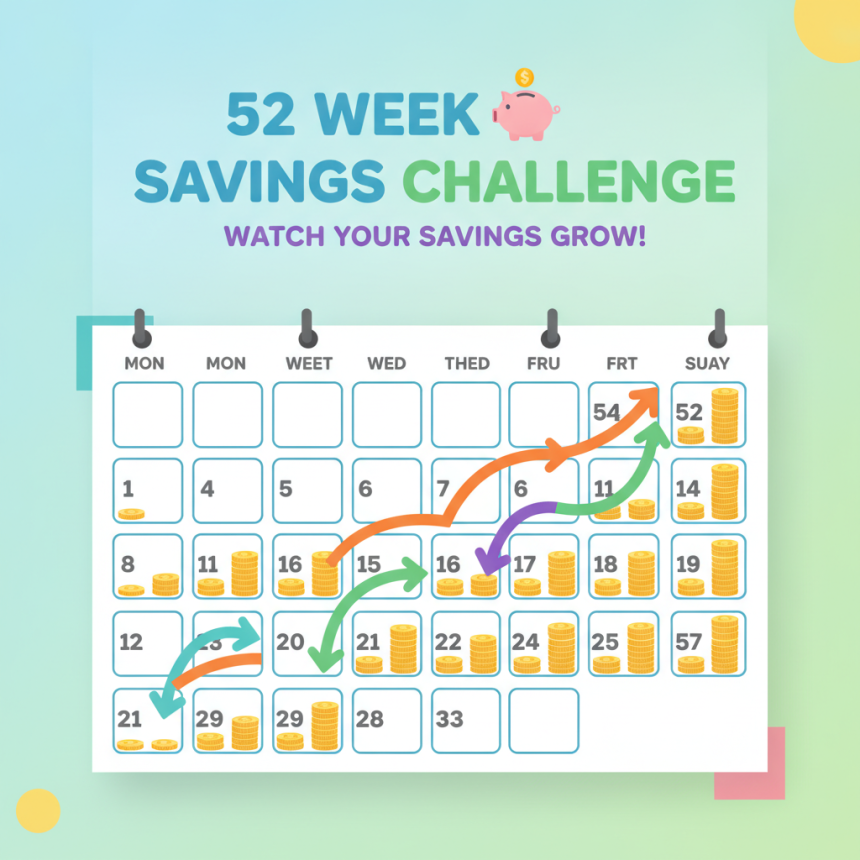
: A Simple Plan to Build a Full Year of Savings
Author: Peiman Daneshgar
Email: daneshgar781@gmail.com
Table of contents
- 1. What Is the 52 Week Savings Challenge?
- 2. How the 52 Week Savings Challenge Works
- 3. The Basic Rules of the 52 Week Savings Challenge
- 4. Weekly Saving Breakdown
- 5. Why the Challenge Works So Well
- 6. Tips to Successfully Complete the Challenge
- 7. Variations of the 52 Week Challenge
- 8. Common Mistakes to Avoid
- 9. Frequently Asked Questions
- 10. Final Thoughts
1. What Is the 52 Week Savings Challenge?
The 52 Week Savings Challenge is a simple and popular money-saving method designed to help people build savings gradually over one year.
The idea is straightforward. You save a small amount of money each week, increasing the amount slightly every week for 52 weeks.
Because the savings start very small, the challenge feels manageable at the beginning. As the weeks progress, the habit of saving becomes stronger, making the larger amounts easier to handle.
By the end of the year, participants can save $1,378 without feeling overwhelmed.
This challenge is especially useful for people who struggle to build consistent saving habits.
2. How the 52 Week Savings Challenge Works
The concept follows a simple pattern.
- Week 1: Save $1
- Week 2: Save $2
- Week 3: Save $3
- Week 4: Save $4
The amount increases by one dollar each week.
By the time you reach week 52, you save $52 during that week.
When all weekly contributions are combined, the total savings equal $1,378.
The gradual increase makes the process feel achievable rather than intimidating.
3. The Basic Rules of the 52 Week Savings Challenge
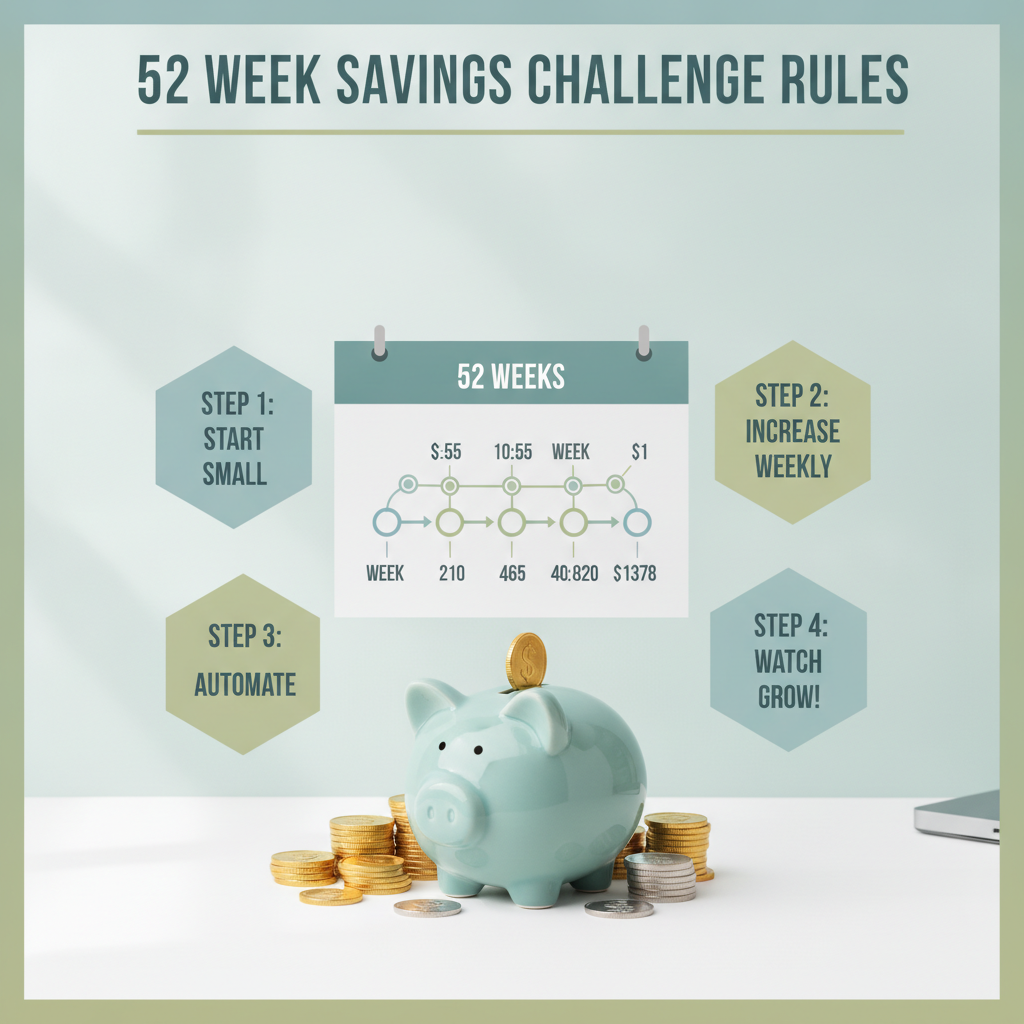
To complete the challenge successfully, follow these basic rules.
Rule 1: Save Every Week
Consistency is the most important rule. Each week must include a deposit based on the weekly amount.
Rule 2: Increase the Amount Each Week
Every week increases by one dollar compared to the previous week.
Rule 3: Keep the Money Separate
Savings should be placed in a separate account, envelope, or savings jar. This prevents accidental spending.
Rule 4: Do Not Withdraw the Money
The goal is to build momentum and discipline. Avoid taking money out before the challenge ends.
Rule 5: Track Your Progress
Tracking helps maintain motivation. Many people use printed charts or mobile apps to mark each completed week.
4. Weekly Saving Breakdown
Here is how the challenge progresses over time.
First Month:
- Week 1: $1
- Week 2: $2
- Week 3: $3
- Week 4: $4
Three Months:
- Week 10: $10 saved that week
Six Months:
- Week 26: $26 saved that week
Final Month:
- Week 49: $49
- Week 50: $50
- Week 51: $51
- Week 52: $52
Total after 52 weeks: $1,378
This gradual increase allows saving to become a routine rather than a burden.
5. Why the Challenge Works So Well
The success of the 52 Week Savings Challenge comes from psychology.
First, the challenge starts extremely small. Saving one dollar feels effortless, which reduces resistance.
Second, the increasing structure builds momentum. As the weeks pass, the act of saving becomes part of your routine.
Third, visible progress encourages consistency. Watching savings grow week by week creates a sense of achievement.
Instead of forcing strict budgeting, the challenge creates a fun and motivating financial habit.
Better Money Habits vs Khan Academy
6. Tips to Successfully Complete the Challenge
Automate your weekly transfer
Setting automatic transfers removes the need to remember each week.
Start with the hardest weeks first
Some people begin with $52 in week one and decrease amounts each week. This makes the challenge easier toward the end.
Use spare cash
Many participants save loose change or small leftover amounts from daily spending.
Track progress visually
Using a chart or checklist can help maintain motivation and commitment.

7. Variations of the 52 Week Challenge
The traditional challenge works well, but several variations exist.
Reverse Challenge
Start with $52 in week one and decrease by $1 each week. This is useful for people who prefer finishing with smaller contributions.
$5 Weekly Challenge
Save a flat $5 every week for 52 weeks. This results in $260 by the end of the year.
Biweekly Challenge
Instead of weekly savings, deposit money every two weeks according to the schedule.
Random Savings Challenge
Choose random numbers between 1 and 52 each week to keep the challenge interesting.
Different variations allow participants to adjust the challenge based on their financial situation.
8. Common Mistakes to Avoid
Some people start the challenge but fail to complete it. Common mistakes include:
Skipping weeks without catching up later
Using the savings for non-emergency spending
Setting unrealistic amounts for personal income
Failing to track progress
The key to success is consistency rather than perfection.
Even if a week is missed, continuing the challenge keeps the habit alive.
9. Frequently Asked Questions
How much money will I save after 52 weeks?
Following the traditional challenge results in $1,378 in savings.
Can I modify the challenge for my income?
Yes. Many people double the amounts or reduce them depending on their financial situation.
Is the challenge good for beginners?
Yes. It is one of the simplest saving systems available and requires no complicated financial knowledge.
Where should I keep the savings?
A dedicated savings account is usually best because it keeps the money separate from daily spending.3
How “Revenge Spending” Is Destroying Your Savings
10. Final Thoughts
The 52 Week Savings Challenge is a simple but powerful way to develop a saving habit.
By starting small and gradually increasing contributions, it removes the pressure that often prevents people from saving money.
Over one year, the challenge builds both financial discipline and a meaningful amount of savings.
For many people, it becomes the first step toward long-term financial stability and smarter money management.