Better Money Habits vs Khan Academy: Which Free Personal Finance Course Is Better?
Author: Peiman Daneshgar
Email: daneshgar781@gmail.com
Introduction: Why Free Personal Finance Education Matters
Most people graduate from school knowing how to solve equations or memorize historical dates, yet very few understand how to manage money.
They don’t learn:
- how credit cards really work
- why interest can destroy savings
- how investing actually builds wealth
- or how to create a realistic budget
This knowledge gap is exactly why free financial education platforms have become so popular.
Two of the most widely recommended resources are:
- Better Money Habits (created by Bank of America)
- Khan Academy Personal Finance
Both platforms promise to help people build financial literacy. Both are free. Both claim to make complicated money topics simple.
But they are not exactly the same.
This review will take a closer look at Better Money Habits, how it compares to Khan Academy, and whether it is actually useful for beginners who want to improve their financial knowledge.
What Is Better Money Habits?
Better Money Habits is a financial education platform created by Bank of America in partnership with Khan Academy.
The goal of the project is simple: teach everyday people how to manage their money better.
The platform focuses on practical financial skills such as:
- budgeting
- saving money
- managing debt
- understanding credit scores
- preparing for major financial decisions
Unlike many financial websites that promote complex investment strategies, Better Money Habits focuses on everyday financial behavior.
It aims to help people develop small habits that improve their financial stability over time.
How the Platform Works
Better Money Habits is designed to be simple and accessible.
The content is divided into short lessons and videos, usually lasting just a few minutes. Instead of long academic lectures, the platform focuses on bite‑sized explanations that are easy to understand.
Topics are organized into categories such as:
1. Budgeting and Saving
This section teaches fundamental money management skills, including:
- how to create a budget
- how to track spending
- how to build an emergency fund
The lessons emphasize that financial success often starts with simple awareness of where money goes each month.

2. Credit and Debt
Many people struggle with credit cards and loans because they do not fully understand how interest works.
Better Money Habits explains concepts such as:
- credit scores
- credit reports
- interest rates
- responsible borrowing
These lessons help users understand how credit affects major life decisions like renting an apartment or buying a car.
3. Investing Basics
While the platform is not an advanced investment course, it introduces key ideas such as:
- stocks
- bonds
- diversification
- long‑term investing
The goal is not to teach complex trading strategies but to give beginners enough knowledge to start learning about investing.
How “Revenge Spending” Is Destroying Your Savings
4. Life Events and Financial Decisions
One unique feature of Better Money Habits is its focus on real-life situations.
For example, it includes guidance on topics like:
- buying a home
- financing a car
- planning for retirement
- paying for education
This practical focus makes the platform especially useful for people facing major financial decisions.
The “Loud Budgeting” Trend Explained: Why Gen Z Is Doing It
Strengths of Better Money Habits
Better Money Habits has several advantages that make it appealing to beginners.
Simple and Easy to Understand
One of the biggest strengths of the platform is its simplicity.
Financial education can often feel intimidating, especially for people who have never studied finance before. Better Money Habits avoids complicated jargon and focuses on clear explanations.
This makes the content accessible to a wide audience.
“Girl Math” vs. “Boy Math”: The Psychology of Justifying Purchases
Short and Focused Lessons
Instead of overwhelming users with long lectures, the platform breaks topics into small lessons.
Most videos are only a few minutes long, which makes them easy to watch during short breaks or spare time.
This design helps learners stay engaged.
What Is “Doom Spending” and How to Stop It Today
Real-Life Practical Advice
Another advantage is the focus on real-world situations.
Rather than discussing abstract financial theories, the lessons explain how financial concepts apply to everyday life.
This practical approach helps learners connect the information to their own financial decisions.
Completely Free
Like Khan Academy, Better Money Habits is completely free.
Users do not need to pay subscription fees or purchase courses to access the material.
For many people, this accessibility is one of the platform’s most attractive features.
Weaknesses of Better Money Habits
Despite its advantages, the platform also has some limitations.
Limited Depth
The biggest limitation is that the content remains fairly basic.
It provides a strong introduction to financial concepts, but it does not go deeply into advanced topics such as:
- portfolio construction
- tax strategies
- advanced investing
For users who want to build serious financial expertise, additional resources will be necessary.
US‑Focused Content
Many examples and explanations are based on the US financial system.
Topics like credit scores, mortgages, and retirement accounts are often explained using American financial structures.
This can make some lessons less relevant for international users.
No Structured Course Path
Compared to Khan Academy, Better Money Habits is slightly less structured.
The lessons are informative, but they do not always follow a strict step‑by‑step learning path.
Some learners prefer a more structured curriculum.
Better Money Habits vs Khan Academy
Because the two platforms are connected, many people wonder which one is better.
In reality, they serve slightly different purposes.
Better Money Habits
Best for:
- quick financial tips
- real-life financial decisions
- short practical lessons
Khan Academy Personal Finance
Best for:
- structured financial education
- deeper explanations
- step‑by‑step learning
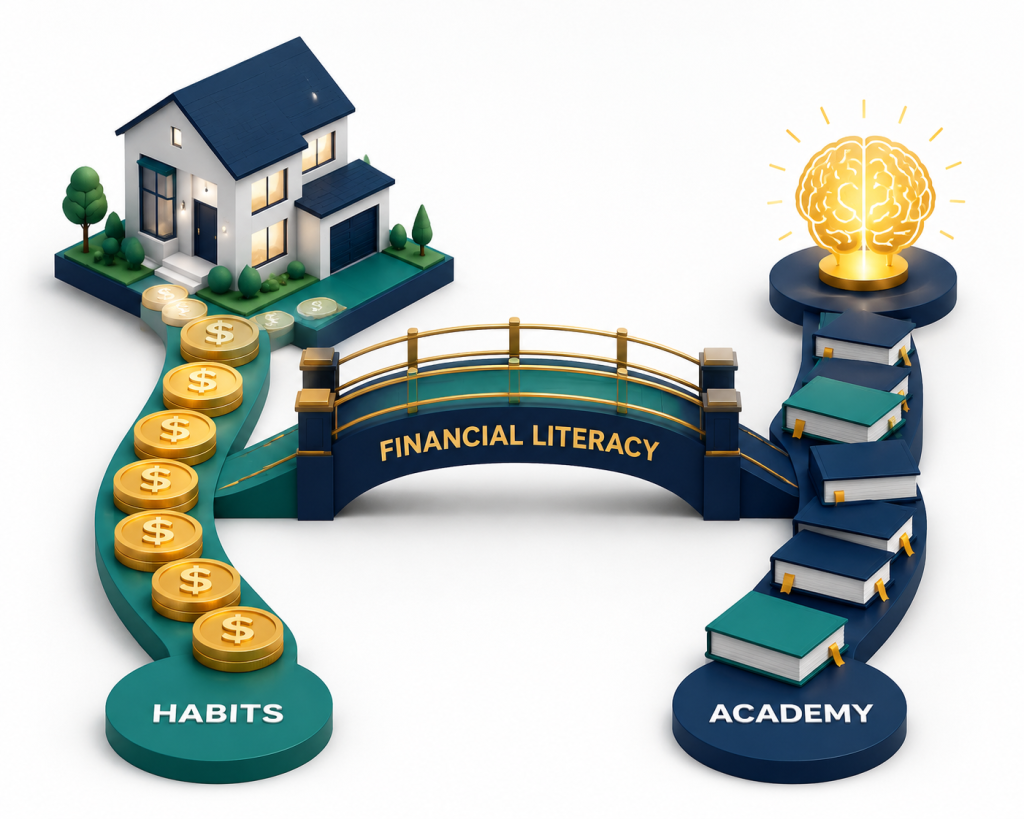
Think of Better Money Habits as a practical guide, while Khan Academy functions more like a complete financial literacy course.
Many learners benefit from using both resources together.
Who Should Use Better Money Habits?
Better Money Habits is particularly useful for:
- beginners with little financial knowledge
- young adults learning about money for the first time
- people who want quick answers to common financial questions
- individuals preparing for financial milestones such as buying a home or managing debt
Because the lessons are short and simple, the platform works well for people who prefer learning in small pieces.
Frequently Asked Questions
Is Better Money Habits free?
Yes. The platform is completely free to access and does not require a paid subscription.
Is Better Money Habits connected to Khan Academy?
Yes. The project was developed through a partnership between Bank of America and Khan Academy to expand financial education resources.
Is Better Money Habits good for beginners?
Yes. The platform is specifically designed for beginners who want to understand basic financial concepts.
Does Better Money Habits teach investing?
It introduces basic investing concepts, but it is not an advanced investing course.
Final Verdict
Better Money Habits is a solid starting point for people who want to improve their financial literacy.
Its biggest strengths are simplicity, accessibility, and practical advice. The short lessons make financial education feel less intimidating, which is especially helpful for beginners.
However, the platform should be seen as an introduction rather than a complete financial education system. People who want to build deeper financial knowledge will eventually need to explore additional resources.
For someone who feels confused about budgeting, credit, or basic investing, Better Money Habits can provide the first step toward developing healthier financial habits.
And sometimes, that first step is the most important one.