Author: Peiman Daneshgar
Email: daneshgar781@gmail.com
Table of contents
- 1. Introduction: The Spending Spree That Feels Like Freedom
- 2. What Is “Revenge Spending”?
- 3. Where the Trend Started (And Why It Exploded)
- 4. The Psychology Behind Revenge Spending
- 1. Emotional Rebound Effect
- 2. Scarcity Mindset
- 3. Identity Restoration
- 5. How Revenge Spending Quietly Destroys Your Savings
- Quick Self‑Check
- 6. Signs You’re Revenge Spending
- 7. The Dangerous Cycle of Deprivation and Overcorrection
- 8. How to Stop Revenge Spending Today
- 1. Create a “Freedom Fund”
- 2. Avoid Post‑Restriction Spending Decisions
- 3. Separate Reward From Spending
- 9. The 72‑Hour Reset Strategy
- 10. Building a Balanced Spending Plan
- Frequently Asked Questions (FAQ)
- Final Thoughts: Take Back Control Before It Costs You
1. Introduction: The Spending Spree That Feels Like Freedom
Let me guess something.
There was a period in your life when you couldn’t spend the way you wanted.
Maybe it was during lockdowns.
Maybe it was while paying off debt.
Maybe it was after months of being “responsible.”
You held back.
You skipped trips.
You avoided restaurants.
You told yourself: “Later.”
And then one day, something shifted.
You thought:
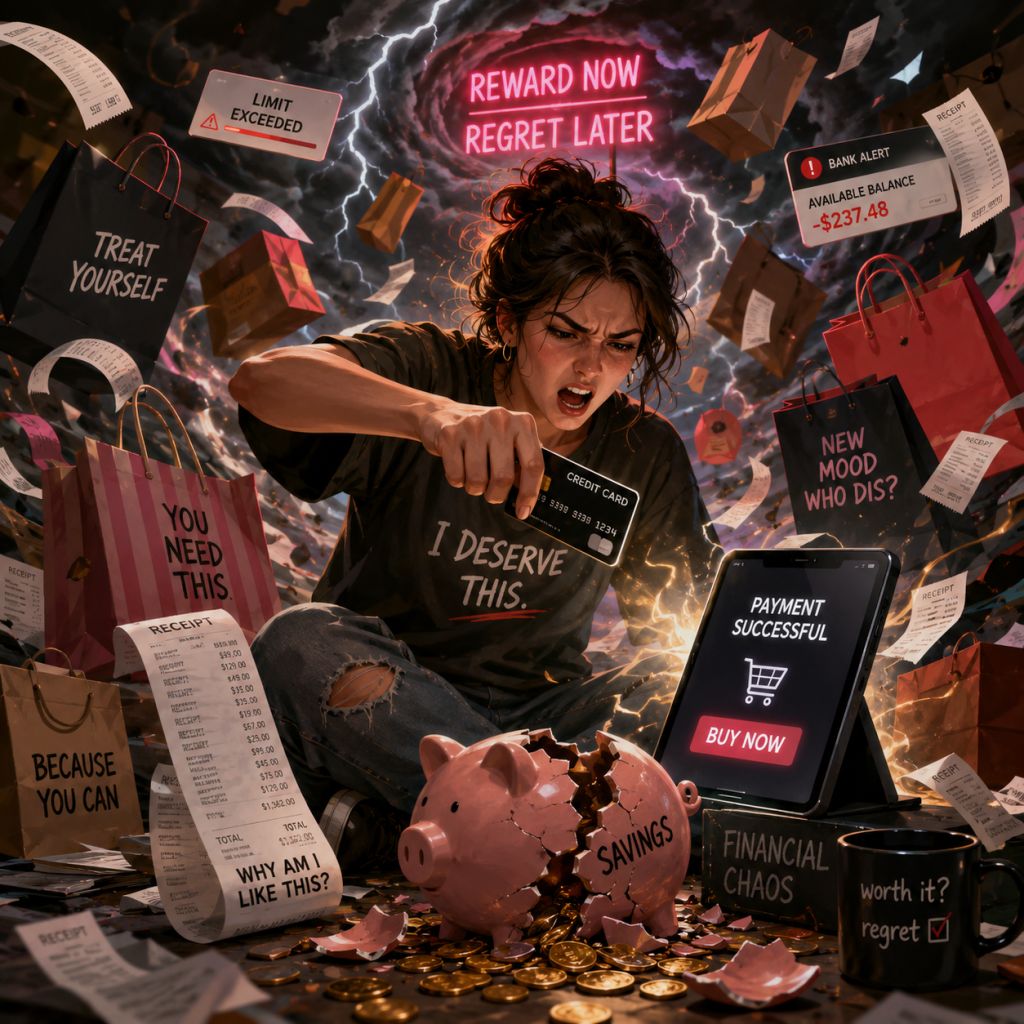
“I deserve this.”
“Life is short.”
“I’ve been good for too long.”
So you booked the trip.
Bought the designer item.
Upgraded the phone.
Said yes to everything.
It felt amazing.
Liberating.
Exciting.
Powerful.
Until your bank account reminded you what happened.
If this feels familiar, you may have experienced revenge spending.
And here’s the uncomfortable truth:
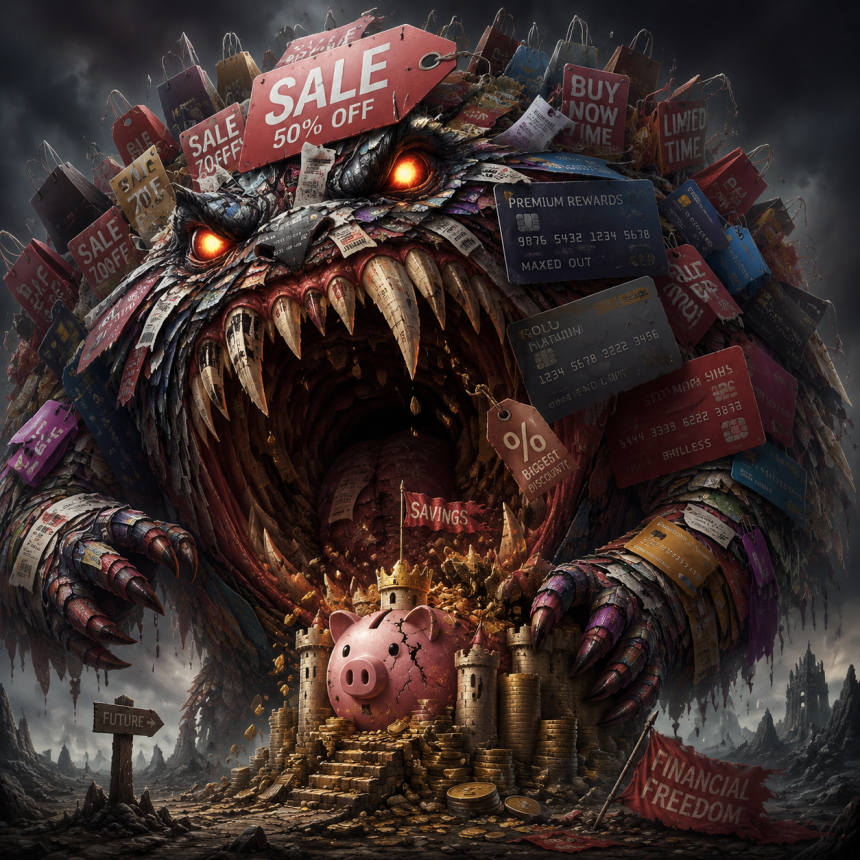
Revenge spending feels like reclaiming control…
But it often destroys your savings silently and quickly.
In this article, you’ll learn:
- What revenge spending really is
- Why it feels so justified
- How it slowly drains your financial security
- And how to stop it without becoming overly restrictive
But first, let’s define it clearly.
The “Loud Budgeting” Trend Explained: Why Gen Z Is Doing It
2. What Is “Revenge Spending”?
Revenge spending is when people dramatically increase spending after a period of restriction, stress, or deprivation.
It’s not random impulse buying.
It’s emotional compensation.
Common triggers include:
- Economic lockdowns
- Long periods of budgeting
- Breakups
- Career burnout
- Major life stress
- Feeling deprived or “behind”
The spending often sounds like this:
“I missed out before, so I’m making up for it now.”
Or:
“I worked so hard. I deserve this.”
And here’s the tricky part:
That statement isn’t entirely wrong.
You do deserve enjoyment.
But revenge spending isn’t about healthy enjoyment.
It’s about overcorrection.
And overcorrection is expensive.
But why does it feel so powerful?
That’s where psychology enters.
“Girl Math” vs. “Boy Math”: The Psychology of Justifying Purchases
3. Where the Trend Started (And Why It Exploded)
The term “revenge spending” became widely discussed after COVID‑19 lockdowns.
During lockdown:
- Travel stopped
- Restaurants closed
- Events were canceled
- Social spending disappeared
Savings rates increased for many households.
Then restrictions lifted.
Suddenly:
- Flights were packed
- Luxury sales surged
- Concerts sold out instantly
Economists observed massive spikes in consumer spending.
It wasn’t normal consumption.
It was emotional release.
People weren’t just buying products.
They were buying back lost experiences.
But the pattern didn’t stop with lockdowns.
Now revenge spending appears after:
- Strict no‑spend challenges
- Intense debt payoff journeys
- Long work burnout phases
And it often leads to one painful outcome:
Savings disappear faster than they were built.
What Is “Doom Spending” and How to Stop It Today
4. The Psychology Behind Revenge Spending
Revenge spending is powered by three major psychological forces.
1. Emotional Rebound Effect
When you suppress desire for too long, it builds pressure.
Eventually, the brain seeks relief.
This is similar to extreme dieting.
The stricter the restriction, the stronger the rebound binge.
Money works the same way.
2. Scarcity Mindset
When people feel deprived, their brain shifts into urgency mode.
It whispers:
“Enjoy now. You might not get another chance.”
This reduces long-term thinking.
3. Identity Restoration
Sometimes spending becomes symbolic.
After a tough period, people spend to prove:
- “I’m doing well.”
- “I survived.”
- “I’m successful.”
It’s not about the item.
It’s about regaining emotional control.
But here’s the part no one talks about.
Revenge spending doesn’t just cost money.
It damages momentum.
5. How Revenge Spending Quietly Destroys Your Savings
The destruction isn’t dramatic.
It’s gradual.
Here’s how it usually unfolds.
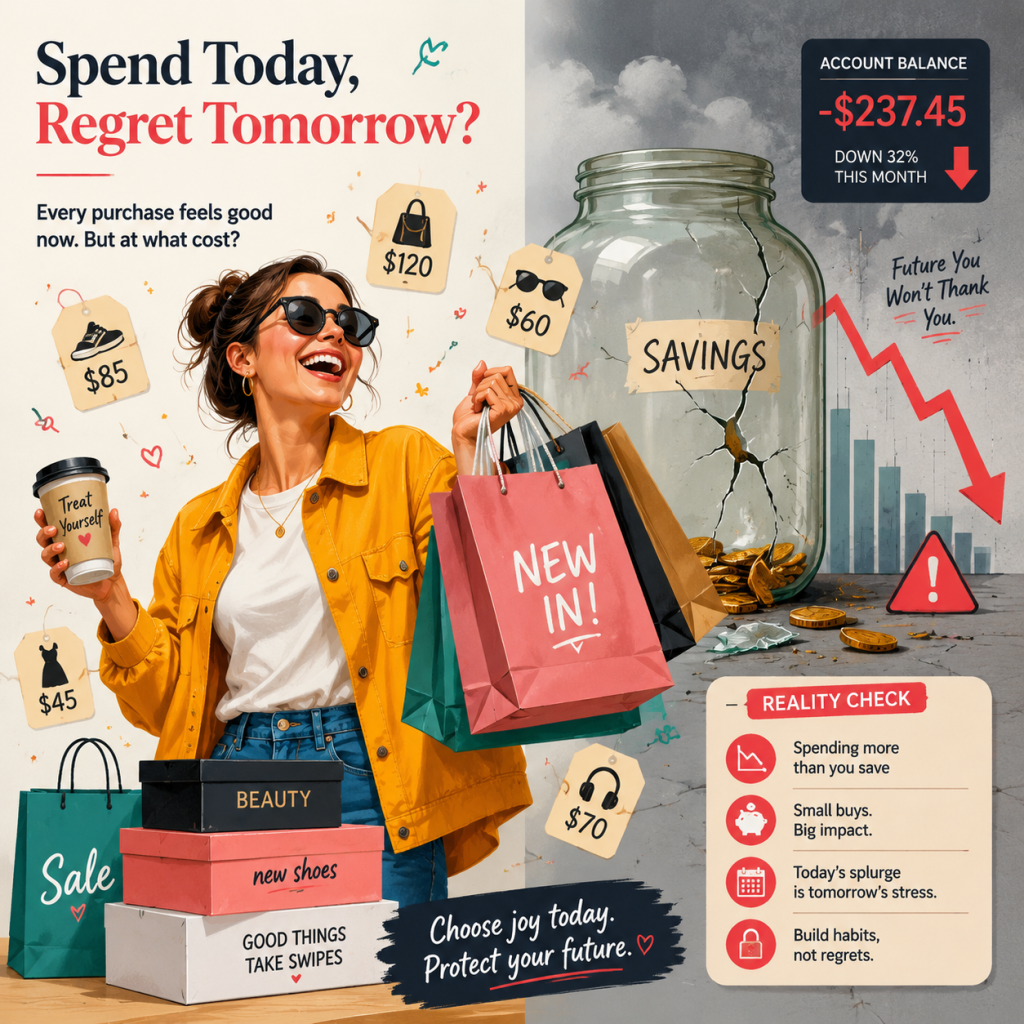
You saved $5,000 over six months.
You feel proud.
Then:
- A $1,200 vacation
- $800 shopping
- $600 tech upgrade
- $400 dining out
Within weeks, half your savings are gone.
But the most dangerous part isn’t the math.
It’s the mental shift.
You start thinking:
“Well, I already dipped into savings…”
That mindset makes future spending easier.
And rebuilding savings feels harder the second time.
Savings require discipline.
Spending requires emotion.
Emotion usually wins when unchecked.
Quick Self‑Check
Ask yourself honestly:
Have you ever wiped out months of careful saving in a short burst of spending?
If yes, that wasn’t a lack of discipline.
It was likely revenge spending.
And it often follows clear warning signs.
6. Signs You’re Revenge Spending
Here are subtle red flags:
- You justify large purchases by referencing past sacrifices
- You say, “I haven’t treated myself in forever”
- You upgrade things that didn’t need upgrading
- You dramatically increase lifestyle spending
- You feel a rush while spending
- You feel mild regret afterward
The emotional pattern is predictable:
Restriction → Release → Regret → Repeat
And unless interrupted, it becomes a cycle.
7. The Dangerous Cycle of Deprivation and Overcorrection
Many people think the solution is stricter budgeting.
But extreme restriction often causes stronger revenge spending later.
It becomes a pendulum:
Extreme saving → Extreme spending → Guilt → Extreme saving again
This is financially and emotionally exhausting.
Instead of stability, you experience financial whiplash.
The real solution is balance.
But before we discuss that, let’s focus on immediate damage control.
best money habits for beginners
8. How to Stop Revenge Spending Today
Stopping revenge spending doesn’t require eliminating fun.
It requires structured enjoyment.
Here are practical steps.
1. Create a “Freedom Fund”
Instead of restricting enjoyment, allocate a monthly amount specifically for fun.
When it’s planned, it doesn’t explode.
2. Avoid Post‑Restriction Spending Decisions
Right after:
- finishing debt payoff
- completing a strict savings challenge
- receiving a bonus
Wait before making large purchases.
Emotions run high after achievement.
3. Separate Reward From Spending
Reward yourself with:
- experiences
- time off
- personal projects
Not always purchases.
9. The 72‑Hour Reset Strategy
When you feel the urge to “make up for lost time,” try this:
Wait 72 hours before any major purchase.
During those three days:
- Write why you want it
- Visualize your savings goal
- Calculate how long it took to save that amount
This pause interrupts emotional escalation.
Often, the intensity fades.
And if you still want it after 72 hours?
It’s probably more intentional than emotional.
Healthy Financial Habits to Build
10. Building a Balanced Spending Plan
Here’s the key idea:
Financial health isn’t built on extremes.
Instead of:
“All saving” or “All spending”
Try this structure:
- 50–60% essentials
- 20–30% saving/investing
- 10–20% lifestyle & enjoyment
When enjoyment is built into the plan, revenge spending loses its power.
Because you’re no longer depriving yourself.
You’re managing desire sustainably.
Frequently Asked Questions (FAQ)
What is revenge spending?
Revenge spending is excessive spending after a period of restriction or stress as a form of emotional compensation.
Is revenge spending always bad?
Not necessarily. Occasional celebration is healthy. It becomes harmful when it significantly damages savings or creates financial instability.
Why does revenge spending feel justified?
Because it often follows sacrifice, hardship, or discipline. The brain frames spending as earned relief.
How is revenge spending different from impulse buying?
Impulse buying is spontaneous.
Revenge spending is reactive and often follows a long restrictive period.
What is the fastest way to stop revenge spending?
Implement a waiting period (like 72 hours) and build controlled enjoyment into your financial plan.
Final Thoughts: Take Back Control Before It Costs You
Revenge spending feels powerful.
It feels like reclaiming your life.
Like declaring:
“I won’t be restricted anymore.”
But real freedom isn’t spending without limits.
Real freedom is knowing your savings are safe.
It’s sleeping well at night.
It’s not undoing months of discipline in a few emotional decisions.
You don’t need to eliminate joy.
You don’t need to live rigidly.
You just need balance.
Because once you understand how revenge spending works,
you’re no longer reacting emotionally.
You’re choosing intentionally.
And that shift can protect your savings for years to come.