Author: Peiman Daneshgar
Email: daneshgar781@gmail.com
Estimated reading time: 6 minutes
Table of contents
- 1. What Is a House Deposit?
- 2. Why a Deposit Is So Important
- 3. How Much Deposit Do You Really Need?
- 4. How Long It Takes to Save for a House Deposit
- 5. Step‑by‑Step Plan to Save for a Home
- 6. Smart Strategies to Save Faster
- 7. Where to Keep Your House Deposit Savings
- 8. Common Mistakes First‑Time Buyers Make
- 9. How to Stay Motivated During the Saving Process
- 10. Frequently Asked Questions
- 11. Final Thoughts
1. What Is a House Deposit?
A house deposit is the portion of a home’s purchase price that you pay upfront when buying property.
The remaining amount is usually financed through a mortgage loan from a bank or lender.
For example:
Home price: $300,000
Deposit (20%): $60,000
Mortgage loan: $240,000
The deposit reduces the amount you need to borrow.
This directly affects your mortgage payments and loan approval chances.
For many first‑time buyers, saving the deposit is the biggest obstacle to home ownership.
2. Why a Deposit Is So Important
A larger deposit provides several financial advantages.
First, it reduces the total loan amount. Smaller loans mean lower monthly mortgage payments.
Second, lenders often offer better interest rates to buyers with larger deposits.
Third, a larger deposit reduces the lender’s risk, which improves your mortgage approval chances.
Finally, a strong deposit can protect you financially if housing prices fluctuate.
Homeownership becomes much more stable when you begin with solid savings.
3. How Much Deposit Do You Really Need?
The required deposit depends on the country, lender, and loan program.
However, most mortgages fall into three common categories.
20% Deposit (Traditional Standard)
Saving 20% of the property price is often considered ideal.
Benefits include:
- Lower mortgage payments
- Better interest rates
- Avoiding private mortgage insurance (PMI) in some countries
Example:
House price: $250,000
20% deposit: $50,000
10% Deposit (Moderate Option)
Some lenders allow smaller deposits.
Example:
House price: $250,000
10% deposit: $25,000
However, this may increase monthly payments and insurance costs.
Digital Envelope Saving System

3–5% Deposit (First‑Time Buyer Programs)
Certain mortgage programs allow very small deposits.
While this makes homeownership accessible sooner, it increases long‑term costs.
The smaller the deposit, the larger the loan.
4. How Long It Takes to Save for a House Deposit
Saving for a deposit depends on three key factors:
- Income
- Living expenses
- Saving rate
Example scenario:
Target deposit: $40,000
If you save:
- $500 per month → about 6 years 8 months
- $1,000 per month → about 3 years 4 months
- $1,500 per month → about 2 years 3 months
Increasing savings speed dramatically shortens the timeline.
That’s why strategy matters.
5. Step‑by‑Step Plan to Save for a Home
Step 1: Set a Clear Target
Research average home prices in your desired area.
Determine the deposit you need.
Example:
Target home price: $350,000
20% deposit goal: $70,000
Having a specific goal keeps your savings focused.
Step 2: Create a Dedicated Savings Account
Your house deposit should be kept separate from everyday spending.
This reduces temptation and protects your savings progress.
A high‑yield savings account is usually ideal.
Step 3: Automate Monthly Contributions
Automatic transfers ensure consistent progress.
For example:
Paycheck arrives → automatic transfer to house fund.
Automation removes the need for willpower.
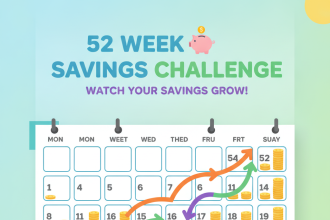
52 Week Savings Challenge Rules
Step 4: Track Your Progress
Seeing your savings grow increases motivation.
Many people create progress trackers or savings charts to visualize their goal.
Small milestones help maintain momentum.

6. Smart Strategies to Save Faster
Saving for a deposit can take years, but certain strategies can accelerate progress.
Reduce Housing Costs Temporarily
Housing is often the largest expense.
Options include:
- Living with roommates
- Moving to a cheaper apartment
- Staying with family temporarily
Even a temporary reduction can free up hundreds of dollars per month.
Increase Your Income
Additional income streams can dramatically speed up savings.
Examples include:
- Freelancing
- Part‑time work
- Selling unused items
- Side businesses
Directing extra income toward your deposit fund can shorten the saving timeline significantly.
Use Windfalls Wisely
Unexpected money can provide large boosts.
Examples include:
- Tax refunds
- Work bonuses
- Gifts
- Investment gains
Instead of spending these windfalls, deposit them directly into your house savings.
Reduce Lifestyle Inflation
When income increases, spending often increases as well.
Resisting this pattern allows you to save much more.
Direct raises or bonuses toward your housing goal.
7. Where to Keep Your House Deposit Savings
Because the timeline is usually a few years, safety matters more than aggressive growth.
Common options include:
High‑Yield Savings Accounts
Safe, liquid, and earning modest interest.
Money Market Accounts
Similar to savings accounts but sometimes with slightly higher returns.
Short‑Term Treasury Funds
Low‑risk options for slightly better returns.
Avoid high‑risk investments such as stocks or cryptocurrency if you plan to buy within the next few years.
Market volatility could reduce your deposit at the wrong time.
8. Common Mistakes First‑Time Buyers Make
One common mistake is focusing only on the deposit.
Buying a home involves additional costs.
Examples include:
- Closing costs
- Inspection fees
- Moving expenses
- Furniture and repairs
Many buyers benefit from saving an additional 3–5% of the home price for these costs.
Another mistake is rushing the process.
Buying before you are financially ready can create long‑term stress.
Patience often leads to better financial outcomes.
9. How to Stay Motivated During the Saving Process
Saving for a house deposit can feel slow.
Maintaining motivation requires visualizing the outcome.
Strategies include:
Tracking progress charts
Celebrating small milestones
Researching neighborhoods and homes
Creating a clear vision of your future home
The clearer your goal becomes, the easier it is to stay committed.
10. Frequently Asked Questions
Can I buy a house with no deposit?
Some programs allow extremely low deposits, but completely zero‑deposit loans are rare and often risky.
Should I invest my deposit savings?
If you plan to buy within three years, keeping the money in safe accounts is usually recommended.
Is renting while saving a waste of money?
Not necessarily. Renting can provide flexibility while you build a stronger financial position.
How much should I save monthly?
Many experts suggest saving 20–30% of income when working toward a major financial goal.
11. Final Thoughts
Saving for a house deposit is one of the most significant financial goals many people pursue.
Although the process can take several years, consistent saving, smart budgeting, and disciplined financial habits make the goal achievable.
The key is turning a large goal into manageable monthly steps.
With patience and a clear strategy, today’s small savings can eventually become the foundation of your future home.