How to Save Money Fast: The Ultimate Guide to Financial Speed and Stability
Author: Peiman Daneshgar
Email: daneshgar781@gmail.com
Table of Contents
- The “End-of-Month” Trap: Why Saving Feels Impossible
- Phase 1: The Radical Audit (Stop the Leaks)
- Phase 2: The Psychology of “Fast” Savings
- Phase 3: The 24-Hour Rule and Impulse Control
- Phase 4: High-Impact Lifestyle Tweaks
- Phase 5: Automating Your Financial Freedom
- FAQs: Answering the Hard Questions
- Conclusion: Your Future Self Will Thank You
1. The “End-of-Month” Trap: Why Saving Feels Impossible
I know how it feels. You work hard, you clock in, you clock out, and by the time you pay your rent, your utilities, and the grocery bill, you’re left with… nothing. Or maybe just enough to stress about.
Honestly? It’s not your fault. We live in an economy designed to make us spend. From the “one-click” checkout buttons to the algorithmic ads targeting our insecurities, every piece of technology you own is optimized to separate you from your money.
The pain is real. You feel behind. You see others on social media seemingly living their best lives, and you wonder: “How can I ever save money fast when I’m barely keeping my head above water?”
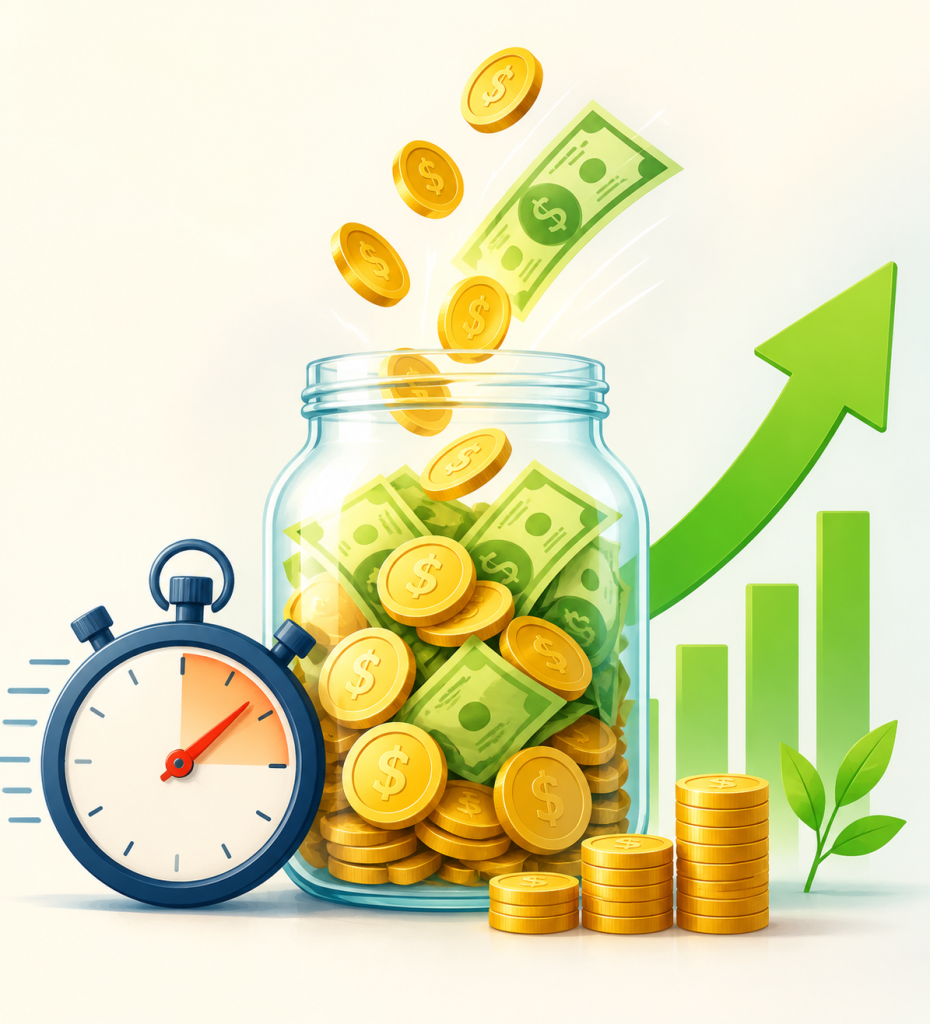
Here is the secret: Saving fast isn’t about being “cheap.” It’s about being intentional. It’s about stopping the invisible leaks in your wallet so that your income finally starts working for you instead of disappearing into the void.
Quick Thought: If you could save just $10 a day by making small changes, that’s $3,650 a year. Imagine where that money could be in 5 years with compound interest.
2. Phase 1: The Radical Audit (Stop the Leaks)
Before you can save, you have to find where your money is hiding. Most people look at their bank balance and think they’re broke. I want you to look at your transactions and realize you’re just disorganized.
The 3-Step Audit:
- Print your last 3 months of bank statements. Yes, actual paper. Seeing it on paper is painful, and pain is a great motivator.
- Color-code your spending. Use a highlighter. One color for “Essential” (Rent, Food, Bills), another for “Convenience” (DoorDash, Coffee, Ubers), and a third for “Forgotten” (Subscriptions you don’t even remember buying).
- The “Elimination Round.” If you haven’t used it or benefited from it in the last 30 days, cut it. No excuses.
Did you know? The average American spends nearly $200 a month on subscription services they don’t use. That’s $2,400 a year—a solid emergency fund right there.
Are you still with me? Good. The next part is where the real change happens.
3. Phase 2: The Psychology of “Fast” Savings
Saving money is 20% math and 80% behavior. If you hate your budget, you’ll never stick to it. We need to hack your brain.
The “Scarcity Mindset” vs. “Abundance Mindset”
When you say “I can’t afford that,” you feel deprived. Instead, try saying, “I’m choosing to prioritize my future freedom over this temporary pleasure.” It sounds like a small change, but it shifts your identity from a victim of your finances to the boss of them.
The “Freedom Fund” Concept:
Instead of calling it “Savings,” name your account “Freedom Fund.” Every dollar you put in there is a dollar you don’t have to work for later. When you look at your account, you aren’t looking at “money,” you’re looking at “days of not having to work.”
4. Phase 3: The 24-Hour Rule and Impulse Control
Retailers thrive on the “dopamine hit” of shopping. You feel stressed, you buy something, you feel a split-second of relief, and then the guilt kicks in.
The 24-Hour Rule is your armor.
If you see something you want to buy (that isn’t a life necessity), tell yourself: “I can buy this tomorrow if I still want it.”
Here is what happens during those 24 hours:
- The emotional impulse fades.
- Your logical brain takes back control.
- You realize you probably didn’t actually need it.
Try it this weekend. You’ll be shocked at how many items stay in your digital cart.
5. Phase 4: High-Impact Lifestyle Tweaks
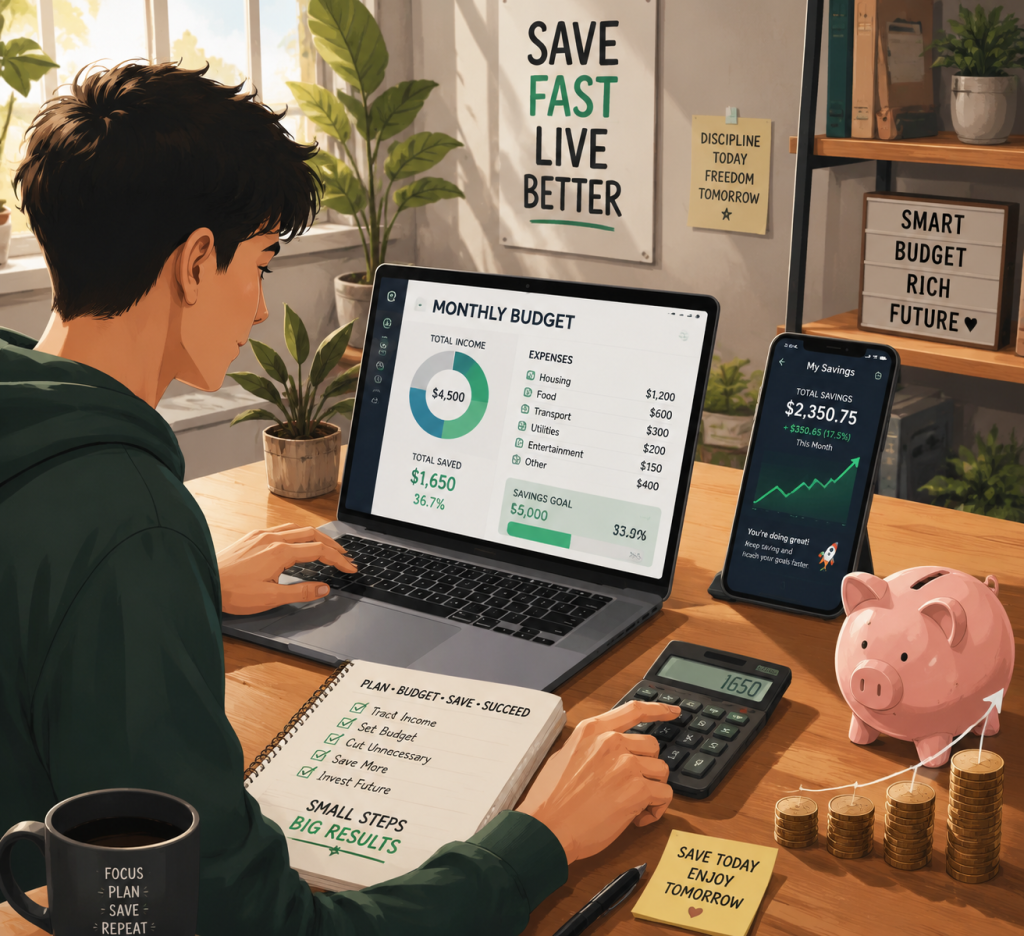
You don’t need to live on rice and beans to save money. You just need to optimize your “Big Three” expenses: Housing, Transportation, and Food.
- Food: Cooking at home isn’t just about saving money; it’s about regaining control. Try “Batch Cooking” on Sundays. It prevents the “I’m too tired to cook, let’s order pizza” disaster that costs $40.
- Transportation: Is your car costing you more than it’s worth? Sometimes, the fastest way to save is to downgrade your vehicle or find ways to reduce commute costs.
- Negotiation: Call your internet, insurance, and phone providers. Tell them you are considering leaving for a cheaper competitor. 90% of the time, they will drop your bill just to keep you. It takes 15 minutes and can save you hundreds annually.
- Would Money Make Me Happy?
6. Phase 5: Automating Your Financial Freedom
Willpower is a finite resource. If you rely on “remembering” to save money at the end of the month, you will fail.
Set it and forget it.
Go to your bank app right now and set up an automatic transfer for the day after your paycheck hits. Even if it’s only $50. Once the money is gone from your checking account, you won’t miss it. You will naturally adjust your spending to what remains. This is the “Pay Yourself First” method, and it is the single most effective way to build wealth without thinking about it.
How “Revenge Spending” Is Destroying Your Savings
7. Frequently Asked Questions (FAQs)
Q: Is it better to pay off debt or save money first?
A: If you have high-interest credit card debt (15%+ interest), prioritize that. If your debt is low-interest (like a student loan), build a $1,000 emergency fund first so you don’t have to rely on credit if a surprise bill pops up.
Q: How can I save money fast when my income is low?
A: Focus on “income expansion” rather than just cutting costs. Can you sell unused items? Can you pick up 5 hours of freelance work? When income is the constraint, finding ways to earn more is often faster than cutting pennies.
Q: Does saving money really make me happier?
A: Research shows that money itself doesn’t make you happy, but security does. Reducing financial anxiety is one of the highest correlations to overall life satisfaction.
The “Loud Budgeting” Trend Explained: Why Gen Z Is Doing It
8. Conclusion: Your Future Self Will Thank You
Saving money fast isn’t a sprint; it’s a strategic move in the game of life. By auditing your expenses, hacking your psychology, and automating your savings, you are doing something most people never do: you are taking control.
You aren’t just saving cash; you are buying peace of mind. You are buying the ability to handle an emergency without panic. You are buying options.
Start today. Not tomorrow, not “when you get a raise.” Open your bank app, cut one unnecessary subscription, and move a little bit of money into your “Freedom Fund.”
You are ahead of the crowd already. Now, keep that momentum.