Author: Peiman Daneshgar
Email: daneshgar781@gmail.com
Table of contents
- Introduction: The New Way People Are Saying “I Can’t Afford That”
- What Is “Loud Budgeting”?
- Where the Loud Budgeting Trend Started
- Why Gen Z Is Embracing Loud Budgeting
- The Psychology Behind Saying “No” to Spending
- Loud Budgeting vs. Silent Budgeting
- Real-Life Examples of Loud Budgeting
- The Benefits of Loud Budgeting
- Criticism and Misunderstandings
- How to Practice Loud Budgeting
- Why Loud Budgeting Might Change Money Culture
- Frequently Asked Questions (FAQ)
- Final Thoughts: A Cultural Shift Around Money
Introduction: The New Way People Are Saying “I Can’t Afford That”
Let’s start with a familiar situation.
Your friends want to go out again.
Another dinner.
Another expensive brunch.
Another weekend trip.
And you feel that quiet pressure.
You don’t really want to spend the money… but saying “I can’t afford it” feels awkward.
So what do most people do?
They invent excuses.
- “I’m busy.”
- “Maybe next time.”
- “I’m tired today.”
But Gen Z is doing something different.
Instead of hiding financial limits, they’re saying them out loud.
Directly.
Without embarrassment.
Something like:
“I’m skipping this because I’m saving money right now.”
This approach has a name.
Loud Budgeting.
And surprisingly, it’s becoming one of the biggest financial trends among younger generations.
In this article you’ll learn:
- What loud budgeting actually means
- Why Gen Z is embracing it
- The psychology behind openly talking about money
- And how this trend might change social spending culture
But first, let’s clarify what loud budgeting really is.
Because it’s not just about budgeting.
It’s about changing the social rules around money.
“Girl Math” vs. “Boy Math”: The Psychology of Justifying Purchases
What Is “Loud Budgeting”?
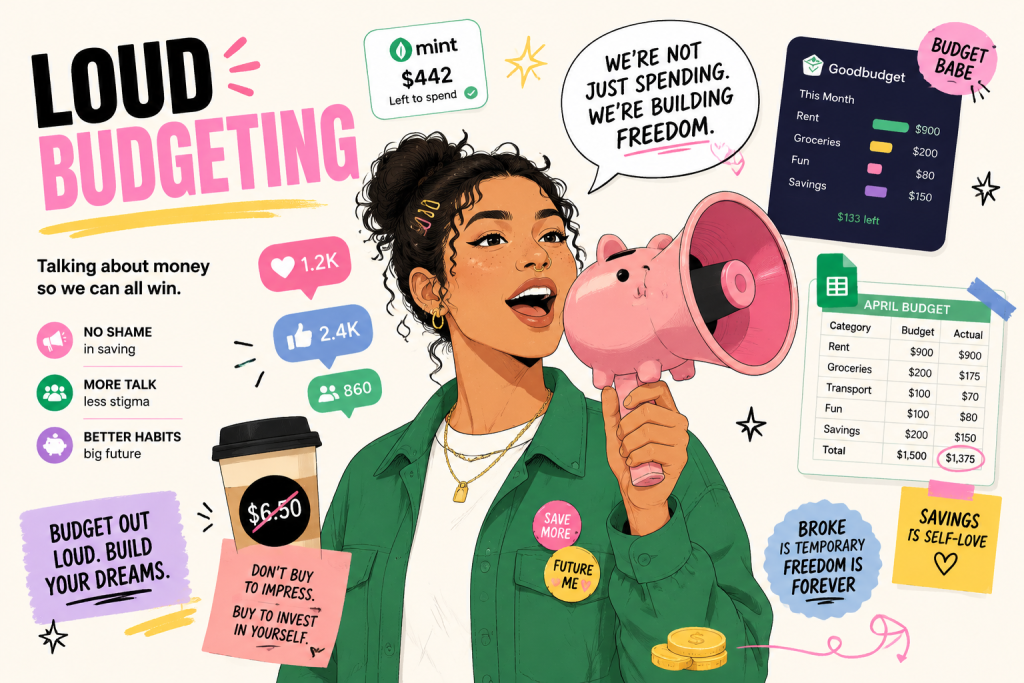
Loud budgeting is the practice of openly expressing financial priorities and limits instead of hiding them.
Instead of avoiding conversations about money, people state them clearly.
Examples of loud budgeting include:
- “I’m not buying that right now because I’m focusing on saving.”
- “I’d rather cook at home this week.”
- “That trip sounds fun, but it’s not in my budget.”
The key difference is transparency.
Instead of quietly declining or making excuses, people explain the real reason.
And that reason is simple:
They’re managing their money intentionally.
This idea may sound obvious.
But culturally, talking about money openly has long been considered uncomfortable.
Many people were raised to believe:
- discussing money is rude
- saying you can’t afford something is embarrassing
- financial struggles should be hidden
Loud budgeting challenges those ideas.
And that’s exactly why it’s spreading so quickly.
But where did this trend actually start?
What Is “Doom Spending” and How to Stop It Today
Where the Loud Budgeting Trend Started
The concept of loud budgeting gained attention in early 2024 after financial creators and influencers discussed it on platforms like TikTok and Instagram.
One viral video summarized the idea perfectly:
“Instead of pretending you’re busy, just say you’re not spending money right now.”
The message resonated immediately.
Millions of young people shared similar experiences.
They were tired of:
- social spending pressure
- pretending money wasn’t a factor
- feeling embarrassed about financial priorities
Social media accelerated the trend because it gave people permission to say something many were already thinking.
And once enough people started doing it, the behavior became normalized.
But loud budgeting isn’t just a social trend.
It’s also a reaction to economic reality.

Why Gen Z Is Embracing Loud Budgeting
Several financial pressures have shaped how Gen Z thinks about money.
Compared to previous generations, many young adults face:
- higher housing costs
- student loan debt
- inflation
- uncertain job markets
At the same time, social media constantly showcases expensive lifestyles.
Travel.
Luxury brands.
Dining out.
This combination creates a difficult situation.
People feel pressure to spend even when their finances say otherwise.
Loud budgeting is a response to that pressure.
Instead of silently struggling to keep up, people are choosing honesty.
They’re saying:
“My financial priorities matter more than social expectations.”
And that shift is surprisingly powerful.
Because it changes the conversation around spending.
Quick Reflection
Think about the last time you spent money mainly because everyone else was doing it.
A dinner.
A group trip.
A celebration.
Would you have made the same decision if there was no social pressure?
This question is exactly why loud budgeting resonates with so many people.
But the psychology behind it goes deeper.
The Psychology Behind Saying “No” to Spending
Human spending behavior is heavily influenced by social environments.
Psychologists call this social proof.
When everyone around us spends money on something, we assume it’s normal.
Even if it strains our finances.
Loud budgeting disrupts this pattern.
When one person openly says:
“That’s not in my budget right now.”
Something interesting happens.
Others often feel relieved.
Because many people were thinking the same thing but didn’t want to say it first.
In this way, loud budgeting creates a ripple effect.
One honest statement can change group behavior.
And that’s why this trend spreads quickly inside friend groups.
But to understand why it feels so different, we should compare it to the traditional approach.
best money habits for beginners
Loud Budgeting vs. Silent Budgeting
For decades, budgeting was considered a private activity.
People tracked their expenses quietly and avoided discussing financial limits.
This is what we might call silent budgeting.
Silent budgeting looks like:
- making excuses to avoid spending
- quietly declining invitations
- pretending financial choices are unrelated to money
Loud budgeting, by contrast, removes the secrecy.
Instead of hiding financial boundaries, people state them clearly.
Here’s a simple comparison.
Silent budgeting says:
“I’m busy that night.”
Loud budgeting says:
“I’m saving money this month.”
The second approach may feel uncomfortable at first.
But it also removes unnecessary pressure.
Because honesty reduces the need for excuses.
Real-Life Examples of Loud Budgeting
To see how this works in practice, let’s look at a few everyday situations.
Example 1: Group Dinner
Friends suggest a fancy restaurant.
Instead of going along reluctantly, someone says:
“I’m skipping expensive restaurants this month. Want to grab something cheaper instead?”
Often the group adjusts.
Healthy Financial Habits to Build
Example 2: Travel Plans
A friend group plans a costly vacation.
Loud budgeting response:
“That trip sounds great, but it’s outside my travel budget this year.”
No excuses needed.
Example 3: Shopping
Friends suggest a shopping spree.
Loud budgeting approach:
“I’m focusing on saving right now, so I’m passing on shopping trips.”
Simple. Honest. Clear.
And surprisingly, people usually respect this more than vague excuses.
The Benefits of Loud Budgeting
This trend offers several practical benefits.
Reduced Social Pressure
When financial limits are openly stated, others stop assuming everyone can spend freely.
More Honest Conversations
Loud budgeting encourages real discussions about money.
And those conversations can lead to better financial awareness.
Better Financial Decisions
Clear boundaries help people align spending with their actual priorities.
Stronger Financial Confidence
People who openly discuss their financial goals often feel more in control of their money.
Instead of reacting to social expectations.
Criticism and Misunderstandings
Not everyone loves the loud budgeting trend.
Some critics argue that openly discussing budgets can feel uncomfortable or awkward in social situations.
Others worry it might appear overly rigid.
But in practice, loud budgeting doesn’t require sharing personal financial details.
It simply means expressing priorities honestly.
You don’t need to say:
“I only have $200 left this month.”
You can simply say:
“I’m saving money right now.”
That level of transparency is usually enough.
How to Practice Loud Budgeting
If you want to try loud budgeting, start small.
Here are simple ways to begin.
1. Replace Excuses With Honesty
Instead of vague reasons, clearly state your financial priorities.
2. Suggest Alternatives
If something is too expensive, offer a cheaper option.
Example:
“Let’s cook instead of ordering.”
3. Normalize Financial Goals
Mention goals like saving, investing, or paying off debt.
This reframes budgeting as progress rather than restriction.
4. Be Consistent
The more comfortable you become discussing money boundaries, the easier it feels.
Why Loud Budgeting Might Change Money Culture
Historically, people avoided discussing money openly.
But younger generations are increasingly transparent about finances.
They discuss:
- salaries
- debt
- budgeting
- investing
Loud budgeting fits into this broader shift.
Instead of pretending money isn’t a factor, people are acknowledging it.
And that honesty can reduce unnecessary financial stress.
It also encourages healthier spending habits.
Because when financial boundaries are visible, social pressure loses its power.
Frequently Asked Questions (FAQ)
What is loud budgeting?
Loud budgeting is the practice of openly stating financial limits or priorities instead of hiding them behind excuses.
Why is loud budgeting popular with Gen Z?
Gen Z faces high living costs and economic uncertainty, making financial transparency more practical and necessary.
Is loud budgeting rude?
Not necessarily. When expressed respectfully, it simply communicates personal financial priorities.
Does loud budgeting mean revealing your finances?
No. It only involves stating boundaries, not sharing specific financial details.
Can loud budgeting help with saving money?
Yes. Clearly expressing financial goals can reduce social spending pressure and support better financial habits.
Final Thoughts: A Cultural Shift Around Money
For a long time, people treated money as a topic best kept private.
Budgets were silent.
Financial struggles were hidden.
Excuses replaced honesty.
The loud budgeting trend flips that idea.
Instead of pretending money isn’t part of the conversation, it acknowledges reality.
Everyone has financial limits.
Everyone has priorities.
And saying them out loud isn’t embarrassing.
In fact, it can be empowering.
Because once people feel comfortable saying:
“That’s not in my budget right now.”
They stop making financial decisions based on pressure.
And start making them based on intention.
And in a world full of spending temptations…
That small shift can make a very big difference.