Automate Your Savings Easily: The Smartest Way to Build Wealth Without Stress
Author: Peiman Daneshgar
Email: daneshgar781@gmail.com
Table of contents
- Automate Your Savings Easily: The Smartest Way to Build Wealth Without Stress
- 1. Why Saving Feels So Hard (And Why It Shouldn’t)
- 2. What Does It Mean to Automate Your Savings?
- 3. Why Automation Works Better Than Willpower
- 4. Step‑by‑Step: How to Automate Your Savings Easily
- 5. The “Pay Yourself First” System Explained
- 6. How Much Should You Automate?
- 7. Automation for Different Financial Goals
- 8. Common Mistakes to Avoid
- 9. Advanced Automation Strategies
- 10. FAQs About Automating Your Savings
- 11. Final Thoughts: Build Wealth on Autopilot
1. Why Saving Feels So Hard (And Why It Shouldn’t)
Let’s be honest.
Most people don’t fail at saving because they’re irresponsible. They fail because they’re tired.
You work all day. You pay your bills. You try to be disciplined. But by the end of the month, there’s barely anything left to save.
And the worst part? You intend to save.
That’s the problem.
Saving based on intention relies on willpower. And willpower is unreliable. Some months you’re motivated. Some months you’re exhausted.
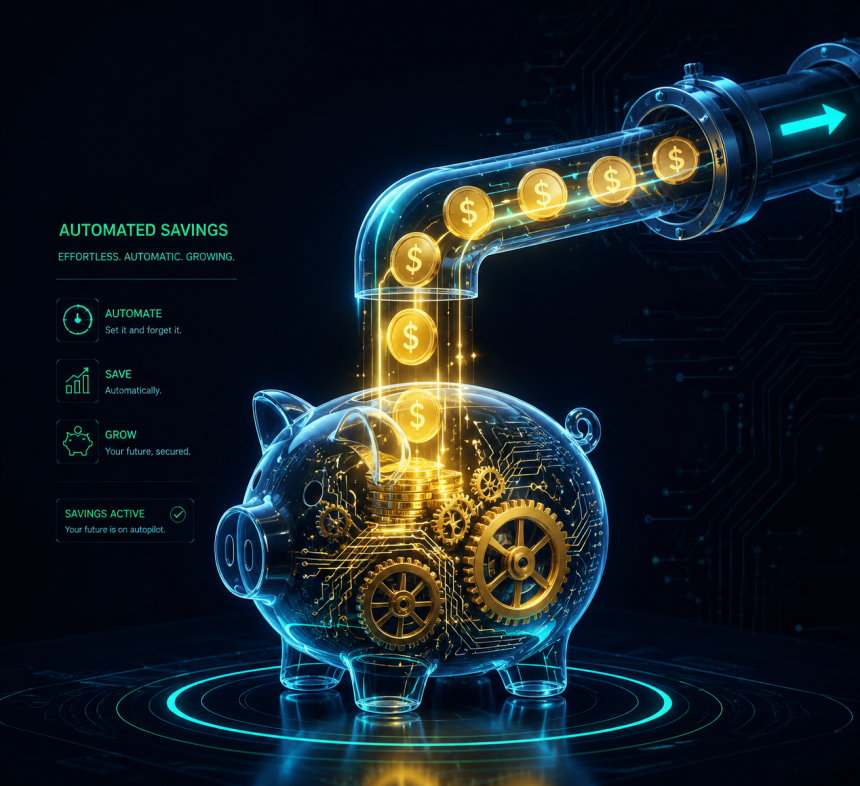
Automation removes the decision entirely.
And that changes everything.
2. What Does It Mean to Automate Your Savings?
To automate your savings simply means:
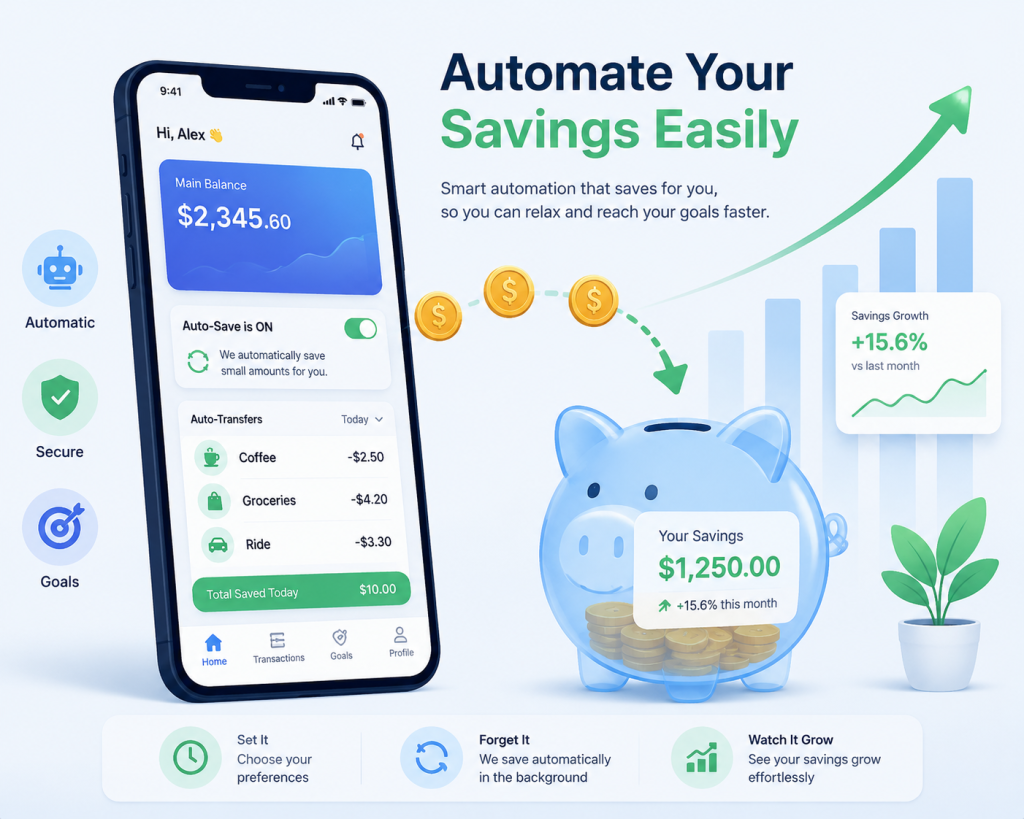
Money moves into your savings account automatically without you needing to think about it.
No reminders.
No monthly debate.
No “I’ll save what’s left.”
It happens in the background.
Usually this is done by:
- Setting up automatic transfers between accounts
- Splitting direct deposit into multiple accounts
- Scheduling recurring transfers through your banking app
- Using budgeting apps that auto-allocate money
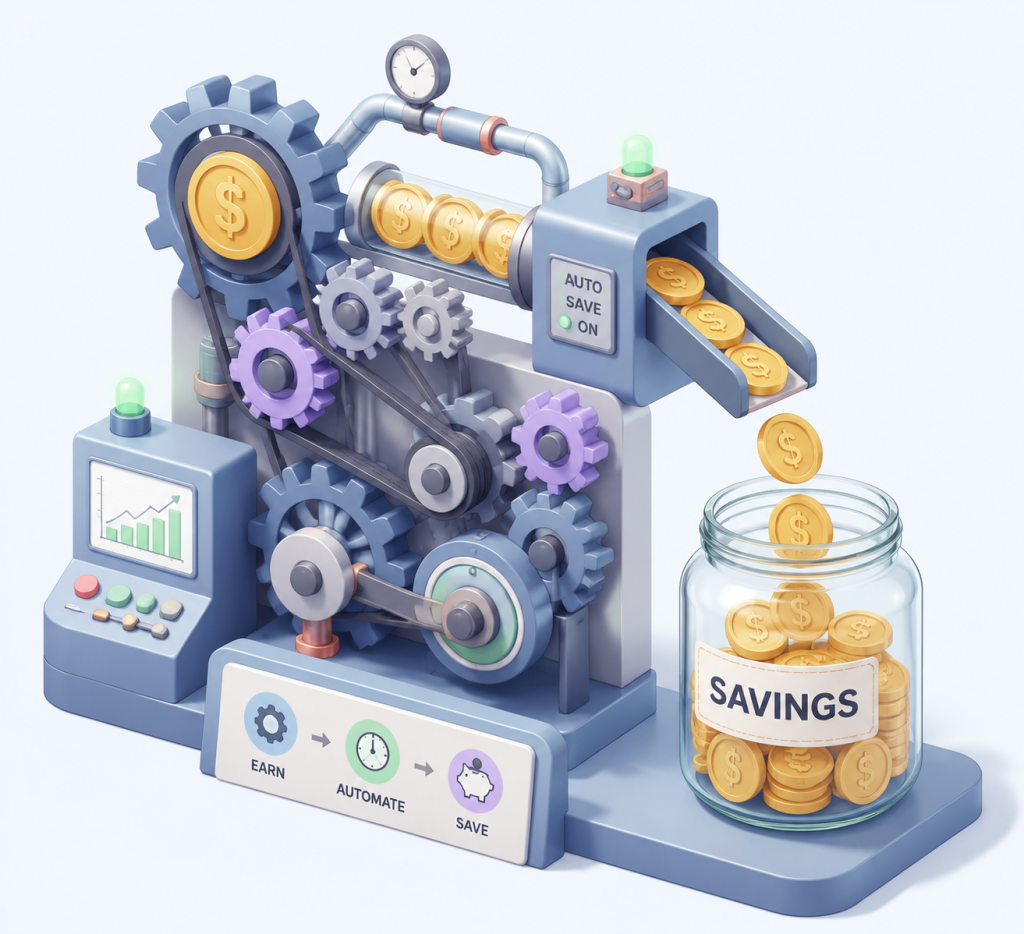
Automation turns saving from an effort into a system.
And systems beat motivation every time.
Better Money Habits vs Khan Academy
3. Why Automation Works Better Than Willpower
Here’s something important:
Saving money is 20% math and 80% behavior.
When money sits in your checking account, your brain sees it as available.
Available money feels spendable.
But when money moves instantly into savings before you see it?
You adjust your lifestyle to what remains.
This is called behavioral default bias.
Humans stick with defaults.
If spending is the default → you spend.
If saving is the default → you save.
Automation flips the default in your favor.
Quick Reality Check
If you automated $200 per month:
- In 1 year → $2,400
- In 5 years → $12,000
- Invested at 7% annually → significantly more
Small automatic moves create large long-term impact.
4. Step‑by‑Step: How to Automate Your Savings Easily
Let’s make this practical.
Step 1: Open a Separate Savings Account
Do not use the same account as your checking.
Why?
Separation reduces temptation.
Even better: use a high‑yield savings account.
Step 2: Choose Your Automation Day
The best day is:
The day after your paycheck arrives.
Not the end of the month.
Not “whenever you remember.”
The day after income hits.
Step 3: Set a Fixed Amount (Start Small)
If you’re unsure, start with:
- 5% of your income
- Or a fixed number like $50 or $100
The key is consistency, not size.
You can increase it later.
How “Revenge Spending” Is Destroying Your Savings
Step 4: Forget About It
Once it’s automated, don’t monitor it daily.
Let it accumulate.
The magic of automation is emotional detachment.
The “Loud Budgeting” Trend Explained: Why Gen Z Is Doing It
5. The “Pay Yourself First” System Explained
Most people do this:
Income → Bills → Spending → Maybe Save
Successful savers do this:
Income → Save → Bills → Spending
That’s “Pay Yourself First.”
You are the first bill that gets paid.
This isn’t selfish.
It’s strategic.
When you automate savings first, you eliminate the risk of “nothing left.”
“Girl Math” vs. “Boy Math”: The Psychology of Justifying Purchases
6. How Much Should You Automate?
There’s no universal number, but here are smart benchmarks:
- Minimum goal: 10% of income
- Strong financial position: 20%
- Aggressive wealth building: 30%+
If that feels overwhelming, start with 5%.
Progress beats perfection.
Increase automation every time you:
- Get a raise
- Pay off debt
- Cancel a subscription
- Reduce an expense
Make saving increases automatic too.
What Is “Doom Spending” and How to Stop It Today
7. Automation for Different Financial Goals
Automation isn’t just for “generic savings.”
You can automate multiple buckets:
Emergency Fund
Goal: 3–6 months of expenses
Automate until target is reached.
Travel Fund
Small weekly transfers build guilt‑free vacations.
Investment Account
Automated investing builds long-term wealth.
Sinking Funds
Car repairs, insurance payments, holidays.
When money is pre-assigned, surprise expenses stop being emergencies.
8. Common Mistakes to Avoid
Mistake 1: Saving What’s Left
There’s never anything left.
Mistake 2: Setting the Amount Too High
If automation causes overdrafts, you’ll disable it.
Start sustainable.
Mistake 3: Keeping Savings Too Accessible
If savings is one click away, you’ll transfer it back.
Consider mild friction.
9. Advanced Automation Strategies
Once you’re comfortable, level up.
1. Split Direct Deposit
Ask your employer to send:
- 90% to checking
- 10% directly to savings
You’ll never even see the money.
2. Round‑Up Apps
Apps that round purchases to the nearest dollar and invest the difference.
Small, invisible contributions.
3. Automatic Investment Contributions
Set recurring transfers into index funds or retirement accounts.
Wealth grows quietly in the background.
4. Escalation Automation
Increase savings rate automatically every 6–12 months.
Future raises go to investments, not lifestyle inflation.
10. FAQs About Automating Your Savings
Is automating savings safe?
Yes, if done through reputable banks or regulated financial platforms.
What if my income fluctuates?
Use percentage-based automation instead of fixed amounts.
Should I automate before paying off debt?
If debt has high interest, prioritize that.
But still automate a small emergency fund first.
Can automation make me wealthy?
Automation alone won’t make you rich.
But automation + time + investing absolutely can.
11. Final Thoughts: Build Wealth on Autopilot
Here’s the truth most people don’t realize:
Financial stress often comes from inconsistency.
Automation creates consistency.
When you automate your savings easily, you remove emotion from the process.
You remove procrastination.
You remove excuses.
You remove decision fatigue.
And what’s left?
Progress.
Not dramatic.
Not flashy.
But steady.
Five years from now, the version of you who automated their savings today will feel calmer, stronger, and ahead of the majority of people still “trying” to save.
Set it up once.
Let it run.
And let your money quietly build your future while you focus on living your life.