The Ultimate Guide: How to Improve Credit Score Before Applying for a Mortgage (2026)
By Peyman Daneshgar
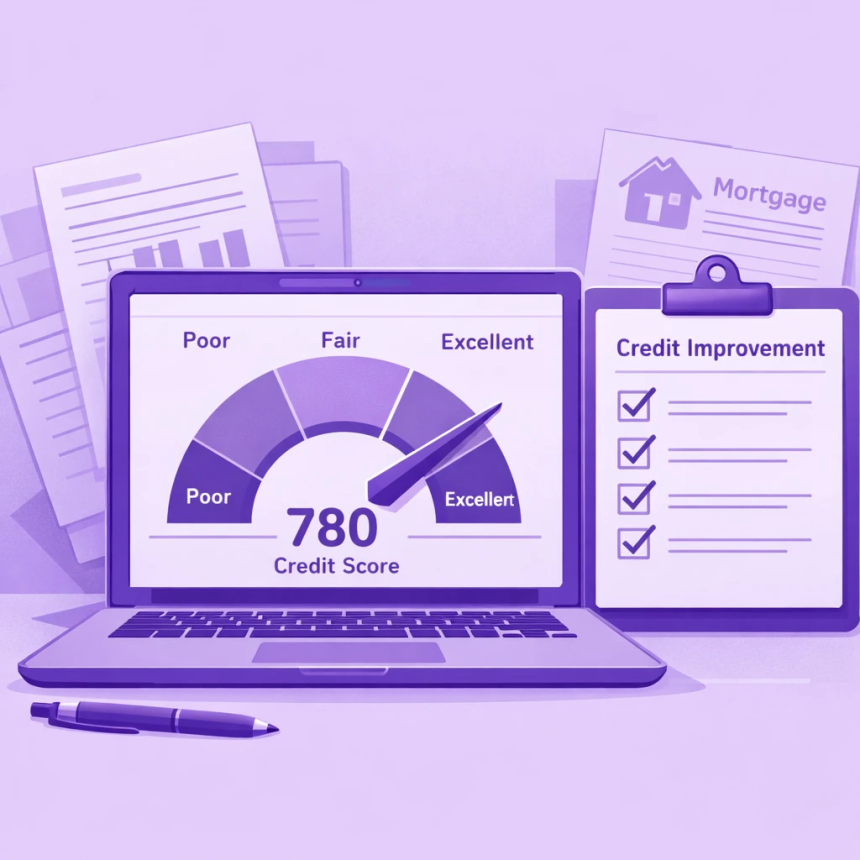
Your credit score is the key that unlocks the door to homeownership. It doesn’t just determine whether you’ll be approved for a mortgage—it dictates the interest rate you’ll pay, which can amount to tens of thousands of dollars over the life of your loan. In today’s market, where even a fraction of a percentage point matters, having strong credit is more important than ever.
The good news? 2026 brings significant changes to how mortgage lenders evaluate credit, creating new opportunities for borrowers. The Federal Housing Finance Agency (FHFA) has mandated the use of updated scoring models—VantageScore 4.0 and FICO 10T—which consider alternative data like rent and utility payments . This means millions more Americans may now qualify for mortgages, including those with “thin” credit files who were previously overlooked .
But here’s the catch: while the rules are evolving, the fundamentals of credit health remain unchanged. Whether you have months or just weeks before applying, knowing how to improve credit score before applying for a mortgage can mean the difference between a rejection letter and the keys to your dream home.
This guide is the definitive resource for mortgage-ready credit in 2026. We’ll walk you through the latest scoring changes, the proven strategies to boost your score fast, the dangerous pitfalls to avoid, and exactly what lenders are looking for. By the end, you’ll have a clear, actionable roadmap to present your strongest possible financial self to mortgage lenders.
Table of Contents
- Why Your Credit Score Matters More Than Ever in 2026
- The 2026 Credit Score Revolution: What’s Changing for Mortgage Borrowers
- The 5 Pillars of Mortgage-Ready Credit
- Step-by-Step: How to Improve Credit Score Before Applying for a Mortgage
- The “Rapid Rescore” Secret: How to Boost Your Score in Days
- The Danger Zone: What NOT to Do Before Applying
- Mortgage Options for Lower Credit Scores
- The Role of Credit Counseling
- Frequently Asked Questions (FAQs)
- Conclusion: Your Path to Mortgage Approval
Why Your Credit Score Matters More Than Ever in 2026
With mortgage rates hovering around 6.15% for a 30-year fixed loan in early 2026, every borrower is feeling the squeeze . But here’s what many don’t realize: your credit score directly determines the rate you’ll be offered. The difference between a “good” score and an “exceptional” score can save you tens of thousands of dollars.
how to invest in S&P 500 from Europe (or UK, Germany, etc.)
Consider this example from FICO’s Loan Savings Calculator: on a $300,000, 30-year mortgage, a borrower with a 760 credit score might qualify for a 6.0% rate, while a borrower with a 620 score might be offered 7.5% . Over 30 years, that difference amounts to over $100,000 in additional interest payments.
Is Investing in Cryptocurrency Safe for Beginners?
The average credit score in the U.S. is now 715, which falls into the “good” category. About 25% of consumers have scores in the “very good” range (740-799), and 21% have “exceptional” scores of 800 or higher . Where do you stand—and where do you need to be?
| Credit Score Range | Category | Typical Mortgage Rate Impact | What It Means for You |
|---|---|---|---|
| 760+ | Excellent | Best available rates | Maximum savings, easiest approval |
| 700-759 | Good | Competitive rates | Strong approval odds |
| 620-699 | Fair to Good | Higher rates | May qualify, but costs more |
| Below 620 | Poor | May not qualify | Consider FHA or VA loans |
The 2026 Credit Score Revolution: What’s Changing for Mortgage Borrowers
If you haven’t checked your credit in a while, you’re in for a surprise. 2026 is a landmark year for mortgage credit scoring .
How to Choose Your First Mutual Fund
New Scoring Models: FICO 10T and VantageScore 4.0
The FHFA has mandated that Fannie Mae and Freddie Mac adopt updated credit scoring models. Lenders will now use FICO 10T and VantageScore 4.0, alongside traditional models .
What makes these new models different?
- Trended Data: Instead of a single snapshot, these models analyze your credit behavior over the past two years. Are you consistently paying down debt, or are you racking up balances? Consistent habits now matter more than short-term fixes .
- Alternative Data: For the first time, rent payments, utility bills, and phone bills can be considered in your credit evaluation . This is a game-changer for millions of Americans with “thin” credit files who pay their housing costs on time but never got credit for it.
- investment mistakes to avoid in your 20s
VantageScore estimates that approximately 5 million more borrowers could qualify for mortgages as a result of these changes .
The End of Minimum Credit Score Requirements?
In a stunning move, Fannie Mae eliminated its minimum credit score requirement on November 15, 2025 . The government-sponsored enterprise stated that risk decisions would now be based on “a broad set of factors, such as borrower reserves, debt levels, property characteristics, and loan purpose” .
However, don’t pop the champagne just yet. As FHFA director William J. Pulte explained, while the formal requirement is gone, actual underwriting standards remain largely unchanged . Lenders can still choose to use traditional FICO scores, and most will continue to look for scores in the 620-640 range for conventional loans . The key takeaway: if you have a thin file or no traditional score, you now have a pathway, but you’ll need to find a lender willing to work with the new models.
snowball vs avalanche method calculator
What’s Staying the Same
Despite these changes, the fundamentals of credit health are not changing :
- Payment history remains the most important factor.
- Credit utilization (how much of your available credit you’re using) still matters immensely.
- Length of credit history continues to play a role.
- New credit applications and credit mix still factor into your score.
The 5 Pillars of Mortgage-Ready Credit
Before diving into specific strategies, understand the five factors that make up your FICO score. These are the levers you can pull to improve your score :
- Payment History (35%): The most important factor. One 30-day late payment can cause significant damage.
- Amounts Owed / Credit Utilization (30%): How much of your available credit you’re using. Lower is better.
- Length of Credit History (15%): Older accounts help your score.
- Credit Mix (10%): Having different types of credit (credit cards, installment loans) can help.
- New Credit (10%): Hard inquiries from new applications can temporarily lower your score.
- how to negotiate lower credit card interest rates
Step-by-Step: How to Improve Credit Score Before Applying for a Mortgage
Whether you have six months or six weeks, these steps—ordered by impact—will help you maximize your score.
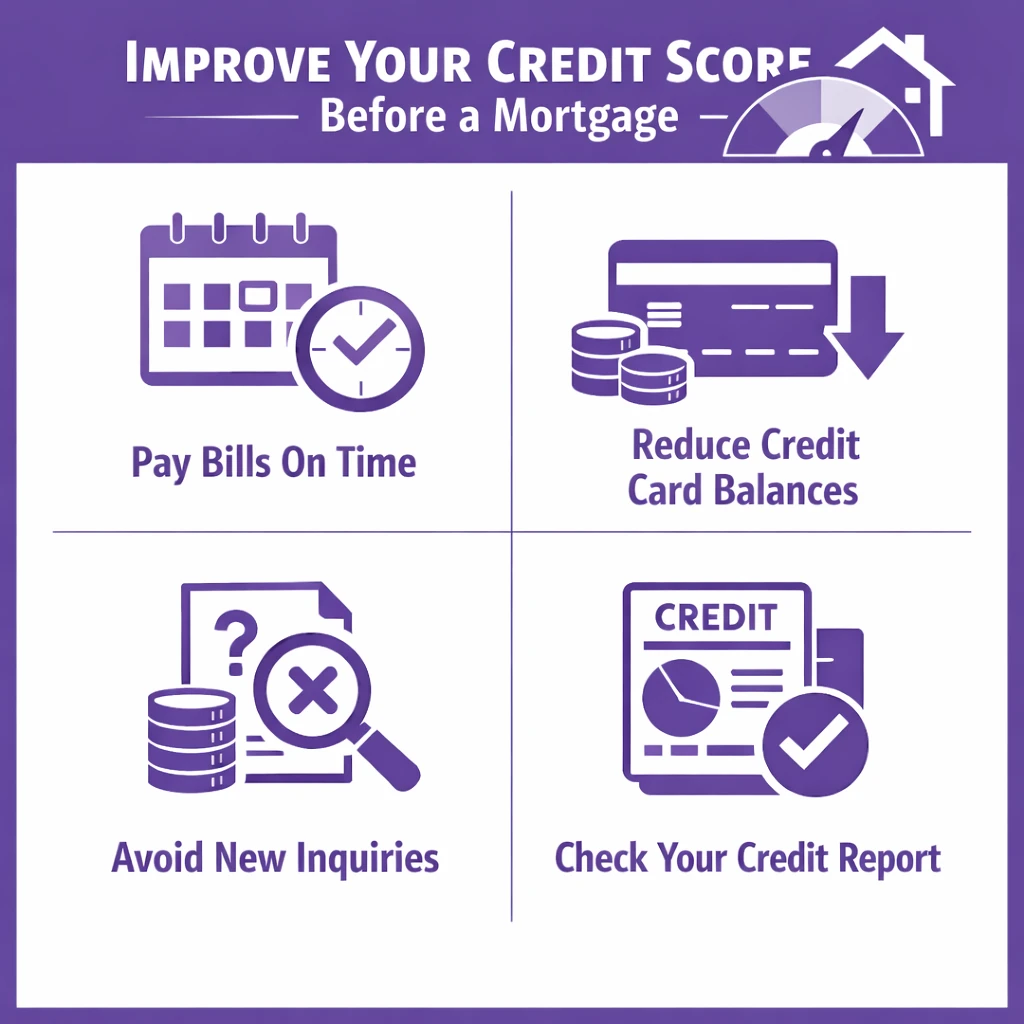
Step 1: Get Current on All Payments—Especially Delinquent Accounts
This is non-negotiable and the most impactful action you can take . Your payment history is 35% of your score.
- Prioritize severely delinquent accounts: A payment that is 90 days late hurts far more than a 30-day late payment. If you’re behind, bring the most delinquent accounts current first .
- At minimum, pay the minimum: If you can’t pay the full balance, at least make the minimum payment to stop the delinquency from progressing and re-establish positive payment history .
- Automate everything: Set up automatic payments or digital reminders so nothing slips through the cracks. Just one missed payment can derail your mortgage plans .
Step 2: Slash Your Credit Utilization Rate
Your utilization ratio is the second-most important factor (30% of your score) and, unlike payment history, changes here can be reflected in your score in as little as 30 days .
- The 30% Rule is the MINIMUM: While it’s broadly recommended to keep your utilization below 30% of your total credit limit, if you’re planning to apply for a mortgage, aim for below 10% for an even better score .
- Watch individual accounts: Maxing out any single credit card is particularly damaging, even if your overall utilization is low .
- Pay multiple times a month: Don’t wait for the statement date. Make payments whenever you have extra cash—say, every time you get paid—to keep the balance from climbing .
- Switch to cash or debit: For big monthly expenses like travel, dining, and shopping, temporarily switch to cash or debit to stop adding to your balance .
- best debt consolidation loans for good credit 2024
Step 3: Check Your Credit Reports for Errors (And Fix Them Fast)
One in 20 consumers has errors on their credit report that affect their score . You are entitled to a free credit report from each of the three major bureaus (Equifax, Experian, TransUnion) weekly at AnnualCreditReport.com .
Look for:
- Late payments that were actually on time
- Duplicate accounts
- Accounts that aren’t yours (potential identity theft)
- Incorrect balances
If you find an error, file a dispute in writing with the credit bureau. This is your legal right under the Fair Credit Reporting Act .
Step 4: Consider Becoming an Authorized User
If you have a trusted family member or friend with excellent credit and a long history of on-time payments, ask if they will add you as an authorized user on their oldest, most spotless credit card . You don’t even need to use the card. The account’s positive history and age will be added to your credit profile, potentially boosting your score in as little as one to two months .
Warning: This only works if the primary user continues to manage the account responsibly. If they max out the card or miss payments, your score will suffer too .
Step 5: Don’t Open or Close Any Accounts
In the months leading up to your mortgage application, freeze your credit .
- No new credit cards: Each application triggers a hard inquiry, which can temporarily lower your score by up to 5 points .
- No store financing: That “10% off” offer for opening a store card? Not worth it if you’re applying for a mortgage soon.
- Don’t close old cards: Closing a credit card reduces your total available credit, which increases your utilization ratio and can lower your score. It also shortens your average account age. Keep old accounts open, even if you’re not using them .
The “Rapid Rescore” Secret: How to Boost Your Score in Days
If you’re in the middle of the home-buying process and discover you’re just a few points shy of a better interest rate, there’s a powerful tool: Rapid Rescoring .
What it is: A service your mortgage lender can purchase directly from the credit bureaus to update your credit profile in 2 to 5 days, rather than waiting the standard 30-60 days for changes to appear .
How it works:
- Your lender identifies the issue (e.g., you paid down a credit card balance or resolved a dispute).
- You provide “clear evidence” of the change—bank statements showing the payment, a satisfaction of judgment, etc.
- Your lender submits this proof directly to the credit bureaus, which update your score immediately .
When Rapid Rescoring makes sense :
- You are only a few points shy of a critical interest rate threshold.
- You have high credit utilization and the cash to pay it down immediately.
- You are in an active home purchase with tight closing deadlines.
- You need to resolve a documented error that is blocking your approval.
Important: You cannot purchase Rapid Rescoring yourself. It must be done through your lender.
how to get out of payday loan debt fast
The Danger Zone: What NOT to Do Before Applying
The “Re-aging” Trap
If you have old, delinquent debt that is nearing the seven-year mark (when negative information falls off your report), be extremely careful. Making a “good faith” payment—even a small one—can accidentally “re-age” the debt, resetting the seven-year reporting clock and keeping that black mark on your record for another seven years .
If an account is six and a half years old, the finish line is in sight. Consult with a housing counselor before making any payment on old debt .
Avoiding Credit Repair Scams
The credit repair industry is rife with fraud. Be wary of any company that :
- Asks for upfront fees. Under the Credit Repair Organizations Act (CROA) and the Telemarketing Sales Rule, companies cannot charge you until they have fully performed the services promised.
- Guarantees they can “erase” accurate negative information. If it’s accurate, it stays until it expires.
- Tells you to create a “new identity” or use an Employer Identification Number (EIN) to hide from your credit history. This is illegal and can lead to federal charges.
The CFPB’s rule is simple: “Don’t pay upfront.” Everything you can do to improve your credit, you can do yourself for free .
does debt settlement hurt your credit score?
Mortgage Options for Lower Credit Scores
If your credit score is below 620, you may still have options .
FHA Loans
Backed by the Federal Housing Administration, FHA loans are designed for borrowers with lower credit.
- Credit score as low as 580 with a 3.5% down payment .
- Credit score as low as 500 with a 10% down payment .
- You’ll need a debt-to-income ratio (DTI) ideally below 43% .
VA Loans
For active military, veterans, and surviving spouses.
- No official minimum credit score, but most lenders look for around 600 .
- 0% down payment required .
- More affordable interest rates as a benefit of service .
USDA Loans
For buyers in designated rural areas.
- Guaranteed by the U.S. Department of Agriculture.
- 0% down payment.
- Income limits apply.
Larger Down Payment
Regardless of your score, a larger down payment can offset lender risk. Putting 20% down allows you to avoid Private Mortgage Insurance (PMI) and may help you qualify even with less-than-perfect credit .
Strategies to Pay Off $30,000 in Student Loans
The Role of Credit Counseling
If you’re struggling to improve your score on your own, consider working with a HUD-approved housing counseling agency . These nonprofit organizations offer free or low-cost counseling on budgeting, debt management, and credit improvement.
A landmark HUD study found that counseled borrowers were 10.4% more likely to contact their lender before missing a payment if they faced financial distress—a key predictor of homeownership sustainability . Organizations like GreenPath Financial Wellness offer NFCC- and HUD-certified experts who can help you review your finances and create a plan .
sinking funds: what are they and how to set them up
Frequently Asked Questions (FAQs)
1. How long does it take to improve a credit score before buying a home?
Most people can see noticeable improvements in three to six months, according to FICO. Some actions, like paying down credit card balances, can positively impact your score in as little as 30 days .
2. What credit score do I need for a conventional mortgage in 2026?
Most lenders still look for a minimum score of 620 for conventional loans, though Fannie Mae has officially eliminated its minimum requirement. Higher scores (740+) will get you the best rates .
3. Will paying off old debt help my score immediately?
It depends. Paying down credit card balances (revolving debt) can help quickly, often within 30-45 days. Paying off an old installment loan may have a less immediate impact. Be careful with old debt nearing the seven-year mark, as discussed above .
4. How does the new VantageScore 4.0 help first-time homebuyers?
VantageScore 4.0 considers rent, utility, and phone payments in its scoring. This allows people with “thin” credit files—who may have been paying housing costs on time for years—to establish a credit score and qualify for mortgages .
5. Can I buy a house with a credit score below 500?
It is very difficult. FHA loans are available with a 500 score, but require a 10% down payment. Most lenders will have their own “overlays” (stricter requirements), so finding a lender willing to work with a score this low will be challenging .
6. What is a “hard inquiry” and how much does it hurt my score?
A hard inquiry occurs when a lender checks your credit as part of a loan application. It can temporarily lower your score by up to 5 points. Multiple inquiries for the same type of loan (like a mortgage) within a 14-45 day window are typically treated as a single inquiry .
7. What is the “28/36 rule” in mortgage lending?
The 28/36 rule is a guideline: your total monthly housing costs (principal, interest, taxes, insurance) should not exceed 28% of your gross monthly income, and your total debt payments (including the mortgage) should not exceed 36% .
8. Should I close credit cards I’m not using before applying for a mortgage?
No. Closing a credit card reduces your total available credit, which can increase your credit utilization ratio and lower your score. It also shortens your average account age. Keep them open, even if you don’t use them .
9. Can a larger down payment compensate for a low credit score?
Yes. A larger down payment reduces the lender’s risk. If you can put 20% or more down, you may qualify for a loan even with a lower score, and you’ll avoid PMI .
10. How do I find a reputable credit counselor?
Look for agencies that are HUD-approved and members of the NFCC (National Foundation for Credit Counseling) . Avoid any company that charges high upfront fees or guarantees specific results .
how to create a budget for beginners step by step
Conclusion: Your Path to Mortgage Approval
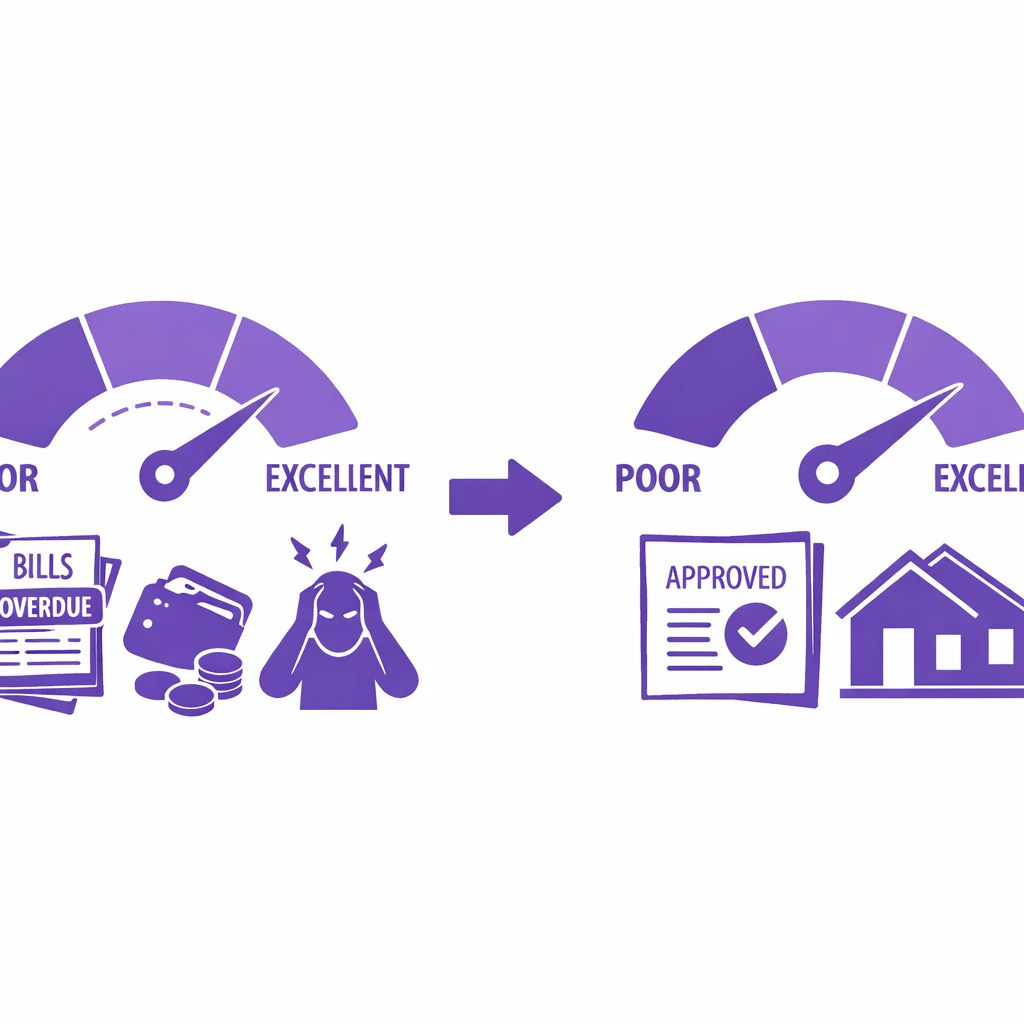
The question of how to improve credit score before applying for a mortgage is really a question of discipline and strategy. In 2026, the path to homeownership is more accessible than ever, thanks to new scoring models that recognize rent payments and trended data. But the fundamentals remain the same: pay your bills on time, keep your credit card balances low, and avoid new debt.
Start by checking your credit reports for free at AnnualCreditReport.com. Know where you stand. If you’re months away from applying, follow the steps in this guide to maximize your score. If you’re weeks away and just need a final push, ask your lender about Rapid Rescoring.
Your dream home is waiting. Make sure your credit is ready for it.