By Peyman Daneshgar
If you are struggling with overwhelming debt, the term “debt settlement” may sound like a lifeline. The promise is alluring: negotiate with your creditors to pay a lump sum that is significantly less than what you owe, and walk away free. But a critical question lingers in the minds of most borrowers: does debt settlement hurt your credit score?
The short answer is yes, debt settlement will negatively impact your credit score. However, the full story is far more nuanced. For many people, the damage has already been done by missed payments long before a settlement is reached. Understanding the precise mechanics of this impact—how many points you might lose, how long it stays on your report, and how it compares to alternatives like bankruptcy—is crucial to making an informed financial decision.
This guide is the most definitive resource available on this topic. We will explore the intricate relationship between debt settlement and your credit score, drawing on expert insights from FICO, VantageScore, and leading credit counselors. By the end, you will know exactly what to expect, how to mitigate the damage, and how to rebuild your credit after settlement.
Table of Contents
- What is Debt Settlement?
- Does Debt Settlement Hurt Your Credit Score? The Direct Impact
- The Hidden Damage: Why Your Score Drops Before the Settlement
- Settled vs. Written-Off: Which is Worse for Your Credit?
- How Long Does Debt Settlement Stay on Your Credit Report?
- Debt Settlement vs. Other Options: A Credit Score Comparison
- The Pros and Cons of Debt Settlement
- How to Rebuild Your Credit After Debt Settlement
- Frequently Asked Questions (FAQs)
- Conclusion: Is Debt Settlement Worth the Credit Score Impact?
What is Debt Settlement?
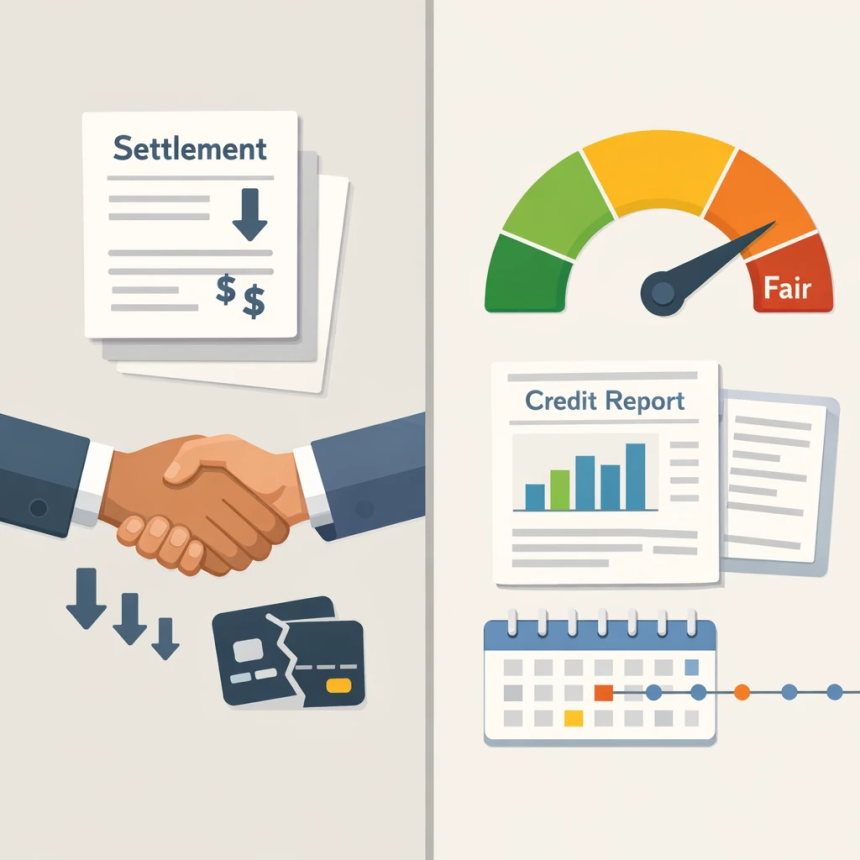
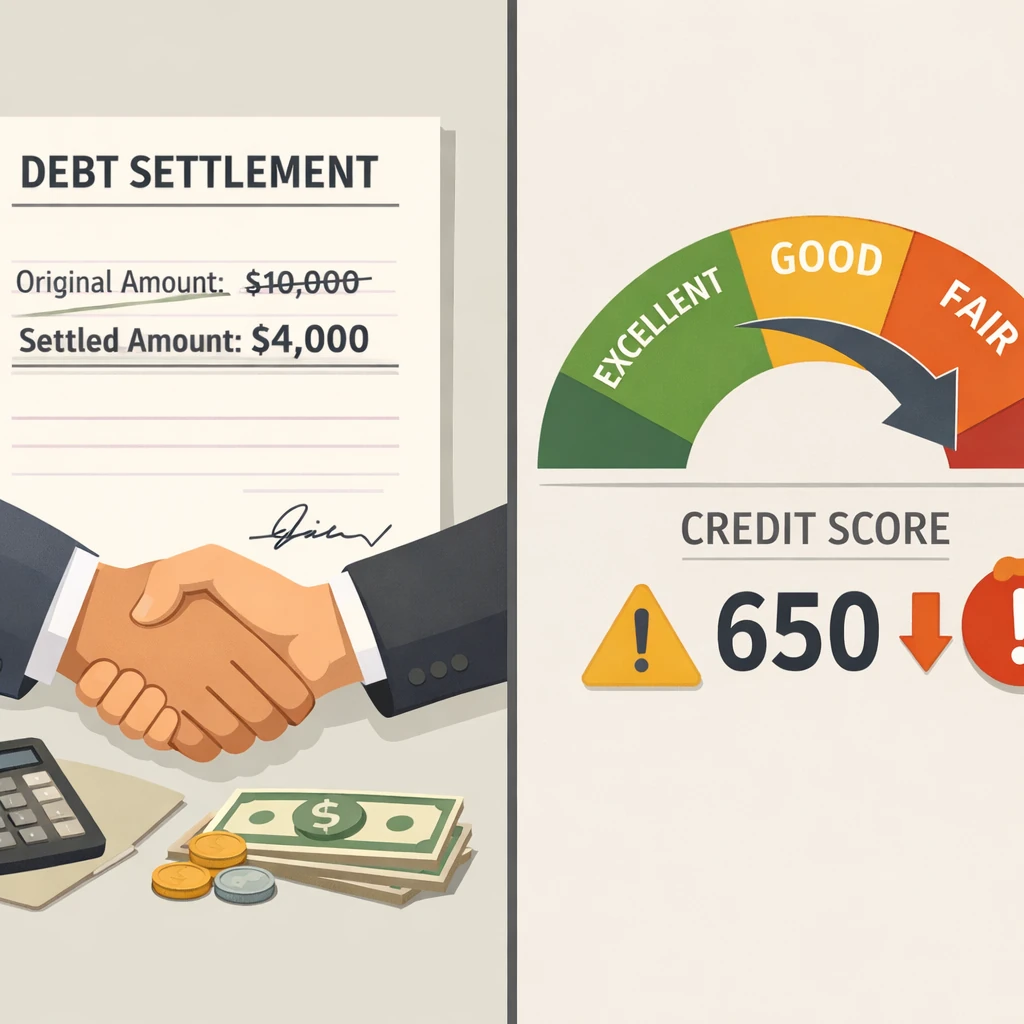
Debt settlement, also known as debt relief or debt negotiation, is a process where you or a third-party company negotiates with your creditors to accept a lump-sum payment that is less than the full amount you owe . For example, if you owe $10,000 on a credit card, a debt settlement company might negotiate with the bank to accept $5,000 as full payment for the debt.
This option is typically reserved for unsecured debt, such as credit cards, personal loans, and medical bills. It is generally pursued by individuals who are already behind on payments and facing severe financial hardship, such as job loss or medical emergencies .
how to start investing with $100 or less
Does Debt Settlement Hurt Your Credit Score? The Direct Impact
To answer the central question directly: Yes, debt settlement does hurt your credit score. However, the act of enrolling in a debt settlement program itself does not directly lower your score. The damage comes from the actions taken during the process and the way the settled account is reported to the credit bureaus .
The “Settled” Status vs. “Paid in Full”
When you pay a debt exactly as agreed, your credit report shows the account as “paid in full” or “closed.” This is positive and reflects financial responsibility . When you settle a debt, the account is typically marked as “settled,” “settled in full,” or “settled for less than the full balance” .
This status is a red flag to future lenders. It signals that you did not fulfill your original contractual obligation. While it is better than having an unpaid debt in collections, it is significantly worse than paying in full . According to FICO’s vice president, Ethan Dornhelm, choosing to settle for less than the full amount is “regarded negatively by the FICO scoring model” .
best stocks for dividend income for beginners
Quantifying the Damage: How Many Points Will You Lose?
It is impossible to give an exact number because the impact varies based on your unique credit profile. However, experts provide clear estimates:
- Potential Drop: Your credit score can drop by 100 points or more as a result of the delinquencies and the subsequent settlement .
- Higher Scores, Bigger Drops: If you have a high credit score (e.g., 700 or above), the drop will be more dramatic—potentially 200 points or more—because you have further to fall. If your score is already below 700, the drop might be less severe, around 100 points or more .
- Final Destination: After settlement, your score will almost certainly land in the “subprime” range (580-619) or “deep subprime” range (below 580) .
The Hidden Damage: Why Your Score Drops Before the Settlement
One of the biggest misconceptions about debt settlement is that the “settlement” itself is the primary cause of the credit score drop. In reality, the most significant damage usually occurs months before a settlement is ever reached.
The Required Delinquency
Creditors have no incentive to settle a debt that is being paid on time. To have leverage in negotiations, you must be in a state of default. Debt settlement companies typically require you to stop making payments to your creditors entirely .
You will be instructed to save money in a dedicated account while the company negotiates. During this period—which can last many months—you are missing payments.
how to invest in S&P 500 from Europe (or UK, Germany, etc.)
Late Payments and Charge-Offs
These missed payments are reported to the credit bureaus, and they devastate your score.
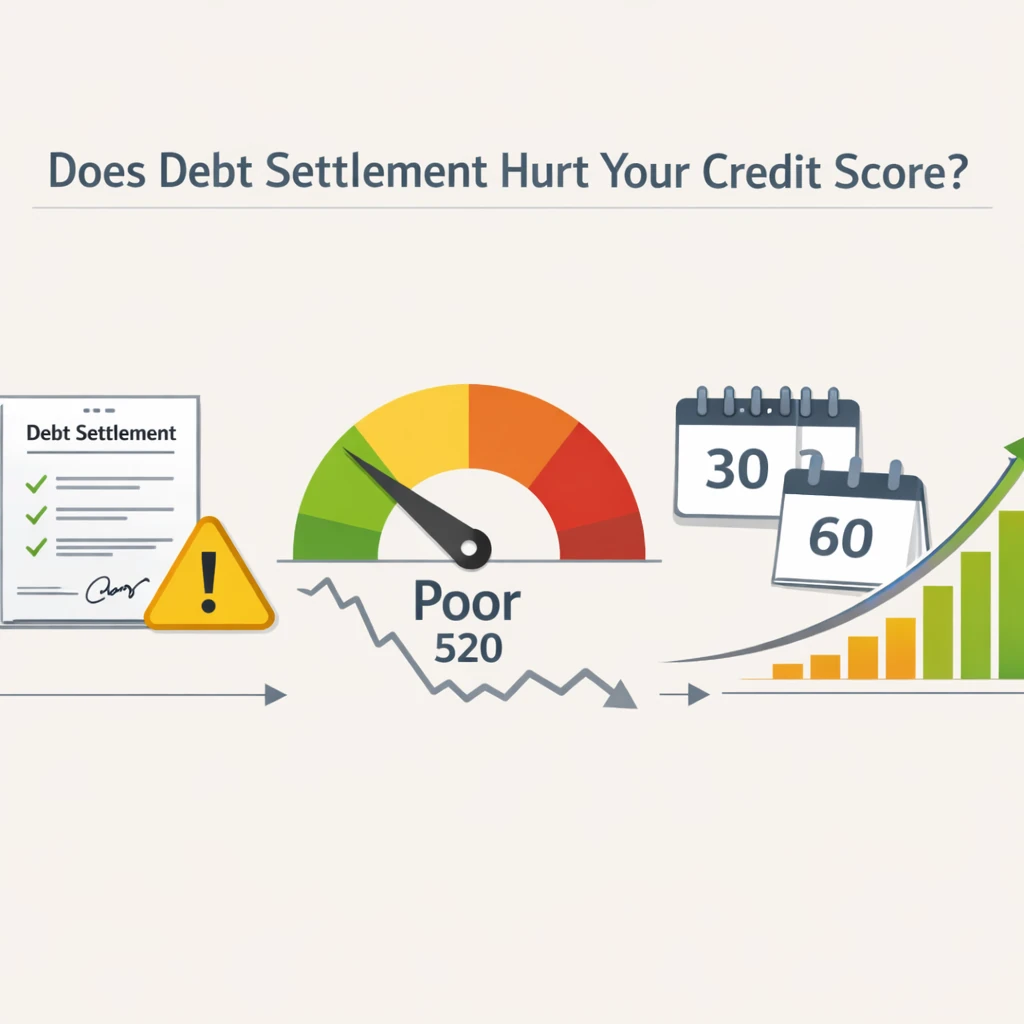
- 30 Days Late: Your score begins to drop.
- 60-90 Days Late: The damage intensifies.
- 180 Days Late (Charge-Off): At this point, the creditor will likely “charge off” the debt, meaning they write it off as a loss. A charge-off is a severe negative mark that indicates you are unlikely to pay .
By the time a settlement is actually reached, your credit score has already plummeted. The settlement itself merely confirms to future lenders that you did not repay the full amount, but the heavy lifting of the damage was done by the months of missed payments .
Is Investing in Cryptocurrency Safe for Beginners?
Settled vs. Written-Off: Which is Worse for Your Credit?
You may encounter terms like “written-off” or “charged-off” on your credit report. It is important to understand the hierarchy of damage:
- Written-Off / Charged-Off: This is the worst status. It indicates the lender has given up on collecting the debt and removed it from their books as a loss. It signifies severe default and tells future lenders that you were highly unreliable .
- Settled: This is less severe than a charge-off, but still negative. It shows that while you were in distress, you at least made an effort to repay a portion of the debt. Sachin Seth, Regional MD at CRIF, notes that “a ‘settled’ status is generally seen as slightly less severe than a complete write-off, since at least part of the dues were repaid” .
- How to Choose Your First Mutual Fund
In short: Paid in Full > Settled > Written-Off/Default.
How Long Does Debt Settlement Stay on Your Credit Report?
Negative information, including debt settlements, does not stay on your credit report forever. Under the Fair Credit Reporting Act (FCRA), a settled account can remain on your credit report for seven years from the date of the first missed payment that led to the default .
This means if you missed your first payment in January 2024, the settlement mark will generally disappear from your report in January 2031. While the mark remains, its impact on your score will gradually lessen over time, especially if you establish a pattern of positive credit behavior afterward .
Debt Settlement vs. Other Options: A Credit Score Comparison
To truly understand if debt settlement is right for you, you must compare it to the alternatives.
Debt Settlement vs. Bankruptcy
Bankruptcy is often the only alternative for those with overwhelming debt.
- Chapter 7 Bankruptcy: Stays on your credit report for 10 years.
- Chapter 13 Bankruptcy: Stays on your credit report for 7 years .
- Comparison: While both are devastating, some experts argue that debt settlement is “better than bankruptcy, but [bankruptcy is] probably a very close second” . Bankruptcy offers a legal “fresh start” but is more public and can affect your ability to get certain jobs. However, because bankruptcy wipes out debt immediately (Chapter 7) or via a court order (Chapter 13), some argue it allows you to start rebuilding credit sooner than a prolonged settlement process .
Debt Settlement vs. Debt Management Plans (DMPs)
A Debt Management Plan, offered by nonprofit credit counseling agencies, is vastly different.
- Impact on Credit: A DMP generally has a neutral or positive impact on your credit, provided you make your monthly payments on time .
- How it Works: You pay the full amount of your debt, but the agency negotiates lower interest rates and waived fees. Because you are paying in full, there is no “settled” status on your report.
Debt Settlement vs. Debt Consolidation
Debt consolidation involves taking out a new loan to pay off existing debts.
- Impact on Credit: Initially, your score may dip slightly due to a hard inquiry. However, if you use the loan to pay off credit cards (lowering your utilization) and make on-time payments, your score will likely improve .
- Comparison: This is a far healthier option for your credit score, but it requires good credit to qualify for a low interest rate.
- investment mistakes to avoid in your 20s
The Pros and Cons of Debt Settlement
Before proceeding, weigh these factors carefully .
Pros:
- Avoid Bankruptcy: It can help you avoid the legal proceedings and longer reporting period of bankruptcy .
- Reduce Total Debt: You may pay significantly less than what you owe, sometimes 50% or less of the balance .
- Resolution: It provides a definitive end to the stress of dealing with specific debts.
Cons:
- Severe Credit Damage: Your score will drop significantly (100-200+ points) .
- Long Reporting Period: The “settled” status remains for seven years .
- Taxable Income: The IRS considers forgiven debt over $600 as taxable income. You may receive a 1099-C form and owe taxes on the amount that was written off .
- Fees: Debt settlement companies charge hefty fees, often a percentage of the enrolled debt or the amount saved .
- No Guarantee: Creditors are not obligated to settle. You could end up deeper in debt with a ruined credit score and nothing to show for it .
How to Rebuild Your Credit After Debt Settlement
If you have gone through debt settlement, your financial life is not over. Credit scores are designed to reflect your current behavior. Here is a step-by-step plan to rebuild .
1. Pay All Remaining Bills On Time
Payment history is the most significant factor in your credit score (35%). From this point forward, paying every single bill—rent, utilities, car loans—on time is non-negotiable .
2. Get a Secured Credit Card
After a settlement, you likely won’t qualify for a traditional credit card. A secured credit card requires a cash deposit (e.g., $200) which becomes your credit limit. Use it for small purchases and pay the balance in full every month. This rebuilds positive payment history .
3. Keep Credit Utilization Low
Once you have credit again, keep your balances low. Aim to use less than 30% of your available credit limit. For a card with a $1,000 limit, keep your balance below $300. This demonstrates you are not overly reliant on credit .
4. Monitor Your Credit Reports for Errors
You are entitled to a free credit report from AnnualCreditReport.com. Check your reports from Equifax, Experian, and TransUnion regularly. Ensure that settled accounts are accurately reported and that no old, incorrect information is dragging you down .
50/30/20 rule calculator excel template free
Frequently Asked Questions (FAQs)
1. Will my credit score go up after settlement?
No, not immediately. A settlement is a negative mark. However, once the debt is resolved, you stop accruing new late payments. Over time, as you add positive payment history with other accounts, your score will begin to recover .
2. Is a settlement worse than a late payment?
A settlement is the result of multiple late payments. One 30-day late payment is damaging, but a settlement implies you were 180+ days late and then failed to pay in full. The cumulative effect of the missed payments and the settlement is far worse than a single isolated late payment .
3. Can I remove a settled account from my credit report early?
No. If the information is accurate, it will remain for the full seven years. Some companies promise “pay for delete,” but this is rarely successful with accurate information and is against the policy of most major lenders and credit bureaus .
4. Does debt settlement hurt your credit score more than doing nothing?
Ignoring the debt will likely result in charge-offs, collections, and potentially a lawsuit. A settlement at least resolves the debt. A resolved debt, even if settled, is generally viewed more favorably by future lenders than an open, unpaid collection .
5. Can I buy a house after debt settlement?
Yes, but not immediately. Most mortgage lenders will want to see at least two years of clean credit history after a major negative event like a settlement or bankruptcy. The higher your score recovers and the more time has passed, the better your chances .
6. How do I know if a debt settlement company is legitimate?
Look for accreditation from the American Fair Credit Council (AFCC) or the International Association of Professional Debt Arbitrators (IAPDA). Be wary of companies that charge upfront fees (illegal in many cases), guarantee results, or tell you to stop communicating with creditors without explaining the risks .
7. What is the difference between “settled” and “closed”?
“Closed” simply means the account is no longer active for new charges. It can be closed in good standing (paid in full) or closed with a negative status. “Settled” specifically refers to how the balance was resolved—for less than the full amount owed .
how to save money on a tight income
Conclusion: Is Debt Settlement Worth the Credit Score Impact?
So, does debt settlement hurt your credit score? Unquestionably, yes. It is a severe negative event that will stay on your record for seven years and can drop your score by over 100 points. The process itself requires you to miss payments, which destroys your score long before the settlement is finalized.
However, this question must be asked in the right context. By the time you are considering debt settlement, your credit score is likely already in tatters due to missed payments, charge-offs, and collection activity. You are choosing between bad options.
Debt settlement is worth it if:
- You are already severely behind on payments.
- You cannot afford a Debt Management Plan or qualify for a consolidation loan.
- You have a lump sum of money available to settle and want to avoid the 10-year mark of bankruptcy.
Debt settlement is not worth it if:
- Your accounts are still current. Exhaust all other options first, including hardship programs and credit counseling.
- You can afford to pay your debts in full over time.
Ultimately, the decision hinges on your specific financial reality. Use this guide to weigh the consequences carefully, and consider speaking with a nonprofit credit counselor to explore all your options before making a choice that will impact your financial future for the next seven years.