Author: Peyman Daneshgar
Email: daneshgar781@gmail.com
Table of Contents
- Introduction: The Cryptocurrency Phenomenon
- Understanding Cryptocurrency: A Beginner’s Foundation
- The Safety Spectrum: Risks vs. Rewards
- Psychological Preparedness: The Beginner’s Mindset
- Technical Safety: Wallets, Exchanges, and Security
- Strategic Safety: Investment Approaches for Beginners
- Regulatory Landscape and Legal Safety
- Common Beginner Pitfalls and How to Avoid Them
- Case Studies: Lessons from Success and Failure
- Future-Proofing Your Crypto Journey
- Frequently Asked Questions (FAQs)
- Conclusion: Your Path Forward
how to invest in S&P 500 from Europe (or UK, Germany, etc.)
1. Introduction: The Cryptocurrency Phenomenon
Cryptocurrency has emerged as one of the most transformative financial innovations of the 21st century, captivating investors worldwide with its potential for substantial returns and its decentralized nature. For beginners asking “is investing in cryptocurrency safe for beginners?”, the answer is neither simple nor universal. The safety of investing in cryptocurrency for beginners depends on numerous factors including knowledge, strategy, risk tolerance, and timing. This comprehensive guide will explore every dimension of this question, providing you with the tools to make informed decisions.
The cryptocurrency market, valued at over $1 trillion at the time of writing, represents both unprecedented opportunity and significant risk. Unlike traditional markets, crypto operates 24/7, is highly volatile, and exists in an evolving regulatory landscape. For beginners, navigating this space requires more than just capital—it demands education, caution, and strategic thinking.
When considering is investing in cryptocurrency safe for beginners, we must acknowledge that safety exists on a spectrum. With proper education and precautions, beginners can mitigate many risks. Without them, the crypto space can indeed be perilous. This article will serve as your roadmap to understanding those risks and implementing safety measures.
best stocks for dividend income for beginners
2. Understanding Cryptocurrency: A Beginner’s Foundation
2.1 What is Cryptocurrency?
Cryptocurrency is a digital or virtual form of currency that uses cryptography for security, making it extremely difficult to counterfeit. Unlike traditional currencies issued by governments (fiat currencies), cryptocurrencies operate on decentralized networks based on blockchain technology—a distributed ledger enforced by a disparate network of computers.
2.2 How Blockchain Technology Works
At its core, blockchain is a chain of blocks containing transaction data. Each block is connected to those before and after it, making it difficult to tamper with a single record without altering all subsequent blocks, which requires network consensus. This transparency and security form the foundation of cryptocurrency safety.
2.3 Major Cryptocurrencies for Beginners
- Bitcoin (BTC): The first and most valuable cryptocurrency, often called “digital gold.”
- Ethereum (ETH): More than a currency, a platform for decentralized applications and smart contracts.
- Stablecoins (USDT, USDC): Cryptocurrencies pegged to stable assets like the U.S. dollar, offering reduced volatility.
Understanding these fundamentals is crucial when evaluating is investing in cryptocurrency safe for beginners. Without this knowledge, you’re effectively navigating unknown territory without a map.
how to start investing with $100 or less

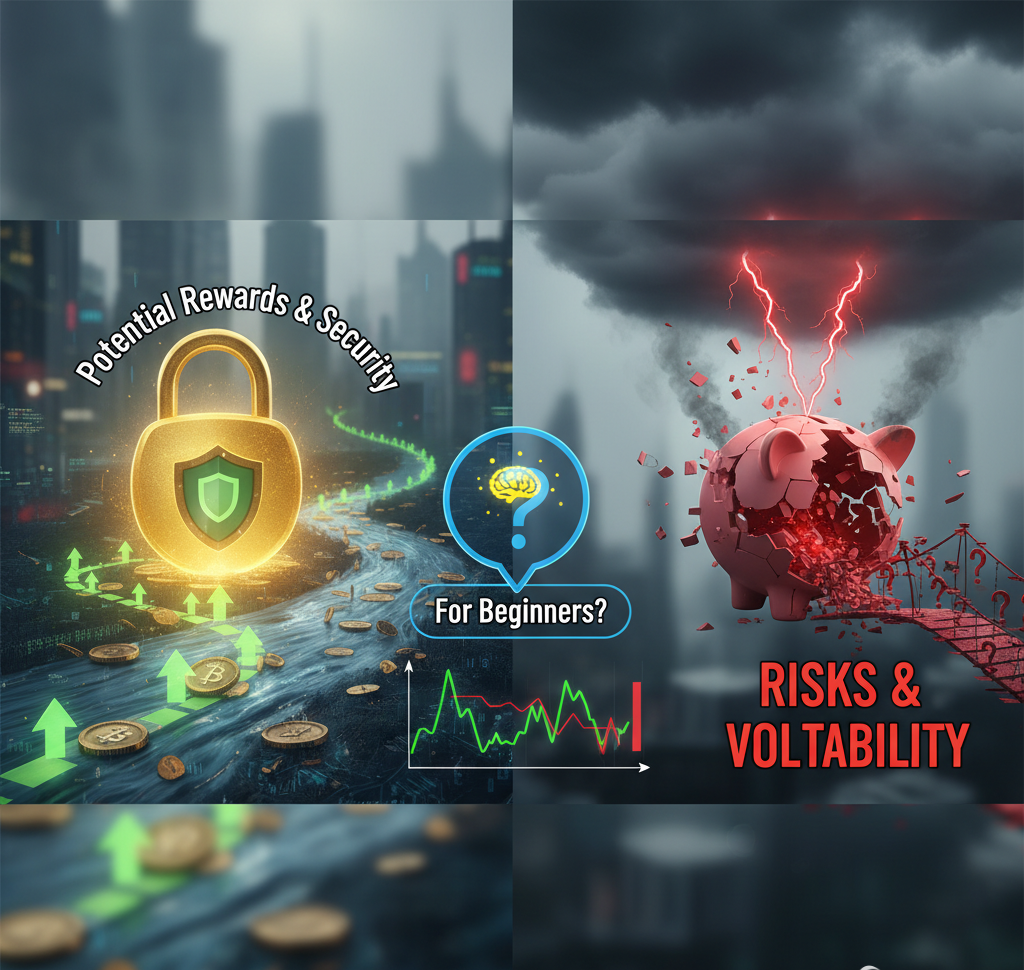
3. The Safety Spectrum: Risks vs. Rewards
3.1 Potential Rewards of Cryptocurrency Investing
- High Return Potential: Historically, cryptocurrencies have delivered extraordinary returns, though past performance never guarantees future results.
- Decentralization: Freedom from traditional banking systems and government control.
- Accessibility: 24/7 markets accessible to anyone with an internet connection.
- Portfolio Diversification: Low correlation with traditional assets can reduce overall portfolio risk.
3.2 Quantifiable Risks for Beginners
- Extreme Volatility: Prices can swing 20% or more in a single day.
- Regulatory Uncertainty: Changing government policies worldwide can dramatically impact value.
- Security Vulnerabilities: Exchange hacks, wallet compromises, and phishing attacks.
- Lack of Investor Protections: Unlike bank accounts, crypto investments typically have no FDIC insurance.
- Market Manipulation: “Pump and dump” schemes and whale manipulations are prevalent.
When asking is investing in cryptocurrency safe for beginners, you must weigh these risks against potential rewards based on your personal circumstances.
best robo-advisors for beginners 2024 comparison
4. Psychological Preparedness: The Beginner’s Mindset
4.1 Emotional Discipline in Crypto Investing
The psychological aspect is often overlooked when considering is investing in cryptocurrency safe for beginners. Crypto markets test emotional resilience through:
- FOMO (Fear Of Missing Out): Leading to impulsive decisions
- Panic Selling: During market downturns
- Overconfidence: After early successes
- Attachment Bias: Holding losing positions too long
4.2 Developing a Risk-Aware Mindset
Beginners should cultivate:
- Realistic Expectations: Not “getting rich quick” but gradual wealth building
- Loss Acceptance: Only investing what you can afford to lose completely
- Patience: Understanding that crypto investing is often a long-term game
- Continuous Learning: The crypto space evolves rapidly; your education should too
Safety begins in the mind. A prepared investor is a safer investor when considering is investing in cryptocurrency safe for beginners.
ETF vs index fund: which is better for a beginner?
5. Technical Safety: Wallets, Exchanges, and Security
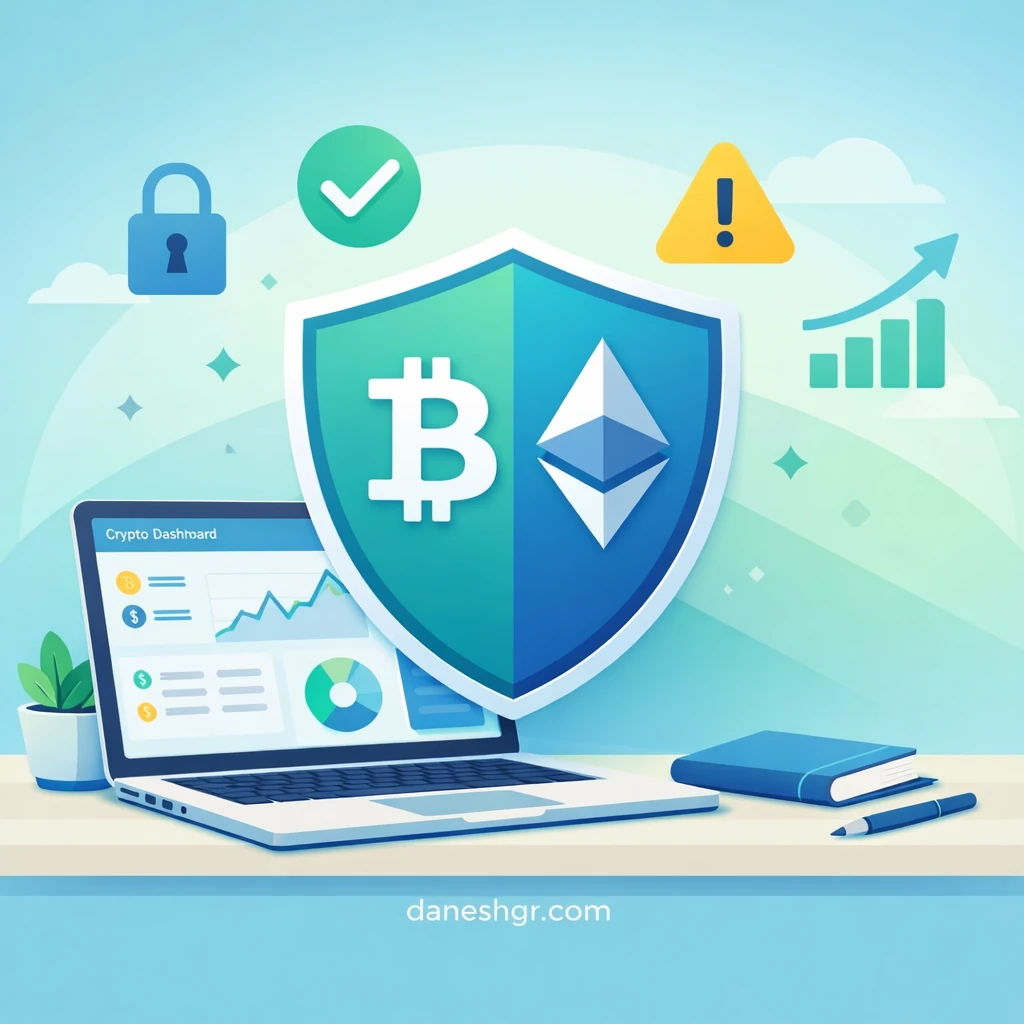
5.1 Choosing Secure Wallets
When evaluating is investing in cryptocurrency safe for beginners, wallet security is paramount:
Hot Wallets (Connected to Internet):
- Pros: Convenient for frequent trading
- Cons: Vulnerable to online attacks
- Safety Tips: Use only for small amounts, enable 2FA, keep software updated
Cold Wallets (Hardware/Paper Wallets):
- Pros: Excellent security against online threats
- Cons: Less convenient, risk of physical loss
- Recommendation for Beginners: Ledger or Trezor for storing significant amounts
5.2 Selecting Reputable Exchanges
- Regulatory Compliance: Choose exchanges registered with relevant authorities
- Security History: Research past security incidents and responses
- Insurance Funds: Some exchanges maintain insurance for hack incidents
- User Control: Prefer exchanges that allow withdrawal to personal wallets
5.3 Essential Security Practices
- Two-Factor Authentication (2FA): Always enable, preferably using authenticator apps
- Strong Password Management: Unique, complex passwords for each platform
- Phishing Awareness: Never click suspicious links, always verify URLs
- Regular Software Updates: Keep all crypto-related software current
- Backup Strategies: Secure, multiple-location backups of wallet keys
These technical safeguards significantly impact is investing in cryptocurrency safe for beginners.
6. Strategic Safety: Investment Approaches for Beginners
6.1 Dollar-Cost Averaging (DCA)
One of the safest strategies when considering is investing in cryptocurrency safe for beginners is Dollar-Cost Averaging—investing fixed amounts at regular intervals regardless of price. This approach:
- Reduces impact of volatility
- Eliminates timing anxiety
- Builds position gradually
- Is psychologically easier for beginners
6.2 Portfolio Allocation Principles
Financial advisors typically recommend:
- Conservative: 1-5% of total investment portfolio in crypto
- Moderate: 5-10% allocation for those with higher risk tolerance
- Aggressive: 10%+ only for those who can absorb complete loss
6.3 Diversification Within Crypto
Don’t put all funds in one cryptocurrency:
- Large Caps (60-70%): Bitcoin, Ethereum—more established, relatively stable
- Mid Caps (20-30%): Projects with proven utility but smaller market cap
- Small Caps (0-10%): Higher risk, higher potential reward projects
6.4 Risk Management Techniques
- Stop-Loss Orders: Automatically sell at predetermined price levels
- Take-Profit Targets: Secure gains at specific price points
- Position Sizing: Limiting any single investment to 1-5% of crypto portfolio
- Regular Rebalancing: Maintaining target allocations as markets move
Strategic approaches fundamentally determine is investing in cryptocurrency safe for beginners.
7. Regulatory Landscape and Legal Safety
7.1 Global Regulatory Environment
The regulatory landscape significantly impacts is investing in cryptocurrency safe for beginners:
United States:
- SEC classifying certain cryptos as securities
- IRS treating crypto as property for tax purposes
- Evolving legislation (e.g., proposed crypto bills in Congress)
European Union:
- MiCA (Markets in Crypto-Assets) regulation providing clarity
- Travel Rule requirements for transactions over €1,000
Asia:
- Varied approaches from China’s bans to Singapore’s licensing frameworks
7.2 Tax Implications and Compliance
- Capital Gains: Most jurisdictions tax crypto profits
- Reporting Requirements: Many countries require disclosure above certain thresholds
- Record Keeping: Essential for accurate tax reporting and dispute resolution
7.3 Legal Protections and Their Limitations
- Consumer Protection Laws: Vary widely by jurisdiction
- Dispute Resolution: Often difficult with decentralized platforms
- Recovery Options: Limited in cases of fraud or theft
Understanding regulations is crucial when assessing is investing in cryptocurrency safe for beginners.
how to open a brokerage account for the first time
8. Common Beginner Pitfalls and How to Avoid Them
8.1 Emotional Trading Mistakes
- Chasing pumps: Buying after massive price increases
- Panic selling: Dumping during corrections
- Revenge trading: Trying to immediately recover losses
- Solution: Develop and stick to a written trading plan
8.2 Security Oversights
- Sharing private keys or seed phrases
- Using public WiFi for crypto transactions
- Failing to test backup and recovery processes
- Solution: Implement security checklist before any investment
8.3 Informational Vulnerabilities
- Following “influencers” without due diligence
- Falling for “guaranteed returns” schemes
- Investing in projects without understanding fundamentals
- Solution: Cross-reference multiple credible sources
8.4 Financial Overextension
- Investing emergency funds or essential savings
- Using leverage without understanding risks
- Taking loans to invest in crypto
- Solution: Establish clear investment boundaries based on risk capacity
Avoiding these pitfalls directly influences is investing in cryptocurrency safe for beginners.
9. Case Studies: Lessons from Success and Failure
9.1 Success Story: The Patient DCA Investor
Sarah, a 32-year-old teacher, began investing $100 monthly in Bitcoin in 2019 through a regulated exchange. She:
- Used only discretionary income
- Stored coins in a hardware wallet
- Never attempted to time the market
- Continued investing through 2022-2023 bear market
By 2024, her $6,000 investment grew to approximately $18,000 despite volatility.
Lesson: Consistency and patience often outperform attempted market timing.
9.2 Cautionary Tale: The Impulsive FOMO Trader
Mike, a 28-year-old software developer, invested $20,000 in a trending meme coin in 2021 after seeing social media hype. He:
- Invested a significant portion of his savings
- Bought near the all-time high
- Panic-sold during a 60% downturn
- Lost approximately $12,000 in two weeks
Lesson: Emotional investing without research frequently leads to significant losses.
These cases illustrate how personal approach determines is investing in cryptocurrency safe for beginners.
what is dollar-cost averaging and how to set it up
10. Future-Proofing Your Crypto Journey
10.1 Ongoing Education
- Follow reputable sources: Coindesk, Cointelegraph, academic papers
- Understand technological developments: Proof-of-stake, layer-2 solutions, zero-knowledge proofs
- Monitor regulatory changes: Subscribe to regulatory updates
- Join communities cautiously: Seek diverse perspectives, beware echo chambers
10.2 Adaptive Strategies
- Periodic strategy reviews: Quarterly assessment of investment approach
- Technology updates: Adopt new security measures as they emerge
- Portfolio re-evaluation: Adjust holdings based on changing fundamentals
- Exit planning: Define clear conditions for reducing or exiting positions
10.3 Building Resilience
- Financial buffers: Maintain non-crypto emergency funds
- Psychological support: Trading journals, accountability partners
- Diversification beyond crypto: Traditional investments as foundation
- Skill development: Understanding blockchain technology itself
Future-proofing enhances safety when considering is investing in cryptocurrency safe for beginners.
11. Frequently Asked Questions (FAQs)
Q1: What percentage of my portfolio should be in cryptocurrency as a beginner?
A: Most financial advisors recommend beginners allocate 1-5% of their total investment portfolio to cryptocurrency, increasing only as knowledge and risk tolerance grow. Never invest essential funds like emergency savings or retirement money.
Q2: How much money do I need to start investing in cryptocurrency?
A: You can start with as little as $10-$50 on many platforms thanks to fractional purchasing. The amount matters less than the percentage of your overall finances and your commitment to learning.
Q3: Which cryptocurrency is safest for beginners?
A: Bitcoin and Ethereum are generally considered the safest entry points due to their established track records, larger market capitalizations, and greater liquidity. Stablecoins can also be safe for learning the mechanics without price volatility.
Q4: How do I securely store my cryptocurrency?
A: For small amounts you trade frequently, reputable exchange wallets with 2FA are sufficient. For larger holdings or long-term storage, hardware wallets like Ledger or Trezor provide optimal security. Never share private keys or seed phrases.
Q5: What are the tax implications of cryptocurrency investing?
A: In most jurisdictions, cryptocurrency is subject to capital gains tax when sold for profit. Some countries also tax crypto-to-crypto trades. Consult a tax professional familiar with crypto in your country and maintain detailed transaction records.
Q6: How can I spot cryptocurrency scams?
A: Red flags include guaranteed returns, pressure to invest quickly, unsolicited offers, complex jargon without clear explanations, and projects without verifiable team members or whitepapers. Remember: if it seems too good to be true, it probably is.
Q7: Should I invest in Bitcoin or altcoins as a beginner?
A: Beginners should typically start with Bitcoin (and possibly Ethereum) to understand the market dynamics before considering altcoins. The altcoin market carries significantly higher risk and requires more research.
Q8: How volatile is cryptocurrency compared to traditional investments?
A: Extremely volatile. While the S&P 500 might experience 10% annual volatility, cryptocurrencies regularly experience daily swings of 5-20%. This volatility presents both opportunity and risk, requiring appropriate psychological and financial preparation.
Q9: Can I lose all my money investing in cryptocurrency?
A: Yes, it’s possible to lose your entire investment through price declines, exchange failures, security breaches, or poor investment choices. This is why you should only invest money you can afford to lose completely and implement strict security measures.
Q10: How much time do I need to manage cryptocurrency investments?
A: This varies by approach. Passive investors using dollar-cost averaging might spend just a few hours monthly. Active traders might spend hours daily. As a beginner, plan for several hours weekly for education and portfolio management.
how to stop impulse buying online
12. Conclusion: Your Path Forward
So, is investing in cryptocurrency safe for beginners? The answer is complex and personal. Cryptocurrency investing carries inherent risks that differ significantly from traditional investments. However, with comprehensive education, strategic planning, stringent security measures, and psychological preparedness, beginners can mitigate many risks and participate in this innovative asset class more safely.
Safety in cryptocurrency investing isn’t binary—it exists on a spectrum that you influence through your choices. The most dangerous approach is uninformed investing; the safest is deliberate, educated, and measured participation.
As you begin your cryptocurrency journey:
- Start with education before significant investment
- Implement security measures before acquiring assets
- Begin with small amounts to learn without excessive risk
- Develop and follow a written plan to counter emotional impulses
- Continuously reassess your knowledge, strategy, and the evolving landscape
Cryptocurrency represents a frontier of financial innovation with transformative potential. While the path contains hazards unknown in traditional finance, the prepared beginner can navigate this space with informed caution. The question isn’t simply “is investing in cryptocurrency safe for beginners?” but rather “how can I make my cryptocurrency investing journey as safe as possible given the inherent risks?”
Your safety ultimately depends less on the market’s nature and more on your preparation, patience, and persistence. Begin not with dreams of instant wealth, but with commitment to gradual understanding. Build not just a portfolio, but knowledge and resilience. In doing so, you transform the question from “is investing in cryptocurrency safe for beginners?” to “how can I responsibly participate in this financial evolution?”
The cryptocurrency landscape will continue evolving, presenting both new opportunities and new challenges. Your journey as a beginner today is the foundation for your participation tomorrow. Approach it not with blind enthusiasm or excessive fear, but with the balanced perspective of an informed investor recognizing both potential and peril.