
By: Peiman Daneshgar | Email: daneshgar781@gmail.com
Published: February 19, 2026
Table of Contents
- How Long Do Late Payments Stay on Your Credit Report? (The Truth Nobody Tells You)
- Introduction: The Pit in Your Stomach
- What This Article Will Actually Give You
- Part 1: The 30-Day Cliff—When the Damage Actually Starts
- Part 2: The Seven-Year Clock—How It Really Works
- Part 3: How Much Damage Are We Talking About?
- Part 4: Can You Actually Remove a Late Payment?
- Part 5: What Happens After 90 Days? Charge-Offs and Collections
- Part 6: Your Comeback Plan—Rebuilding After a Late Payment
- Part 7: How to Never Miss Another Payment
- Frequently Asked Questions
- The Emotional Bottom Line
Introduction: The Pit in Your Stomach
I know that feeling.
You’re going about your day, maybe checking your email, when you see it: a notification from your credit card company. Or worse, you just applied for something—a car loan, an apartment, maybe even a job—and they pulled your credit. And there it is. A late payment. Staring back at you like a neon sign that says “IRRESPONSIBLE.”
Your first thought: “How long is this going to haunt me?”
You’ve probably already Googled this. You saw the number “seven years” pop up and your stomach dropped. Seven years? That’s like a lifetime. That’s longer than some marriages. That’s long enough to graduate high school, college, and start a career.
how much house can I afford on a $70,000 salary?
And now you’re sitting there, running through the mental replay of that missed payment. Maybe you forgot. Maybe you were short that month. Maybe life just got chaotic and the bill slipped through the cracks. Whatever happened, you’re now staring down a seven-year sentence and wondering if your financial life is permanently ruined .
🧠 Pause for a Second:
Before you spiral into a full-blown panic, take a breath. I’m going to tell you something that most “credit expert” articles won’t: Seven years sounds scary, but it’s not the whole story. The impact fades. The score recovers. And in some cases, you can actually fight back. Keep reading—because by the end of this, you’ll know exactly where you stand and what you can do about it.
What This Article Will Actually Give You
Here’s the deal. Most articles will give you the basic answer—”seven years”—and leave you there, drowning in anxiety.
This one is different.
By the time you finish reading, you’ll know:
- The exact date the clock starts ticking (hint: it’s not when you missed the payment) .
- Why the damage might be smaller than you think—especially if your credit was already good (or already bad) .
- The “goodwill letter” strategy that actually gets late payments removed sometimes .
- What happens after 90 days (charge-offs, collections, and why you shouldn’t panic) .
- Exactly how to rebuild so that by the time that seven years is up, your score is already excellent .
This isn’t theory. This is the playbook.
first-time home buyer grants and programs 2024
Part 1: The 30-Day Cliff—When the Damage Actually Starts
Let’s clear up the biggest misconception first.
Missing a payment by a day or two does NOT immediately wreck your credit.
I know, that’s probably not what you’ve heard. But here’s how it actually works:
Most creditors have something called a grace period. It’s usually about 21-30 days after your due date . If you pay during that window, you might get hit with a late fee (anywhere from $25 to $40, depending on the card). But your credit report? Untouched.
The real trouble starts at 30 days past due .
That’s the magic number. At 30 days, the creditor can report the delinquency to the credit bureaus. And once it’s reported, that’s when it becomes a permanent mark on your history .
The 29-Day Window of Opportunity
Here’s what this means for you:
If you’re reading this and you missed a payment yesterday or last week, you might still be in the clear. Pay it right now. Today. Before that 30-day mark hits. If you do, you’ll pay a late fee, but your credit score won’t take the hit .
But—and this is important—once that 30-day line is crossed, the damage is done. The mark goes on your report, and that’s when the seven-year clock starts ticking .
is debt consolidation a good idea?
🤔 Quick Question:
When did you miss that payment? Go check your calendar right now. If it’s been less than 30 days, stop reading and go pay it. Seriously. I’ll wait.
Part 2: The Seven-Year Clock—How It Really Works
Okay, so you’re past the 30-day mark. The damage is done. Now you’re wondering: seven years from when?
This is where it gets a little technical, but stay with me—it matters.
What “Seven Years” Actually Means
Late payments stay on your credit report for seven years from the date of the first missed payment . Not from the date you paid it. Not from the date you noticed it. From the original delinquency date .
Let’s say you missed your January payment. You didn’t pay it until March. The seven-year clock started in January, not March. That late payment will fall off your report seven years after that January date .
The Original Delinquency Date Trap
Here’s where people get confused—and where collectors sometimes try to take advantage.
If your account goes into collections, the collection agency might try to report it as a “new” debt. They’re wrong. The seven-year clock is tied to the original delinquency date of the original creditor .
Example:
- You miss a payment in June 2026.
- The account goes to collections in December 2026.
- The collection agency reports it in January 2027.
When does it fall off? Seven years from June 2026. Not from January 2027. If a collector tells you otherwise, they’re either lying or incompetent .
how to talk to creditors when you can’t pay
Multiple Late Payments: The One-Event Loophole
If you miss several payments in a row—say, January, February, and March—the credit bureaus treat that as one event for removal purposes .
They all share the same seven-year clock, starting from that first missed payment in January. So even if you were 90 days late by March, it’s all coming off together in January, seven years later .
📊 Late Payment Timeline at a Glance
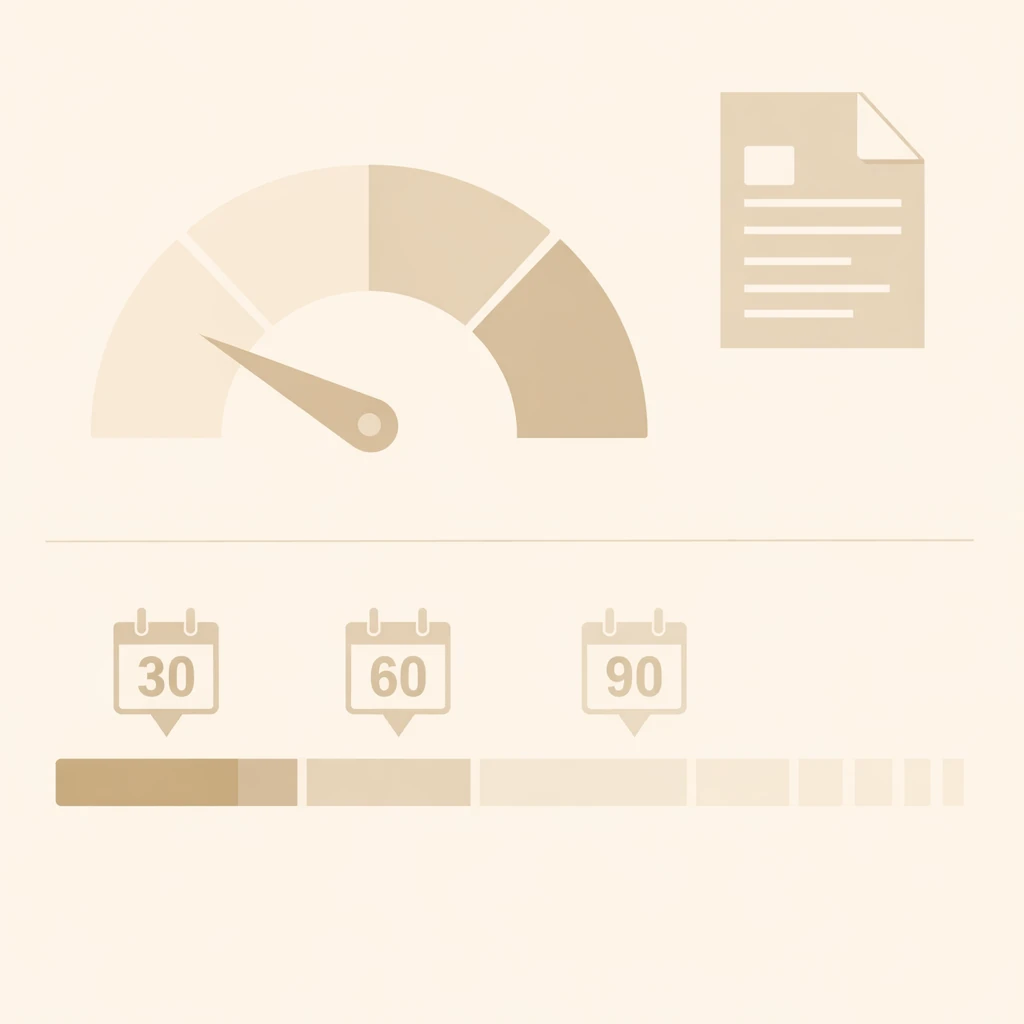
Days Late What Happens 1-29 days Late fee charged, but NO credit reporting 30-59 days Reported to credit bureaus. Score drops. 60-89 days Further damage. Creditors may adjust your terms. 90-119 days Major damage. Account may be labeled “default.” 120+ days Possible charge-off, sent to collections 180 days Account charged off (written off as loss) 7 years Everything above falls off your report
Part 3: How Much Damage Are We Talking About?
Now for the number you really care about: How many points will my score drop?
The answer is frustrating: It depends.
The Irony of Having Good Credit
Here’s the cruel joke the credit scoring models play on you:
If you have great credit—like 780 or above—a single 30-day late payment can drop your score 60 to 100 points . Why? Because you had a perfect record, and this blemish stands out like a sore thumb. The algorithm sees it as a major red flag .
If you have fair credit—say, around 600—that same late payment might only drop you 17 to 37 points . Your record already has some dings, so one more doesn’t shock the system as much .
If you have poor credit—below 580—the drop might be even smaller. But honestly, at that point, you’ve got bigger problems than one late payment.
The Staging Grounds of Delinquency
The damage gets worse the longer you go without paying:
- 30 days late: Noticeable drop .
- 60 days late: Another drop. Your account status updates to “60 days past due” .
- 90 days late: Significant drop. You’re now in “default” territory .
- 120+ days: Major damage. Charge-off possible .
The good news? The impact fades over time . A late payment from three years ago matters much less than one from three months ago. If you’ve been making on-time payments consistently since then, your score will gradually recover
government programs for medical debt relief
📉 Reality Check:
Think of a late payment like a scar. When it’s fresh, it’s red and noticeable. Years later, it fades. It’s still there if you look closely, but it doesn’t define you anymore. Your credit score works the same way.
Part 4: Can You Actually Remove a Late Payment?
This is the million-dollar question.
If the late payment is accurate, you generally cannot remove it . The Fair Credit Reporting Act allows accurate negative information to stay for seven years .
But—and this is a big BUT—there are exceptions. And there are strategies.
Strategy 1: The Goodwill Letter (Your Best Bet)
This works best if:
- You have a generally good payment history.
- This was a one-time mistake.
- You’ve been a customer for a while.
What you do: Write a letter to your creditor. Not an email—a physical letter. Explain what happened. Take responsibility. Ask them, as a gesture of goodwill, to remove the late payment from your credit report .
Sample approach:
“I’ve been a customer for five years and have never missed a payment until now. I had a family emergency and the payment slipped through the cracks. I’ve already paid the balance. Would you consider removing this one late mark as a courtesy?”
Does it work? Sometimes. Maybe 20-30% of the time. But it costs nothing to try .

Strategy 2: Dispute Errors Like a Pro
If the late payment is wrong—you actually paid on time, or it’s someone else’s account—you can and should dispute it .
How to do it:
- Get your credit reports from annualcreditreport.com .
- Find the incorrect late payment.
- File a dispute with the credit bureau (Experian, Equifax, or TransUnion) .
- Provide documentation (bank statements, payment confirmations) .
The bureau has 30 days to investigate . If they can’t verify the late payment, they have to remove it.
how to use a balance transfer card wisely
Strategy 3: Pay-for-Delete (The Gray Area)
This is controversial, and it doesn’t always work.
With pay-for-delete, you negotiate with the creditor or collection agency: you’ll pay the debt (or settle it) if they agree to remove the negative mark entirely .
Some collectors will do this. Some won’t. Some say they will and then don’t. If you try this route, get it in writing first .
What About Credit Repair Companies?
Those companies that promise to “erase” your bad credit? Be careful.
The Consumer Financial Protection Bureau warns that if a company claims it can remove accurate negative information, don’t believe them . They can’t do anything you can’t do yourself for free .
Part 5: What Happens After 90 Days? Charge-Offs and Collections
If you’re reading this and your late payment has spiraled into something bigger—like a charge-off or collections—here’s what you need to know.
Charge-Offs: The “Write-Off” That Follows You
A charge-off happens when your account is 180 days past due . The creditor writes it off as a loss for accounting purposes .
Important: A charge-off does NOT mean the debt is forgiven. You still owe it. But now it’s a permanent mark on your credit .
Charge-offs stay on your report for seven years from the original delinquency date .
Collections: When the Debt Gets Sold
If your debt goes to a collection agency, that agency will likely report a collection account on your credit .
Collection accounts also stay for seven years .
The 7-Year Rule Still Applies
Remember the original delinquency date? That’s still the clock .
If you missed a payment in June 2026, and the debt was sold to a collector in January 2027, both the original late payment and the collection account will fall off in June 2033 .
Strategies to Pay Off $30,000 in Student Loans
Part 6: Your Comeback Plan—Rebuilding After a Late Payment
Okay, enough doom and gloom. Here’s the action plan.
Month 1-3: Damage Control
- Bring the account current. Pay whatever is owed, ASAP .
- Call the creditor. Ask if they’ll remove the mark (goodwill letter) .
- Check your credit reports. Make sure no other errors are lurking .
Month 4-12: The Rebuild
- Pay everything on time. Every single bill. This is non-negotiable now .
- Keep credit utilization low. Under 30%, ideally under 10% .
- Don’t close old accounts. Length of history matters .
- Consider a secured card or credit-builder loan if your credit is thin .
- does debt settlement hurt your credit score?
Year 2-7: Patience and Consistency
- The impact fades. By year two, that late payment matters less .
- Your score will recover. With consistent on-time payments, you can be back in the 700s well before the seven-year mark .
- When the mark falls off, you’ll get a nice little boost.
💡 The Secret:
Lenders care more about recent behavior than old mistakes. If you’ve been perfect for two years, a late payment from 2023 is ancient history to most banks .
Part 7: How to Never Miss Another Payment
Let’s make sure you never have to read an article like this again.
The Autopilot Method
Set up automatic payments for at least the minimum amount due . This is your safety net. Even if you forget, the computer pays it .
Warning: Make sure you have enough in your bank account to cover it. Overdraft fees hurt too.
The Calendar Hack
If you don’t trust autopay, set calendar reminders three days before every due date . When that reminder pops up, stop what you’re doing and pay the bill.
The Due Date Shift
Most creditors let you change your payment due date . If all your bills are due around the same time and it’s overwhelming, spread them out. Put some on the 1st, some on the 15th, some on the 25th. Whatever works for your cash flow.
Frequently Asked Questions
Q: How long does a late payment stay on your credit report?
A: Seven years from the original delinquency date .
Q: Will a late payment fall off after 7 years automatically?
A: Yes. The credit bureaus are required to remove it .
Q: Can I remove a late payment before 7 years?
A: Only if it was reported in error and you successfully dispute it . Accurate late payments generally stay the full seven years.
Q: How many points will my credit score drop?
A: It depends. If you had excellent credit, 60-100 points. If you had fair credit, 17-37 points .
Q: Is it better to pay off a collection or let it go?
A: Paying it off won’t remove it, but it updates the status to “paid collection,” which looks better to some lenders . Plus, you might get sued if you don’t pay.
Q: Do medical bills count as late payments?
A: As of 2025, medical debt under $500 and paid medical collections are no longer included on credit reports . Check current rules.
how to get out of payday loan debt fast
Q: What’s a charge-off?
A: When a creditor gives up trying to collect and writes the debt off as a loss—usually after 180 days. You still owe it, and it stays on your report for seven years .
Q: Can I negotiate with a collection agency to remove the mark?
A: Sometimes. A “pay-for-delete” agreement might work, but get it in writing first .
Q: How can I rebuild my credit after a late payment?
A: Pay everything on time going forward, keep credit utilization low, and consider a secured card or credit-builder loan .
Q: Does checking my own credit report hurt my score?
A: No. That’s a “soft inquiry” and doesn’t affect your score at all .
best debt consolidation loans for good credit 2024
The Emotional Bottom Line
Look, I’m not going to tell you that a late payment is no big deal. It is. It hurts. It’s embarrassing. And it can cost you money in higher interest rates for years.
But here’s the truth: One late payment does not define your financial life.
In the grand scheme of a 40-year adult life, seven years is a chapter, not the whole book. And if you do everything right from this point forward, you can have excellent credit again long before that late payment falls off.
The system is designed to forgive—slowly, painfully, but eventually. Your job is to give it a reason to forgive you.
Pay your bills. Set up autopilot. Watch your score climb. And in a few years, when someone asks you about that old late payment, you’ll barely remember it happened.
You’ve got this.