By Peyman Daneshgar
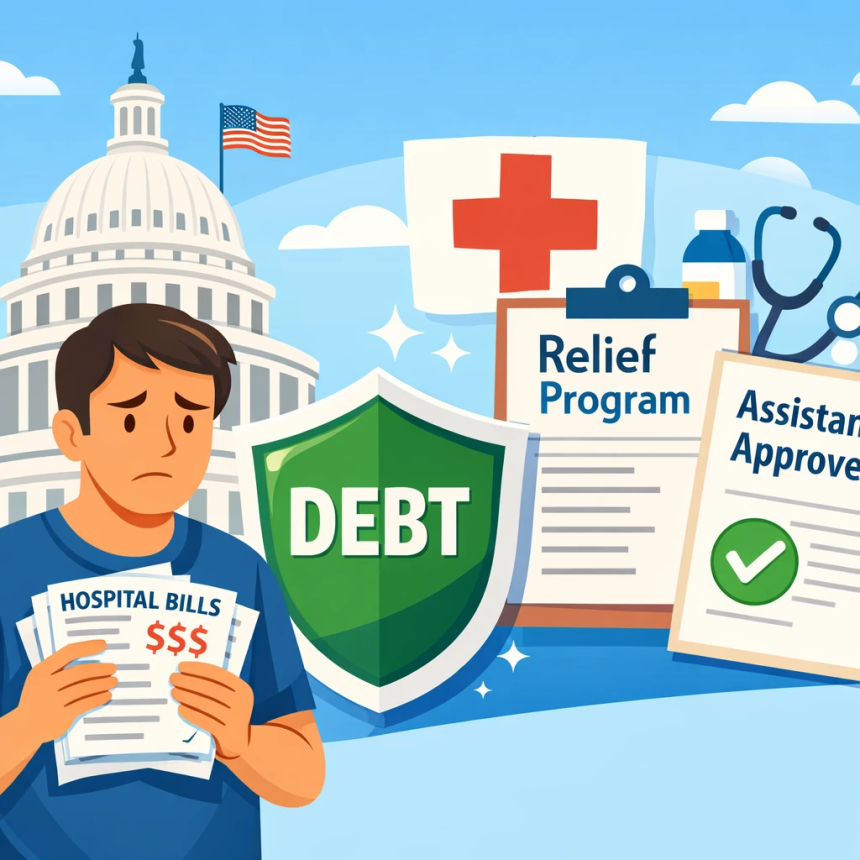
Medical debt is a crisis hiding in plain sight. In the United States alone, an estimated 100 million people—roughly 41% of adults—are burdened by medical or dental bills they cannot pay, with total medical debt exceeding $220 billion . A single ambulance ride, an emergency room visit, or a chronic illness diagnosis can spiral into financial ruin, affecting not just your bank account but your credit score, your housing, and even your mental health.
For years, the solution to medical debt felt personal and isolated: you were expected to negotiate with hospitals, cut back on essentials, or simply ignore the bills and hope they went away. But a massive shift is underway. In 2026, government programs for medical debt relief have emerged as a powerful force, with states, cities, and even the federal government stepping in to erase billions of dollars in medical debt and enact sweeping consumer protections.
This guide is the definitive resource for understanding these programs. We will explore the landscape of government-backed medical debt relief, from direct debt forgiveness initiatives to hospital charity care requirements and new credit reporting laws. Whether you are drowning in bills or simply want to understand your rights, this article will provide the roadmap you need.
Table of Contents
- The Medical Debt Crisis: Why Government Intervention is Critical
- How Government Medical Debt Relief Works: The Undue Model
- State-Level Government Programs for Medical Debt Relief
- Local Government Programs: Cities Taking Action
- Federal Programs and Proposals for Medical Debt Relief
- New Consumer Protections: State Laws Shielding Patients
- Eligibility: Who Qualifies for Government Medical Debt Relief?
- How to Apply: The “No Application” Approach
- Other Resources for Medical Bill Assistance
- Frequently Asked Questions (FAQs)
- Conclusion: The Future of Medical Debt Relief
The Medical Debt Crisis: Why Government Intervention is Critical
Medical debt is unique. Unlike credit card debt or a car loan, medical debt is almost always involuntary. You do not choose to get sick, break a leg, or have a heart attack. Yet the financial consequences can be devastating .
Research consistently shows that people with medical debt often delay or forgo necessary care, suffer from increased anxiety and depression, and face housing instability . A single illness can push a family into bankruptcy, even those with health insurance, as deductibles and copays continue to rise .
In 2026, the problem is intensifying. Enhanced Affordable Care Act premium tax credits have expired, and funding for Medicaid and the health insurance marketplaces has been reduced . At the same time, federal efforts to protect consumers have stalled. The Consumer Financial Protection Bureau (CFPB), under the current administration, has seen its resources cut and has even asked a court to set aside its own rule that would have removed medical debt from credit reports .
This vacuum has created an opportunity—and a necessity—for states and local governments to act. From New Jersey to Hawaii, government programs for medical debt relief are stepping in where the federal government has retreated, using innovative models to buy and forgive debt and enacting laws to prevent debt from accumulating in the first place.
How Government Medical Debt Relief Works: The Undue Model
Most of the state and local relief programs operate through a partnership with a single nonprofit organization: Undue Medical Debt (formerly RIP Medical Debt) .
The Concept: Pennies on the Dollar
Undue Medical Debt works by purchasing large portfolios of past-due medical debt from hospitals and other providers for pennies on the dollar. For example, a hospital might sell $1 million in debt for $30,000 because it considers the debt uncollectible. Undue then buys that debt and erases it—they do not attempt to collect.
The Government’s Role
State and local governments allocate public funds (often from federal pandemic relief dollars like the American Rescue Plan Act) to Undue Medical Debt. Because of the “pennies on the dollar” model, a relatively small government investment can abolish a massive amount of debt.
- In Illinois: $10 million in state funds is expected to relieve up to $1 billion in medical debt .
- In Saint Paul: $1.1 million in city funds is erasing an estimated $110 million in debt .
- In Delaware: $500,000 in state funds is eliminating up to $50 million in debt .
This model is remarkably efficient, delivering $100 of relief for every $1 spent .
how to create a budget for beginners step by step
State-Level Government Programs for Medical Debt Relief
Several states have launched major initiatives to relieve medical debt. Here are the most significant programs currently active or in development.
New Jersey: A National Leader in Debt Abolishment
New Jersey’s partnership with Undue Medical Debt is the most established and ambitious in the nation. In January 2026, Governor Phil Murphy announced the sixth round of medical debt relief, eliminating over $86 million in debt for more than 53,000 residents .
- Total Impact to Date: Nearly $1.4 billion in medical debt abolished for over 828,000 New Jerseyans.
- Funding Source: Approximately $600,000 in American Rescue Plan funds was leveraged for this round.
- Key Protection: New Jersey also enacted the Louisa Carman Medical Debt Relief Act, which prohibits credit reporting for most medical debts, making it one of the first states in the nation with such a protection .
Illinois: $1 Billion in Potential Relief
Illinois launched its Medical Debt Relief Program with a $10 million commitment. The program has the potential to relieve up to $1 billion in medical debt for hundreds of thousands of Illinois residents .
- Eligibility: Illinois residents with household income at or below 400% of the federal poverty level (approximately $62,600 for an individual and $128,600 for a family of four in 2025) OR medical debt that equals 5% or more of household income.
- No Application: There is no application process. Undue Medical Debt analyzes hospital debt portfolios to identify qualifying accounts, and eligible residents are notified by mail .
- Progress Tracking: Illinois provides regular updates on the program’s progress through its Healthcare and Family Services website .
Delaware: $50 Million Initiative with Credit Protections
In July 2025, Governor Matt Meyer announced a partnership with Undue Medical Debt, leveraging $500,000 in state funds to purchase and eliminate up to $50 million in medical debt for an estimated 17,000 or more Delawareans .
- Eligibility: Delaware residents with household income at or below 400% of the federal poverty level (about $100,000 for a family of three) OR medical debt that equals 5% or more of annual household income.
- Credit Protection: Governor Meyer also signed Senate Bill 156, which prohibits the reporting of medical debt to consumer credit reporting agencies. This ensures medical debt cannot be used to disadvantage individuals in accessing housing, credit, or employment .
Hawaii: Legislative Progress Toward a State Program
Hawaii is in the process of establishing its own Medical Debt Acquisition and Forgiveness Program. In 2025, the state legislature advanced S.B. No. 1040, which would require the Office of Wellness and Resilience to develop and administer a program to acquire and forgive medical debt owed by certain households .
- Status: The bill has passed committee and is under consideration. It reflects a growing recognition that medical debt is a social determinant of health that requires government intervention .
- best budgeting method for irregular income
Local Government Programs: Cities Taking Action
States are not alone. Cities are also stepping up to provide relief to their residents.
Saint Paul, Minnesota: The Medical Debt Reset Initiative
The City of Saint Paul is using American Rescue Plan funds to cancel an estimated $110 million in medical debt for its residents .
- How It Works: The city partnered with Undue Medical Debt, using $1.1 million in federal funds. On average, every $1 of city money relieves $100 of medical debt.
- Eligibility: Residents of Saint Paul with income between 0 and 400% of the Federal Poverty Guidelines, OR medical debt representing 5% or more of their annual household income.
- Notification: Eligible residents receive a letter or email from Undue Medical Debt informing them that their debt has been canceled. There is no tax liability or “strings attached” for recipients .
Federal Programs and Proposals for Medical Debt Relief
While federal momentum has slowed, there are still avenues for relief at the national level, both through existing programs and proposed legislation.
The Patient Debt Relief Act (Proposed Federal Legislation)
The Patient Debt Relief Act (H.R. 9129) was introduced in the U.S. House of Representatives in July 2024 . While it was not enacted into law, it represents a blueprint for future federal action.
Key Provisions of the Bill:
- Medicare Participation Requirements: The bill would require hospitals participating in Medicare to establish charity care policies, screen patients for eligibility, and provide notice of financial assistance on bills .
- Debt Collection Limitations: Hospitals would be prohibited from placing liens on homes, garnishing wages, or selling debt to collectors unless specific conditions are met. For patients with household income below 250% of the poverty line, interest cannot be charged, and debt cannot be sold .
- Federal Grant Program: The bill would authorize $100 million for a grant program to a nonprofit organization (like Undue Medical Debt) to acquire and discharge medical debt for eligible individuals—those with debt equal to 5% or more of income, or household income below 400% of the poverty line .
Status: The bill was referred to committee but did not pass. However, its provisions align closely with the state-level programs that are now moving forward.
Federal Health Insurance Programs
While not “debt relief” in the sense of forgiveness, federal health insurance programs are the most important preventive measures against medical debt .
- Medicaid: Provides free or low-cost health coverage to eligible low-income adults, children, pregnant women, elderly adults, and people with disabilities. Eligibility is based on income and family size .
- Children’s Health Insurance Program (CHIP): Covers uninsured children in families with incomes too high to qualify for Medicaid but too low to afford private coverage .
- Medicare: Federal health insurance for people 65 or older, and some younger people with disabilities. Medicare Savings Programs and Extra Help can assist with premiums, deductibles, and prescription drug costs .
- Affordable Care Act (ACA) Marketplaces: Provide subsidized health insurance plans based on income .
Other Federal Assistance
- Ryan White HIV/AIDS Program: Provides HIV/AIDS medications and treatments for uninsured or underinsured individuals .
- National Breast and Cervical Cancer Early Detection Program (NBCCEDP): Offers free or low-cost cancer screenings to low-income, uninsured, or underinsured women .
- Vaccines for Children (VFC): Provides free vaccines to eligible children .
- 50/30/20 rule calculator excel template free
New Consumer Protections: State Laws Shielding Patients
Beyond directly forgiving debt, states are enacting laws to prevent medical debt from destroying lives. These protections are a critical component of the broader government programs for medical debt relief ecosystem.
Banning Medical Debt from Credit Reports
Medical debt on a credit report can lower a person’s score by 100 points or more, affecting their ability to rent an apartment, get a job, or buy a car. In 2025 alone, six states enacted laws restricting the inclusion of medical debt in credit reports: Delaware, Maine, Maryland, Oregon, Vermont, and Washington . In total, 16 states now prohibit or restrict this practice .
- Delaware’s SB 156: “Prohibits any reporting of medical debt to consumer credit reporting agencies, ensuring that such debt cannot appear on consumer reports used in credit, housing, or employment decisions” .
Capping Interest Rates and Limiting Collection Practices
High interest rates can make medical debt snowball. States are fighting back.
- Interest Rate Caps: Maryland, Rhode Island, and Virginia enacted laws in 2025 to limit the interest rates that can be charged on unpaid medical bills .
- Limiting Lawsuits and Wage Garnishment: Maryland prohibited lawsuits over medical bills that are $500 or less. Virginia and Rhode Island banned liens and foreclosures on primary homes and banned wage garnishment for medical debt .
- Reasonable Payment Plans: Maine now requires hospitals to offer payment plans that limit monthly payments to 4% of a patient’s income for those below 400% of the poverty level . This aligns with the federal proposal in the Patient Debt Relief Act .
- how to save money on a tight income
Strengthening Hospital Charity Care Requirements
Nonprofit hospitals are required to provide charity care in exchange for their tax-exempt status, but eligibility criteria vary widely. States are stepping in to set minimum standards.
- Maine: Now requires hospitals to provide free care to patients below 200% of the federal poverty level (up from 150%) .
- Vermont and Maryland: Enacted legislation specifying the percentage by which hospitals must discount bills for eligible patients .
- money saving challenges for couples
Eligibility: Who Qualifies for Government Medical Debt Relief?
While each program has its own specific criteria, there is a remarkable consistency in how states define eligibility for debt relief. Most programs follow the model pioneered by Undue Medical Debt and reflected in the federal Patient Debt Relief Act .
You generally qualify if you meet either of the following criteria:
1. Income-Based Eligibility
Your household income is at or below 400% of the Federal Poverty Guidelines .
- 2025 Federal Poverty Guidelines (for reference):
- 1-person household: 400% = $62,600 (annual income)
- 2-person household: 400% = $84,600
- 3-person household: 400% = $106,600
- 4-person household: 400% = $128,600
*Source: Illinois HFS *
2. Debt Burden-Based Eligibility
Your medical debt equals 5% or more of your annual household income .
This criterion is designed to catch middle-income families who may not be “poor” by federal standards but are nonetheless crushed by a catastrophic medical event.
Additional Requirements:
- Residency: You must be a resident of the state or city offering the program .
- Debt Location: The debt must be held by a participating hospital or provider that sells its debt portfolio to Undue Medical Debt .
- sinking funds: what are they and how to set them up
How to Apply: The “No Application” Approach
One of the most important things to understand about current government programs for medical debt relief is that you cannot apply for them .
The Process
- Government Funding: A state or city allocates funds to Undue Medical Debt.
- Provider Participation: Hospitals and health systems choose to sell or donate their debt portfolios to Undue.
- Data Analysis: Undue analyzes the data (demographics, income estimates, debt amounts) to identify accounts that meet the eligibility criteria (income <400% FPL or debt >5% of income).
- Debt Abolishment: Undue purchases the qualifying debt and erases it.
- Notification: Eligible individuals receive an official letter in the mail from Undue Medical Debt informing them that their specific debt has been canceled .
What to Look For
If you are a resident of a state or city with an active program, keep an eye on your mail. The letters are official and will come from Undue Medical Debt. They are not scams, but you can always verify by contacting the hospital where you owed the debt .
What You Can Do
While you cannot apply for these mass relief programs, you can ensure that your hospital participates. If you are struggling with debt, ask your hospital’s billing department if they sell their debt to Undue Medical Debt. If they do, your debt may be eligible for future rounds of relief.
Other Resources for Medical Bill Assistance
If you are not in a state with an active debt relief program, or if you need help immediately, there are other avenues to explore.
Hospital Financial Assistance (Charity Care)
Every nonprofit hospital is required to offer financial assistance or charity care . These programs can reduce or eliminate your bill based on your income.
- How to Apply: Contact the hospital’s billing department and ask for a “Financial Assistance Application” or “Charity Care Application.” You will need to provide proof of income (tax returns, pay stubs).
- Eligibility: Many hospitals provide free care to patients below 200-300% of the poverty level and discounted care to those below 400-500%.
Dollar For: Helping You Navigate Charity Care
Dollar For is a nonprofit organization that helps patients navigate and apply for hospital financial assistance .
- What They Do: They screen your debt to see if you likely qualify for charity care, and then help you complete and submit the application.
- Cost: Their service is free.
- Website: Visit
dollarfor.orgto see if your debt is eligible.
Legal Aid and Advocacy
If you are facing aggressive collection actions, lawsuits, or billing disputes, legal aid may be available.
- Illinois Attorney General’s Health Care Bureau: Assists with billing disputes, denials of coverage, and unfair insurance practices (877-305-5145) .
- State Social Services Agencies: Can offer referrals to local health centers and organizations .
- Pharmaceutical Assistance: Contact drug manufacturers directly to ask about low-cost options, samples, or discounts .
Frequently Asked Questions (FAQs)
1. Are there federal government programs to forgive medical debt?
There is no active federal program that directly forgives medical debt for individuals. However, the Patient Debt Relief Act has been proposed, which would create a federal grant program for debt relief and establish new rules for hospitals . For now, the most active programs are at the state and local level.
2. How do I know if my medical debt has been forgiven?
If your debt is forgiven through a state or local government program, you will receive an official letter in the mail from Undue Medical Debt . The letter will specify which debts have been canceled. You can also contact the hospital or provider to verify that your balance is zero .
3. Can I apply for government medical debt relief?
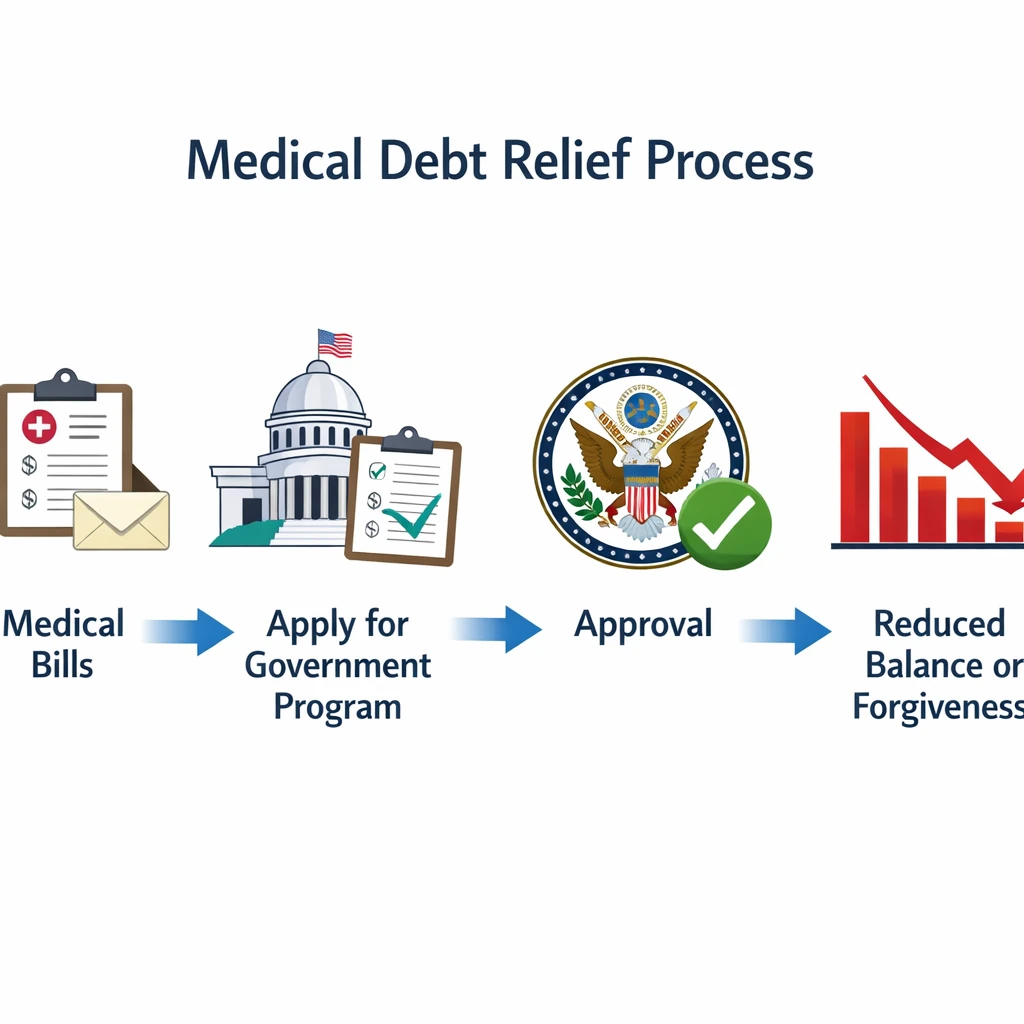
Generally, no. These programs work by analyzing hospital debt portfolios in bulk. There is no individual application process. If you qualify based on income or debt burden, and your debt is held by a participating provider, you will be automatically included .
4. What is the income limit for medical debt relief?
Most programs use a threshold of 400% of the Federal Poverty Level. In 2025, this was approximately:
- $62,600 for an individual
- $84,600 for a couple
- $106,600 for a family of three
- $128,600 for a family of four .
5. Does medical debt still appear on my credit report?
It depends on where you live. As of 2026, 16 states have laws prohibiting or restricting the inclusion of medical debt on credit reports . In other states, it may still appear. Federal efforts to ban this practice were stalled in 2025 .
6. What is Undue Medical Debt?
Undue Medical Debt is a national 501(c)(3) nonprofit organization that partners with governments and donors to buy and abolish medical debt. They purchase debt portfolios for pennies on the dollar and erase the debt, with no tax consequences for the recipient .
7. What should I do if I receive a letter from Undue Medical Debt?
Celebrate! The letter is real and confirms that your debt has been canceled. Keep the letter for your records. You can verify by contacting the hospital or provider listed to ensure your account shows a zero balance .
8. Can hospitals garnish my wages for medical debt?
In many states, yes, but this is changing. Virginia and Rhode Island have recently banned wage garnishment for medical debt . The proposed federal Patient Debt Relief Act would also prohibit garnishment . Check your state’s laws.
9. What is charity care, and how do I get it?
Charity care is free or discounted hospital care offered to low-income patients. You must apply directly with the hospital. Organizations like Dollar For can help you with the application process for free .
10. If my debt is forgiven, do I have to pay taxes on it?
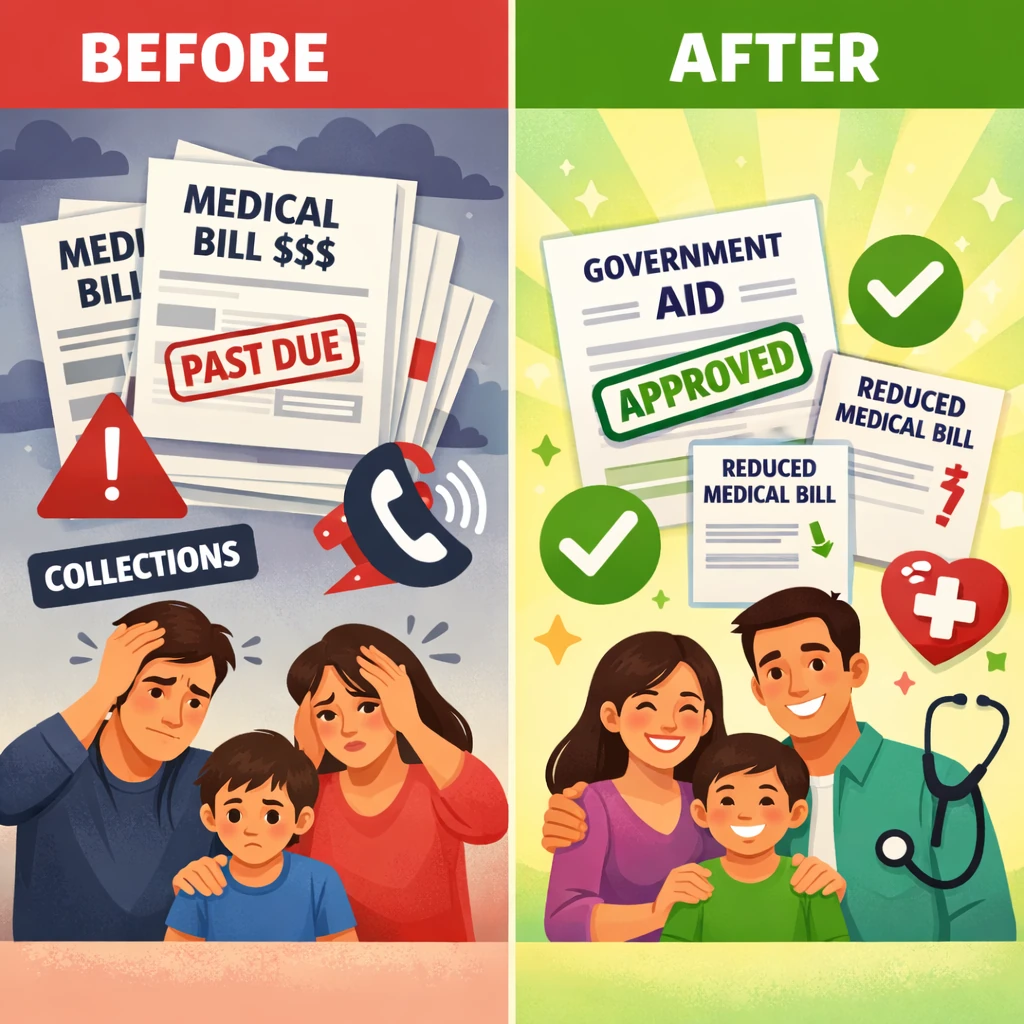
No. Under current IRS rules, debt forgiven through these programs is not considered taxable income for the recipient .
Conclusion: The Future of Medical Debt Relief
The landscape of medical debt in America is changing. With federal protections stalling and the cost of healthcare rising, states and cities have taken the lead in providing direct relief to their residents. Through innovative partnerships with organizations like Undue Medical Debt, government programs for medical debt relief have already abolished billions of dollars in debt for hundreds of thousands of families.
But this is only the beginning. The movement is expanding in two directions:
- Retroactive Relief: More states and cities are allocating funds to buy and forgive existing debt.
- Preventative Protections: More states are passing laws to ban medical debt from credit reports, cap interest rates, limit aggressive collection tactics, and strengthen hospital charity care requirements.
If you are struggling with medical debt, know that you are not alone and that help is increasingly available. Check if your state has an active program. Contact your hospital about charity care. And stay informed about new laws that may protect you.
No one chooses to get sick. And increasingly, governments are recognizing that no one should be financially destroyed for seeking the care they need.