Will Money Make You Happy? The Complete Psychological Answer
Author: Peiman Daneshgar
Email: daneshgar781@gmail.com
Table of contents
- Will Money Make You Happy? The Complete Psychological Answer
- 1. The Question Everyone Asks (But Few Understand)
- 2. The Two Types of Happiness Most People Confuse
- 3. The Income Threshold Debate: Does Happiness Plateau?
- 4. The Law of Diminishing Emotional Returns
- The Hedonic Treadmill
- 5. Security vs Status: The Critical Divide
- 6. Time Affluence: The Most Powerful Happiness Multiplier
- 7. Why Rich People Still Feel Empty
- 8. Social Comparison: The Invisible Trap
- 9. How to Spend Money for Maximum Happiness
- 10. What Money Cannot Fix
- 11. The Final Verdict
- The Most Important Question
1. The Question Everyone Asks (But Few Understand)
“Will money make you happy?”
It sounds simple. It isn’t.
People usually ask this question when they feel:
- Financial stress
- Career pressure
- Comparison with others
- Fear of missing out
- Or dissatisfaction with life
The hidden assumption behind the question is this:
“If I just had more money, my problems would disappear.”
Sometimes that’s true.
Sometimes it’s completely false.
The real answer depends on:
- How much money you currently have
- What problems you’re trying to solve
- And how you define happiness
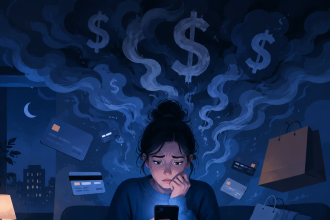
- Would Money Make Me Happy?
2. The Two Types of Happiness Most People Confuse
Psychologists separate happiness into two categories:
1️⃣ Emotional Well‑Being (Daily Mood)
This is how you feel hour by hour:
- Stress
- Anxiety
- Calm
- Joy
- Irritation
2️⃣ Life Satisfaction (Big Picture Evaluation)
This is how you judge your life overall:
- “Am I successful?”
- “Am I progressing?”
- “Am I doing better than others?”
Money affects these two differently.
If you’re financially insecure, money dramatically improves emotional well-being.
But once you’re stable, more money mostly improves life evaluation—not daily joy.
This is a crucial distinction.
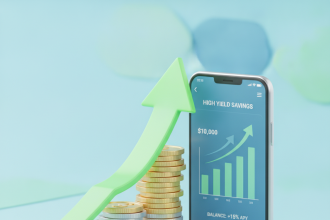
How “Revenge Spending” Is Destroying Your Savings
3. The Income Threshold Debate: Does Happiness Plateau?
For years, research suggested happiness plateaus around $75,000–$100,000 annually (adjusted for inflation).
More recent research shows happiness continues rising with income.
But here’s the important nuance:
The relationship is logarithmic, not linear.
That means:
- Going from $20k → $40k = Huge life change
- Going from $100k → $200k = Noticeable but smaller boost
- Going from $500k → $1M = Surprisingly modest shift
Graphically:
Happiness
   ▲
   │        *
   │      *
   │    *
   │  *
   │ *
   └──────────────────► Income
The curve rises fast at first.
Then it slowly flattens.
Money increases happiness most when it removes instability.
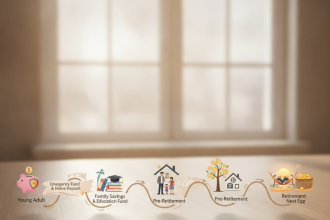
The “Loud Budgeting” Trend Explained: Why Gen Z Is Doing It
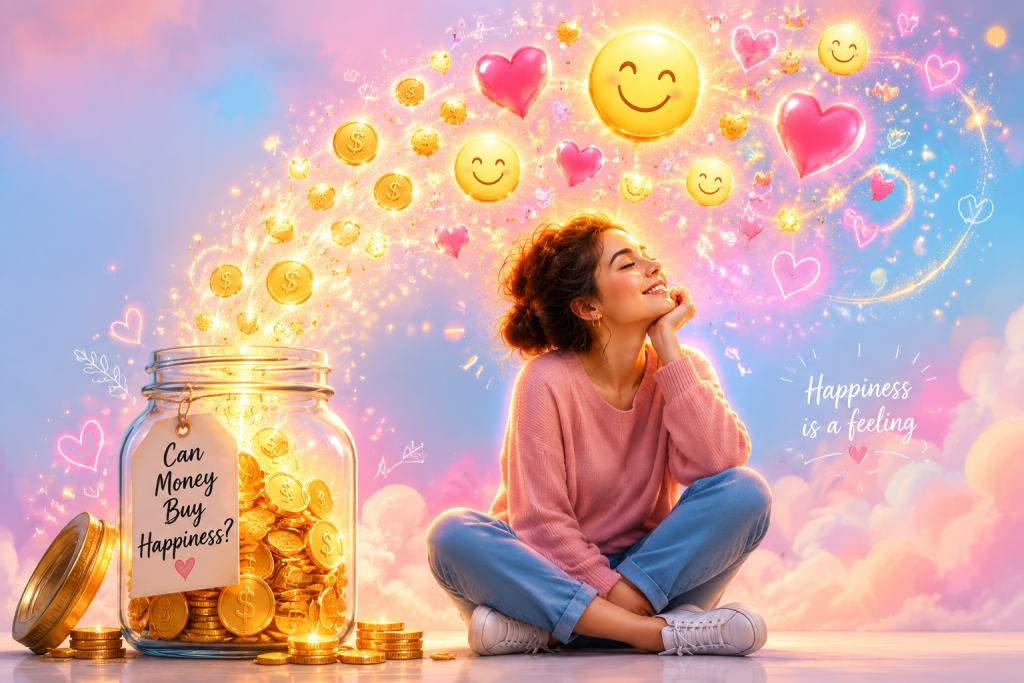
4. The Law of Diminishing Emotional Returns
Money behaves like sugar.
The first bite tastes amazing.
The tenth bite? Not so much.
When you buy something new:
- Dopamine spikes
- Excitement rises
- Identity expands
But your brain adapts quickly.
This adaptation is called:
The Hedonic Treadmill
You return to your baseline happiness level after:
- A raise
- A new car
- A luxury apartment
- Even winning the lottery
Unless something changes internally.
“Girl Math” vs. “Boy Math”: The Psychology of Justifying Purchases
5. Security vs Status: The Critical Divide
Money used for security increases happiness.
Money used for status often decreases it.
Security Spending:
- Emergency fund
- Debt elimination
- Healthcare
- Safe housing
- Insurance
This reduces anxiety permanently.
Status Spending:
- Luxury brands
- Overpriced cars
- Oversized houses
- Social comparison purchases
This creates temporary dopamine, followed by adaptation and comparison.
Security creates peace.
Status creates competition.
What Is “Doom Spending” and How to Stop It Today
6. Time Affluence: The Most Powerful Happiness Multiplier
Research consistently shows one thing:
People with more control over their time are happier.
Money can buy:
- Shorter commutes
- Outsourced chores
- Flexible schedules
- Early retirement
- Sabbaticals
This creates time affluence.
Time affluence reduces:
- Chronic stress
- Burnout
- Relationship conflict
If money is used to buy back time, happiness increases dramatically.
If money is used to buy things that require more work to maintain, happiness may drop.
7. Why Rich People Still Feel Empty
Because money does not fix:
- Childhood trauma
- Loneliness
- Lack of purpose
- Depression
- Identity confusion
Money amplifies your existing psychology.
If you’re secure and grateful, wealth enhances life.
If you’re anxious and comparing, wealth intensifies it.
8. Social Comparison: The Invisible Trap
Humans are relative evaluators.
You don’t evaluate wealth absolutely.
You evaluate it socially.
If you earn $200k in a city where everyone earns $50k, you feel successful.
If you earn $200k in a social circle where everyone earns $1M, you feel behind.
Social media makes this worse.
You are constantly comparing your real life to curated highlights.
Comparison erodes happiness faster than poverty erodes comfort.

9. How to Spend Money for Maximum Happiness
If the question is:
“Will money make you happy?”
The better question is:
“How should I use money to increase happiness?”
Here are evidence-based rules:
✅ 1. Buy Experiences
They create memories and social bonds.
✅ 2. Invest in Relationships
Dinner with friends > luxury watch.
✅ 3. Remove Chronic Stressors
Pay off high-interest debt.
Build emergency savings.
✅ 4. Buy Time
Outsource tasks you hate.
✅ 5. Avoid Lifestyle Inflation
Every raise does not require a bigger life.
10. What Money Cannot Fix
Money cannot manufacture:
- Deep friendships
- Self-worth
- Emotional regulation
- Meaning
- Purpose
Those come from:
- Values alignment
- Skill mastery
- Contribution
- Inner work
Money can create space for these.
It cannot create them directly.
11. The Final Verdict
So…
Will money make you happy?
✅ Yes — if you currently lack stability.
✅ Yes — if you use it to buy time and security.
✅ Yes — if it reduces chronic stress.
❌ No — if you expect it to fix emotional emptiness.
❌ No — if you chase status endlessly.
❌ No — if you tie your identity to your income.
The truth is:
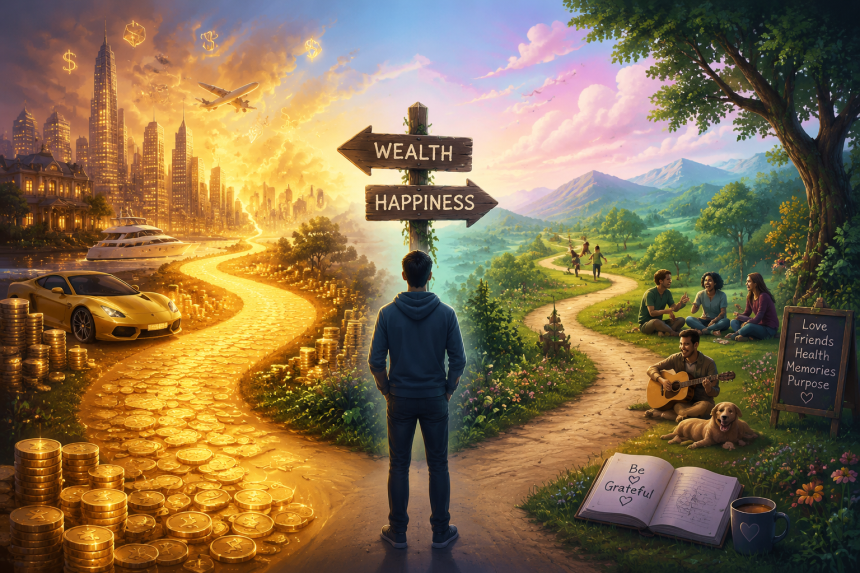
Money doesn’t create happiness.
It removes obstacles to happiness.
If your biggest obstacle is financial stress, money will feel life‑changing.
If your biggest obstacle is internal, money will feel underwhelming.
The Most Important Question
Instead of asking:
“Will money make me happy?”
Ask:
“Which of my current unhappiness is caused by money — and which isn’t?”
That distinction changes everything.