By: Peiman Daneshgar | Email: daneshgar781@gmail.com
Published: February 19, 2026
Table of Contents
- The Best Secured Credit Cards to Build Credit in 2024 (Stop Getting Rejected)
- Introduction: The Rejection Letters Piling Up
- What This Guide Will Actually Give You
- Part 1: What Even IS a Secured Credit Card? (The Training Wheels Analogy)
- Part 2: The 7 Best Secured Credit Cards of 2024
- 1. Best Overall: Capital One Platinum Secured Credit Card
- 2. Best for Rewards: Discover it® Secured Credit Card
- 3. Best for No Credit Check: Chime Credit Builder Secured Visa®
- 4. Best for High Limits: UNITY Visa® Secured Credit Card
- 5. Best for Cash Back: Capital One Quicksilver Secured Cash Rewards
- 6. Best for Credit Union Members: nRewards® Secured Credit Card
- 7. Best for No Bank Account Needed: OpenSky® Secured Visa® Credit Card
- Part 3: Secured Card Comparison at a Glance
- Part 4: Banks vs. Credit Unions—The $147 Reason to Shop Around
- Part 5: How to Actually Use a Secured Card (The Right Way)
- Part 6: The “Graduation” Moment—Getting Your Deposit Back
- Part 7: Common Mistakes That Ruin the Whole Point
- Frequently Asked Questions
- The Emotional Finish Line
Introduction: The Rejection Letters Piling Up
I know that feeling when you open the mail.
You see the envelope from a credit card company, and for a split second, you get that little flicker of hope. Maybe this time. Maybe they’ll say yes.
Then you open it.
“We regret to inform you…”
Or worse, you applied online and got the instant rejection screen. That little message that says “Your application was not approved” followed by some vague reasons that don’t actually help you fix anything.
You’ve probably tried a few cards by now. Maybe the big names like Chase or American Express. Maybe the store cards that seem easier to get. But they keep saying no. And with every rejection, that number on your credit score feels heavier. Like a label. Like a judgment.
Sound familiar?
Here’s the thing they don’t tell you: The system isn’t rejecting YOU. It’s rejecting your lack of history. There’s a difference. And there’s a workaround.
best debt consolidation loans for good credit 2024
🧠 Quick Reality Check:
You know what’s crazy? The people who need credit the most—the ones trying to build it from scratch or repair it after some hard years—are the ones the banks won’t touch. It’s like needing experience to get a job, but needing a job to get experience. Makes zero sense, right?
What This Guide Will Actually Give You
Here’s the deal. Most articles will just throw a list of cards at you and call it a day.
This one is different.
By the time you finish reading, you’ll know:
- Exactly how secured cards work (and why they’re actually a cheat code, not a consolation prize) .
- The 7 best secured cards of 2024—ranked by fees, rewards, and how fast they’ll get you to an unsecured card .
- Why credit unions might save you $147 compared to big banks .
- The “graduation” strategy to get your deposit back and level up to a real rewards card .
- The mistakes that keep people stuck in secured card purgatory for years .
This is the playbook. Let’s run it.
how to negotiate lower credit card interest rates
Part 1: What Even IS a Secured Credit Card? (The Training Wheels Analogy)
Let’s keep this simple.
Imagine you’re teaching a teenager to drive. You don’t hand them the keys to a Ferrari and say “good luck.” You start with an old car. Maybe you put those student driver magnets on it. You sit next to them with a second brake pedal.
A secured credit card is the student driver car of credit cards .
You give the bank some money upfront—say, $200. They hold that money in a special account. Then they give you a credit card with a $200 limit.
If you don’t pay your bill, the bank takes your $200. That’s it. They’re not worried about losing money because they already have it .
How It Actually Works
- You put down a security deposit (usually $200 to $500 to start) .
- That deposit becomes your credit limit .
- You use the card for small purchases.
- You pay the bill every month, on time .
- The bank reports your good behavior to the credit bureaus .
- After 6-12 months of responsible use, you might “graduate” to an unsecured card and get your deposit back .
The “No Credit Check” Myth
Here’s something nobody tells you: Most secured cards still check your credit . They just have lower standards than unsecured cards. A few cards—like Chime and OpenSky—skip the credit check entirely, but they have other requirements .
snowball vs avalanche method calculator
So if you’re worried about a hard inquiry dinging your score, you have options. But honestly? That temporary dip is worth it if you get approved .
🤔 Think About This:
If you put down $500 and treat that card like a sacred object—paying it off every single month—you’re essentially paying yourself to build credit. That $500 isn’t gone. It’s just in timeout until you prove you can handle it.
Part 2: The 7 Best Secured Credit Cards of 2024
Alright, let’s get to the good stuff. These are the cards that actually make sense for real people trying to build credit. I’ve ranked them based on fees, rewards, and how fast you can escape to a real card.
1. Best Overall: Capital One Platinum Secured Credit Card
This is the card that financial writer Dia Adams used to build her credit from 620 to 784 . If that’s not an endorsement, I don’t know what is.
The Details:
- Annual fee: $0
- APR: 29.99% variable
- Security deposit: $49, $99, or $200
- Credit limit: $200 to $1,000
Why it’s great: Capital One is one of the biggest issuers out there. Getting your foot in the door with them is like getting into a good college—it opens doors later. They automatically review your account for a credit limit increase after 6 months of on-time payments . And that flexible deposit? Not everyone has $200 sitting around. Capital One lets you start with as little as $49 if your credit isn’t totally wrecked .
Who it’s for: People who want a straightforward, no-nonsense card from a major bank and don’t care about rewards yet .
2. Best for Rewards: Discover it® Secured Credit Card
Most secured cards treat you like a second-class citizen. No rewards. No perks. Just a card and a bill.
Discover said “nah, let’s give them something.”
The Details:
- Annual fee: $0
- APR: 28.24% variable
- Security deposit: $200–$2,500
- Rewards: 2% cash back on gas and restaurants (up to $1,000 per quarter), 1% everything else
Why it’s great: Cash back on a secured card is rare. Cash back that actually makes sense—gas and restaurants, the stuff you’re buying anyway—is even rarer . Discover also matches all the cash back you earn at the end of your first year. Oh, and they automatically review your account for graduation to an unsecured card after just 7 months .
Who it’s for: People who want to earn while they learn. If you’re going to use a card anyway, might as well get paid for it.
3. Best for No Credit Check: Chime Credit Builder Secured Visa®
Chime isn’t a bank—it’s a fintech company that partners with banks. But their Credit Builder card is honestly genius.
The Details:
- Annual fee: $0
- APR: None (you can only spend what you’ve transferred)
- Security deposit: $0 minimum
- Credit check: None
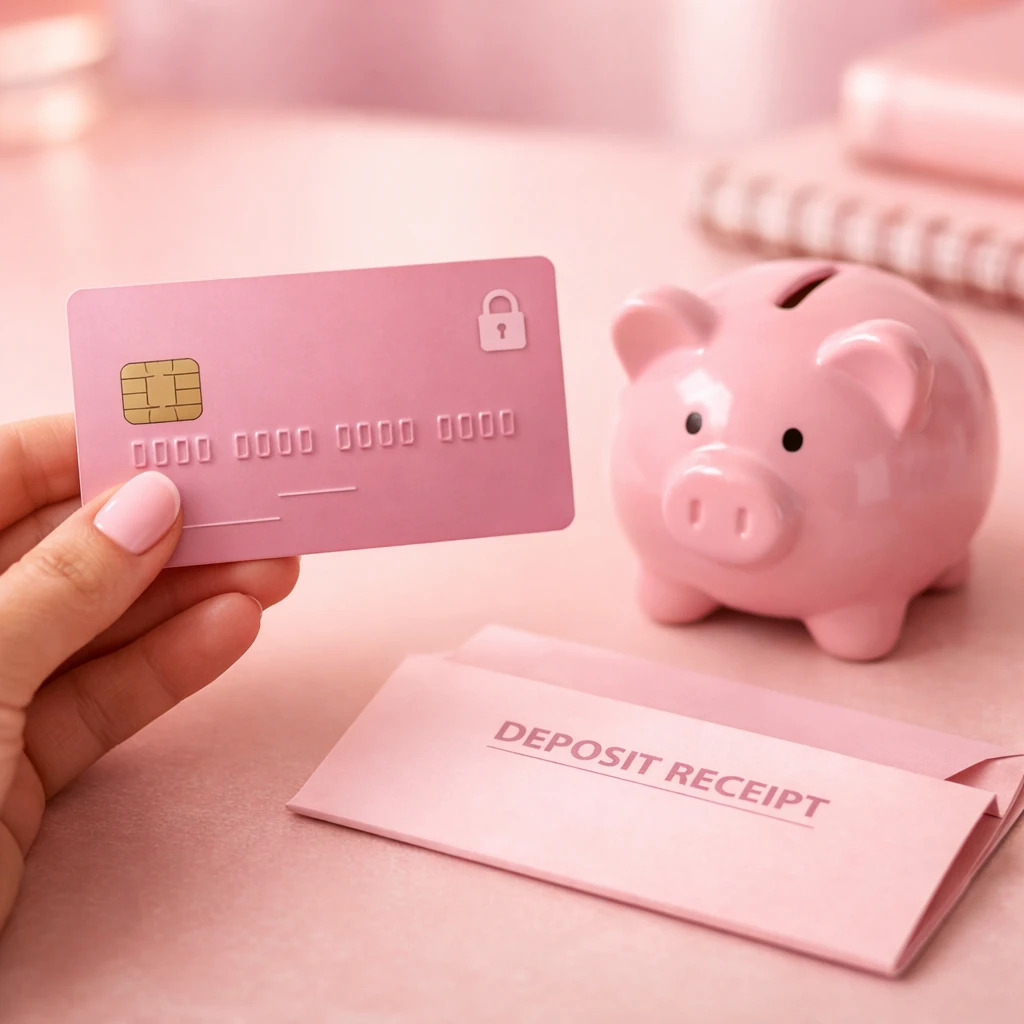
How it works: You open a Chime checking account and move money into your Credit Builder account. Whatever you move becomes your spending limit. You use the card, and at the end of the month, Chime automatically pays your balance from your secured account .
Why it’s great: No credit check means even if your credit is in the gutter, you can get this card . No APR means you’ll never pay interest. And because you’re basically spending your own money, it’s impossible to overspend.
The catch: You need a qualifying direct deposit of $200+ to your Chime checking account to qualify . So if you have a job that pays via direct deposit, you’re golden. If not, look elsewhere.
investment mistakes to avoid in your 20s
4. Best for High Limits: UNITY Visa® Secured Credit Card
Maybe you have more money to put down and want a limit that actually lets you buy stuff.
The Details:
- Annual fee: $39
- APR: 17.99% fixed
- Security deposit: $300–$10,000
Why it’s great: A $10,000 credit limit on a secured card is almost unheard of . Most cap you at $2,500 or $3,000. If you’ve got the cash to put down, this card gives you real spending power. Plus, that 17.99% APR is fixed—meaning it won’t go up when the Fed raises rates .
Who it’s for: People with savings who want a high limit and plan to carry a balance occasionally (though you really shouldn’t).
How to Choose Your First Mutual Fund
5. Best for Cash Back: Capital One Quicksilver Secured Cash Rewards
Same issuer as the Platinum, but with rewards.
The Details:
- Annual fee: $0
- APR: 29.99% variable
- Security deposit: $200–$3,000
- Rewards: 1.5% cash back on everything, 5% on hotels/rentals booked through Capital One Travel
Why it’s great: Flat-rate cash back is simple. You don’t have to think about categories or rotating bonuses. Just swipe and earn . Capital One also does automatic credit line reviews after 6 months .
Who it’s for: People who want simplicity and plan to use their card for everything.
6. Best for Credit Union Members: nRewards® Secured Credit Card
If you’re in the military community or have family who is, this card is a hidden gem.
The Details:
- Annual fee: $0
- APR: 18% variable
- Security deposit: $200 minimum (held in a savings account)
- Foreign transaction fees: $0
Why it’s great: Navy Federal Credit Union is consistently rated one of the best banks in America. Their secured card has a low APR (credit unions are capped at 18% for federal ones), no fees, and they review your account for graduation after just 3 months .
The catch: You have to be eligible for Navy Federal membership (military, veteran, DoD, or family member). If you are, this is arguably the best card on the list.
Is Investing in Cryptocurrency Safe for Beginners?
7. Best for No Bank Account Needed: OpenSky® Secured Visa® Credit Card
Some secured cards require you to have a bank account with them. OpenSky doesn’t care.
The Details:
- Annual fee: $35
- APR: 24.39% variable
- Security deposit: $200–$3,000
- Credit check: None
Why it’s great: No credit check means approval is basically guaranteed if you have the deposit . They report to all three bureaus. And after 6 months of good history, they’ll review you for a higher limit or ungrade .
Who it’s for: People who’ve been denied everywhere else or don’t have a bank relationship.
📊 Quick Comparison: Top 3 Cards at a Glance
Card Annual Fee Min Deposit Best Feature Capital One Platinum $0 $49 Low barrier to entry, major issuer Discover it Secured $0 $200 2% cash back, 7-month graduation Chime Credit Builder $0 $0 No credit check, no APR
Part 3: Secured Card Comparison at a Glance
Let’s be real—you’re probably comparing a few options. Here’s the full breakdown so you can see them side by side.
| Card | Annual Fee | APR | Min Deposit | Max Limit | Credit Check? | Rewards | Graduation Timeline |
|---|---|---|---|---|---|---|---|
| Capital One Platinum | $0 | 29.99% Var | $49 | $1,000 | Yes | No | 6 months |
| Discover it Secured | $0 | 28.24% Var | $200 | $2,500 | Yes | 2% gas/restaurants | 7 months |
| Chime Credit Builder | $0 | None | $0 | Varies | No | No | N/A (no unsecured version) |
| UNITY Visa | $39 | 17.99% Fixed | $300 | $10,000 | Yes | No | Varies |
| Capital One Quicksilver Secured | $0 | 29.99% Var | $200 | $3,000 | Yes | 1.5% cash back | 6 months |
| nRewards Secured | $0 | 18% Var | $200 | Varies | Yes | No | 3 months |
| OpenSky Secured | $35 | 24.39% Var | $200 | $3,000 | No | Up to 10% (select merchants) | 6 months |
Part 4: Banks vs. Credit Unions—The $147 Reason to Shop Around
Here’s something the banks don’t want you to know.
A LendingTree analysis of 47 secured cards found that bank-issued secured cards have an average APR of 25.64% . Credit union-issued secured cards? 16.08% .
That’s a difference of 9.56 percentage points .
The Math That Hurts:
Let’s say you carry a $1,000 balance for a year (which you shouldn’t, but life happens).
- With a bank card at 25.64%: you pay about $256 in interest .
- With a credit union card at 16.08%: you pay about $161 in interest .
That’s $95 in one year. Over multiple years, it adds up fast. If you have a $2,000 balance, you’re looking at $190+ more in interest .
The point: If you can join a credit union (and many let you join for a small fee or donation), do it. Your future self will thank you.
🧠 Brain Break:
Stop and check if you’re eligible for any credit unions. Your employer, your school, your city—there’s probably one you can join for $5. Worth it.
Part 5: How to Actually Use a Secured Card (The Right Way)
Getting the card is step one. Using it correctly is where most people mess up.
The 30% Rule (and Why You Should Ignore It)
You’ve probably heard “keep your credit utilization under 30%.” That’s fine advice for people with established credit.
For you? Aim for under 10% .
If your limit is $200, try to keep your balance below $20 when the statement closes . Why? Because utilization has no memory. It resets every month. But while you’re building credit, you want to look as responsible as humanly possible.
The Autopay Trap
Set up autopay. Seriously. One missed payment can undo months of progress . Most cards let you autopay the minimum or the full balance. Choose full balance if you can. If not, at least autopay the minimum so you never get hit with a late fee.
One Purchase. One Payment.
Here’s a foolproof strategy:
- Put one small recurring charge on the card—Netflix, Spotify, a monthly coffee.
- Set up autopay to pay the full balance every month.
- Forget about it.
That’s it. You’re building credit without thinking about it.
how to invest in S&P 500 from Europe (or UK, Germany, etc.)
Part 6: The “Graduation” Moment—Getting Your Deposit Back
This is the goal. The finish line.
Graduation is when the card issuer looks at your account, sees 6-12 months of on-time payments, and says “you know what? You’ve proven yourself. Here’s your deposit back, and we’re upgrading you to a real card” .
What Graduation Looks Like
- You get an email or letter saying you’re approved for an unsecured card.
- They send you a new card (or just upgrade your existing one).
- Your deposit is returned, either as a check or a credit to your account .
How Long Does It Take?
- Discover: Reviews at 7 months .
- Capital One: Reviews at 6 months .
- Navy Federal: Reviews at 3 months .
- Other issuers: Usually 6-12 months.
If you haven’t graduated after 12-18 months, call them. Ask why. Sometimes you just need to request it .
Part 7: Common Mistakes That Ruin the Whole Point
Don’t do these things.
Mistake 1: Closing the Card Too Early
Got your deposit back and an unsecured card? Great. Don’t close the old secured card .
Closing it shortens your credit history and lowers your total available credit. Both hurt your score. Just put it in a drawer and let it sit.
Mistake 2: Treating It Like Free Money
That deposit isn’t yours to spend. It’s collateral. If you treat the card like an extension of your income, you’ll end up in debt and wreck your credit.
Mistake 3: Not Checking If They Report to All Three Bureaus
If your secured card doesn’t report to Experian, Equifax, and TransUnion, it’s not helping you build credit . Every card on this list does report. But if you go rogue and pick some random card, double-check.
best stocks for dividend income for beginners
Frequently Asked Questions
Q: What is a secured credit card?
A: A credit card that requires a refundable security deposit, which usually becomes your credit limit. It’s designed to help people build or rebuild credit .
Q: How do secured credit cards help build credit?
A: The issuer reports your payment history to the three major credit bureaus. On-time payments build positive history .
Q: What’s the best secured credit card for 2024?
A: It depends on your situation. Capital One Platinum is great for low deposits. Discover it Secured is best for rewards. Chime is best if you need no credit check .
Q: How much deposit do I need?
A: Most cards require $200, but Capital One lets you start at $49 and Chime has no minimum .
Q: Will I get my deposit back?
A: Yes, as long as you pay your bills and close the account in good standing or graduate to an unsecured card .
Q: How long until I can upgrade to an unsecured card?
A: Typically 6-12 months of on-time payments. Some issuers review earlier .
Q: Do secured cards have annual fees?
A: Some do. About a third of secured cards charge an annual fee, ranging from $19 to $50 .
Q: Can I get a secured card with no credit check?
A: Yes. Chime, OpenSky, and a few others don’t require a hard credit pull .
Q: What’s the interest rate on secured cards?
A: The average APR is 23.40%, but credit union cards average 16.08% .
Q: Will using a secured card hurt my credit?
A: The hard inquiry might cause a small, temporary dip. But responsible use will improve your score over time .
how to start investing with $100 or less
The Emotional Finish Line
Look, I’m not going to pretend that using a secured card is glamorous.
It’s not. It feels like a consolation prize when what you really want is a shiny metal card with travel perks and a fat sign-up bonus.
But here’s the thing nobody tells you: Every person with an 800 credit score started somewhere. And for a lot of them, that somewhere was a secured card with a $200 limit and no rewards.
The difference between people who fix their credit and people who stay stuck isn’t income. It isn’t luck. It’s consistency. It’s showing up every month, paying that tiny bill, and trusting the process.
Six months from now, you could be graduating to an unsecured card. A year from now, you could be approved for a card with actual rewards. Two years from now, you could be the one writing articles about how you fixed your credit.
It starts with this decision. Right now.
Pick a card from this list. Put down your deposit. Set up autopay. And let time do its thing.
You’ve got this.
This article was written by Peiman Daneshgar. If it helped you, share it with someone else who’s tired of being rejected for credit cards.
By: Peiman Daneshgar | Email: daneshgar781@gmail.com
Published: February 19, 2026
Table of Contents
- The Best Secured Credit Cards to Build Credit in 2024 (Stop Getting Rejected)
- Introduction: The Rejection Letters Piling Up
- What This Guide Will Actually Give You
- Part 1: What Even IS a Secured Credit Card? (The Training Wheels Analogy)
- Part 2: The 7 Best Secured Credit Cards of 2024
- 1. Best Overall: Capital One Platinum Secured Credit Card
- 2. Best for Rewards: Discover it® Secured Credit Card
- 3. Best for No Credit Check: Chime Credit Builder Secured Visa®
- 4. Best for High Limits: UNITY Visa® Secured Credit Card
- 5. Best for Cash Back: Capital One Quicksilver Secured Cash Rewards
- 6. Best for Credit Union Members: nRewards® Secured Credit Card
- 7. Best for No Bank Account Needed: OpenSky® Secured Visa® Credit Card
- Part 3: Secured Card Comparison at a Glance
- Part 4: Banks vs. Credit Unions—The $147 Reason to Shop Around
- Part 5: How to Actually Use a Secured Card (The Right Way)
- Part 6: The “Graduation” Moment—Getting Your Deposit Back
- Part 7: Common Mistakes That Ruin the Whole Point
- Frequently Asked Questions
- The Emotional Finish Line
Introduction: The Rejection Letters Piling Up
I know that feeling when you open the mail.
You see the envelope from a credit card company, and for a split second, you get that little flicker of hope. Maybe this time. Maybe they’ll say yes.
Then you open it.
“We regret to inform you…”
Or worse, you applied online and got the instant rejection screen. That little message that says “Your application was not approved” followed by some vague reasons that don’t actually help you fix anything.
You’ve probably tried a few cards by now. Maybe the big names like Chase or American Express. Maybe the store cards that seem easier to get. But they keep saying no. And with every rejection, that number on your credit score feels heavier. Like a label. Like a judgment.
Sound familiar?
Here’s the thing they don’t tell you: The system isn’t rejecting YOU. It’s rejecting your lack of history. There’s a difference. And there’s a workaround.
🧠 Quick Reality Check:
You know what’s crazy? The people who need credit the most—the ones trying to build it from scratch or repair it after some hard years—are the ones the banks won’t touch. It’s like needing experience to get a job, but needing a job to get experience. Makes zero sense, right?
What This Guide Will Actually Give You
Here’s the deal. Most articles will just throw a list of cards at you and call it a day.
This one is different.
By the time you finish reading, you’ll know:
- Exactly how secured cards work (and why they’re actually a cheat code, not a consolation prize) .
- The 7 best secured cards of 2024—ranked by fees, rewards, and how fast they’ll get you to an unsecured card .
- Why credit unions might save you $147 compared to big banks .
- The “graduation” strategy to get your deposit back and level up to a real rewards card .
- The mistakes that keep people stuck in secured card purgatory for years .
This is the playbook. Let’s run it.
best robo-advisors for beginners 2024 comparison
Part 1: What Even IS a Secured Credit Card? (The Training Wheels Analogy)
Let’s keep this simple.
Imagine you’re teaching a teenager to drive. You don’t hand them the keys to a Ferrari and say “good luck.” You start with an old car. Maybe you put those student driver magnets on it. You sit next to them with a second brake pedal.
A secured credit card is the student driver car of credit cards .
You give the bank some money upfront—say, $200. They hold that money in a special account. Then they give you a credit card with a $200 limit.
If you don’t pay your bill, the bank takes your $200. That’s it. They’re not worried about losing money because they already have it .
How It Actually Works
- You put down a security deposit (usually $200 to $500 to start) .
- That deposit becomes your credit limit .
- You use the card for small purchases.
- You pay the bill every month, on time .
- The bank reports your good behavior to the credit bureaus .
- After 6-12 months of responsible use, you might “graduate” to an unsecured card and get your deposit back .
The “No Credit Check” Myth
Here’s something nobody tells you: Most secured cards still check your credit . They just have lower standards than unsecured cards. A few cards—like Chime and OpenSky—skip the credit check entirely, but they have other requirements .
So if you’re worried about a hard inquiry dinging your score, you have options. But honestly? That temporary dip is worth it if you get approved .
🤔 Think About This:
If you put down $500 and treat that card like a sacred object—paying it off every single month—you’re essentially paying yourself to build credit. That $500 isn’t gone. It’s just in timeout until you prove you can handle it.
Part 2: The 7 Best Secured Credit Cards of 2024
Alright, let’s get to the good stuff. These are the cards that actually make sense for real people trying to build credit. I’ve ranked them based on fees, rewards, and how fast you can escape to a real card.
1. Best Overall: Capital One Platinum Secured Credit Card
This is the card that financial writer Dia Adams used to build her credit from 620 to 784 . If that’s not an endorsement, I don’t know what is.
The Details:
- Annual fee: $0
- APR: 29.99% variable
- Security deposit: $49, $99, or $200
- Credit limit: $200 to $1,000
Why it’s great: Capital One is one of the biggest issuers out there. Getting your foot in the door with them is like getting into a good college—it opens doors later. They automatically review your account for a credit limit increase after 6 months of on-time payments . And that flexible deposit? Not everyone has $200 sitting around. Capital One lets you start with as little as $49 if your credit isn’t totally wrecked .
Who it’s for: People who want a straightforward, no-nonsense card from a major bank and don’t care about rewards yet .
2. Best for Rewards: Discover it® Secured Credit Card
Most secured cards treat you like a second-class citizen. No rewards. No perks. Just a card and a bill.
Discover said “nah, let’s give them something.”
The Details:
- Annual fee: $0
- APR: 28.24% variable
- Security deposit: $200–$2,500
- Rewards: 2% cash back on gas and restaurants (up to $1,000 per quarter), 1% everything else
Why it’s great: Cash back on a secured card is rare. Cash back that actually makes sense—gas and restaurants, the stuff you’re buying anyway—is even rarer . Discover also matches all the cash back you earn at the end of your first year. Oh, and they automatically review your account for graduation to an unsecured card after just 7 months .
Who it’s for: People who want to earn while they learn. If you’re going to use a card anyway, might as well get paid for it.
3. Best for No Credit Check: Chime Credit Builder Secured Visa®
Chime isn’t a bank—it’s a fintech company that partners with banks. But their Credit Builder card is honestly genius.
The Details:
- Annual fee: $0
- APR: None (you can only spend what you’ve transferred)
- Security deposit: $0 minimum
- Credit check: None
How it works: You open a Chime checking account and move money into your Credit Builder account. Whatever you move becomes your spending limit. You use the card, and at the end of the month, Chime automatically pays your balance from your secured account .
Why it’s great: No credit check means even if your credit is in the gutter, you can get this card . No APR means you’ll never pay interest. And because you’re basically spending your own money, it’s impossible to overspend.
The catch: You need a qualifying direct deposit of $200+ to your Chime checking account to qualify . So if you have a job that pays via direct deposit, you’re golden. If not, look elsewhere.
4. Best for High Limits: UNITY Visa® Secured Credit Card
Maybe you have more money to put down and want a limit that actually lets you buy stuff.
The Details:
- Annual fee: $39
- APR: 17.99% fixed
- Security deposit: $300–$10,000
Why it’s great: A $10,000 credit limit on a secured card is almost unheard of . Most cap you at $2,500 or $3,000. If you’ve got the cash to put down, this card gives you real spending power. Plus, that 17.99% APR is fixed—meaning it won’t go up when the Fed raises rates .
Who it’s for: People with savings who want a high limit and plan to carry a balance occasionally (though you really shouldn’t).
5. Best for Cash Back: Capital One Quicksilver Secured Cash Rewards
Same issuer as the Platinum, but with rewards.
The Details:
- Annual fee: $0
- APR: 29.99% variable
- Security deposit: $200–$3,000
- Rewards: 1.5% cash back on everything, 5% on hotels/rentals booked through Capital One Travel
Why it’s great: Flat-rate cash back is simple. You don’t have to think about categories or rotating bonuses. Just swipe and earn . Capital One also does automatic credit line reviews after 6 months .
Who it’s for: People who want simplicity and plan to use their card for everything.
6. Best for Credit Union Members: nRewards® Secured Credit Card
If you’re in the military community or have family who is, this card is a hidden gem.
The Details:
- Annual fee: $0
- APR: 18% variable
- Security deposit: $200 minimum (held in a savings account)
- Foreign transaction fees: $0
Why it’s great: Navy Federal Credit Union is consistently rated one of the best banks in America. Their secured card has a low APR (credit unions are capped at 18% for federal ones), no fees, and they review your account for graduation after just 3 months .
The catch: You have to be eligible for Navy Federal membership (military, veteran, DoD, or family member). If you are, this is arguably the best card on the list.
7. Best for No Bank Account Needed: OpenSky® Secured Visa® Credit Card
Some secured cards require you to have a bank account with them. OpenSky doesn’t care.
The Details:
- Annual fee: $35
- APR: 24.39% variable
- Security deposit: $200–$3,000
- Credit check: None
Why it’s great: No credit check means approval is basically guaranteed if you have the deposit . They report to all three bureaus. And after 6 months of good history, they’ll review you for a higher limit or ungrade .
Who it’s for: People who’ve been denied everywhere else or don’t have a bank relationship.
📊 Quick Comparison: Top 3 Cards at a Glance
Card Annual Fee Min Deposit Best Feature Capital One Platinum $0 $49 Low barrier to entry, major issuer Discover it Secured $0 $200 2% cash back, 7-month graduation Chime Credit Builder $0 $0 No credit check, no APR
Part 3: Secured Card Comparison at a Glance
Let’s be real—you’re probably comparing a few options. Here’s the full breakdown so you can see them side by side.
| Card | Annual Fee | APR | Min Deposit | Max Limit | Credit Check? | Rewards | Graduation Timeline |
|---|---|---|---|---|---|---|---|
| Capital One Platinum | $0 | 29.99% Var | $49 | $1,000 | Yes | No | 6 months |
| Discover it Secured | $0 | 28.24% Var | $200 | $2,500 | Yes | 2% gas/restaurants | 7 months |
| Chime Credit Builder | $0 | None | $0 | Varies | No | No | N/A (no unsecured version) |
| UNITY Visa | $39 | 17.99% Fixed | $300 | $10,000 | Yes | No | Varies |
| Capital One Quicksilver Secured | $0 | 29.99% Var | $200 | $3,000 | Yes | 1.5% cash back | 6 months |
| nRewards Secured | $0 | 18% Var | $200 | Varies | Yes | No | 3 months |
| OpenSky Secured | $35 | 24.39% Var | $200 | $3,000 | No | Up to 10% (select merchants) | 6 months |
Part 4: Banks vs. Credit Unions—The $147 Reason to Shop Around
Here’s something the banks don’t want you to know.
A LendingTree analysis of 47 secured cards found that bank-issued secured cards have an average APR of 25.64% . Credit union-issued secured cards? 16.08% .
That’s a difference of 9.56 percentage points .
The Math That Hurts:
Let’s say you carry a $1,000 balance for a year (which you shouldn’t, but life happens).
- With a bank card at 25.64%: you pay about $256 in interest .
- With a credit union card at 16.08%: you pay about $161 in interest .
That’s $95 in one year. Over multiple years, it adds up fast. If you have a $2,000 balance, you’re looking at $190+ more in interest .
The point: If you can join a credit union (and many let you join for a small fee or donation), do it. Your future self will thank you.
🧠 Brain Break:
Stop and check if you’re eligible for any credit unions. Your employer, your school, your city—there’s probably one you can join for $5. Worth it.
Part 5: How to Actually Use a Secured Card (The Right Way)
Getting the card is step one. Using it correctly is where most people mess up.
The 30% Rule (and Why You Should Ignore It)
You’ve probably heard “keep your credit utilization under 30%.” That’s fine advice for people with established credit.
For you? Aim for under 10% .
If your limit is $200, try to keep your balance below $20 when the statement closes . Why? Because utilization has no memory. It resets every month. But while you’re building credit, you want to look as responsible as humanly possible.
The Autopay Trap
Set up autopay. Seriously. One missed payment can undo months of progress . Most cards let you autopay the minimum or the full balance. Choose full balance if you can. If not, at least autopay the minimum so you never get hit with a late fee.
One Purchase. One Payment.
Here’s a foolproof strategy:
- Put one small recurring charge on the card—Netflix, Spotify, a monthly coffee.
- Set up autopay to pay the full balance every month.
- Forget about it.
That’s it. You’re building credit without thinking about it.
Part 6: The “Graduation” Moment—Getting Your Deposit Back
This is the goal. The finish line.
Graduation is when the card issuer looks at your account, sees 6-12 months of on-time payments, and says “you know what? You’ve proven yourself. Here’s your deposit back, and we’re upgrading you to a real card” .
What Graduation Looks Like
- You get an email or letter saying you’re approved for an unsecured card.
- They send you a new card (or just upgrade your existing one).
- Your deposit is returned, either as a check or a credit to your account .
How Long Does It Take?
- Discover: Reviews at 7 months .
- Capital One: Reviews at 6 months .
- Navy Federal: Reviews at 3 months .
- Other issuers: Usually 6-12 months.
If you haven’t graduated after 12-18 months, call them. Ask why. Sometimes you just need to request it .
Part 7: Common Mistakes That Ruin the Whole Point
Don’t do these things.
Mistake 1: Closing the Card Too Early
Got your deposit back and an unsecured card? Great. Don’t close the old secured card .
Closing it shortens your credit history and lowers your total available credit. Both hurt your score. Just put it in a drawer and let it sit.
Mistake 2: Treating It Like Free Money
That deposit isn’t yours to spend. It’s collateral. If you treat the card like an extension of your income, you’ll end up in debt and wreck your credit.
Mistake 3: Not Checking If They Report to All Three Bureaus
If your secured card doesn’t report to Experian, Equifax, and TransUnion, it’s not helping you build credit . Every card on this list does report. But if you go rogue and pick some random card, double-check.
Frequently Asked Questions
Q: What is a secured credit card?
A: A credit card that requires a refundable security deposit, which usually becomes your credit limit. It’s designed to help people build or rebuild credit .
Q: How do secured credit cards help build credit?
A: The issuer reports your payment history to the three major credit bureaus. On-time payments build positive history .
Q: What’s the best secured credit card for 2024?
A: It depends on your situation. Capital One Platinum is great for low deposits. Discover it Secured is best for rewards. Chime is best if you need no credit check .
Q: How much deposit do I need?
A: Most cards require $200, but Capital One lets you start at $49 and Chime has no minimum .
Q: Will I get my deposit back?
A: Yes, as long as you pay your bills and close the account in good standing or graduate to an unsecured card .
Q: How long until I can upgrade to an unsecured card?
A: Typically 6-12 months of on-time payments. Some issuers review earlier .
Q: Do secured cards have annual fees?
A: Some do. About a third of secured cards charge an annual fee, ranging from $19 to $50 .
Q: Can I get a secured card with no credit check?
A: Yes. Chime, OpenSky, and a few others don’t require a hard credit pull .
Q: What’s the interest rate on secured cards?
A: The average APR is 23.40%, but credit union cards average 16.08% .
Q: Will using a secured card hurt my credit?
A: The hard inquiry might cause a small, temporary dip. But responsible use will improve your score over time .
The Emotional Finish Line
Look, I’m not going to pretend that using a secured card is glamorous.
It’s not. It feels like a consolation prize when what you really want is a shiny metal card with travel perks and a fat sign-up bonus.
But here’s the thing nobody tells you: Every person with an 800 credit score started somewhere. And for a lot of them, that somewhere was a secured card with a $200 limit and no rewards.
The difference between people who fix their credit and people who stay stuck isn’t income. It isn’t luck. It’s consistency. It’s showing up every month, paying that tiny bill, and trusting the process.
Six months from now, you could be graduating to an unsecured card. A year from now, you could be approved for a card with actual rewards. Two years from now, you could be the one writing articles about how you fixed your credit.
It starts with this decision. Right now.
Pick a card from this list. Put down your deposit. Set up autopay. And let time do its thing.
You’ve got this.