The Ultimate Guide: How to Start Investing with $100 or Less
Author: Peyman Daneshgar
Introduction: Demystifying Micro-Investing
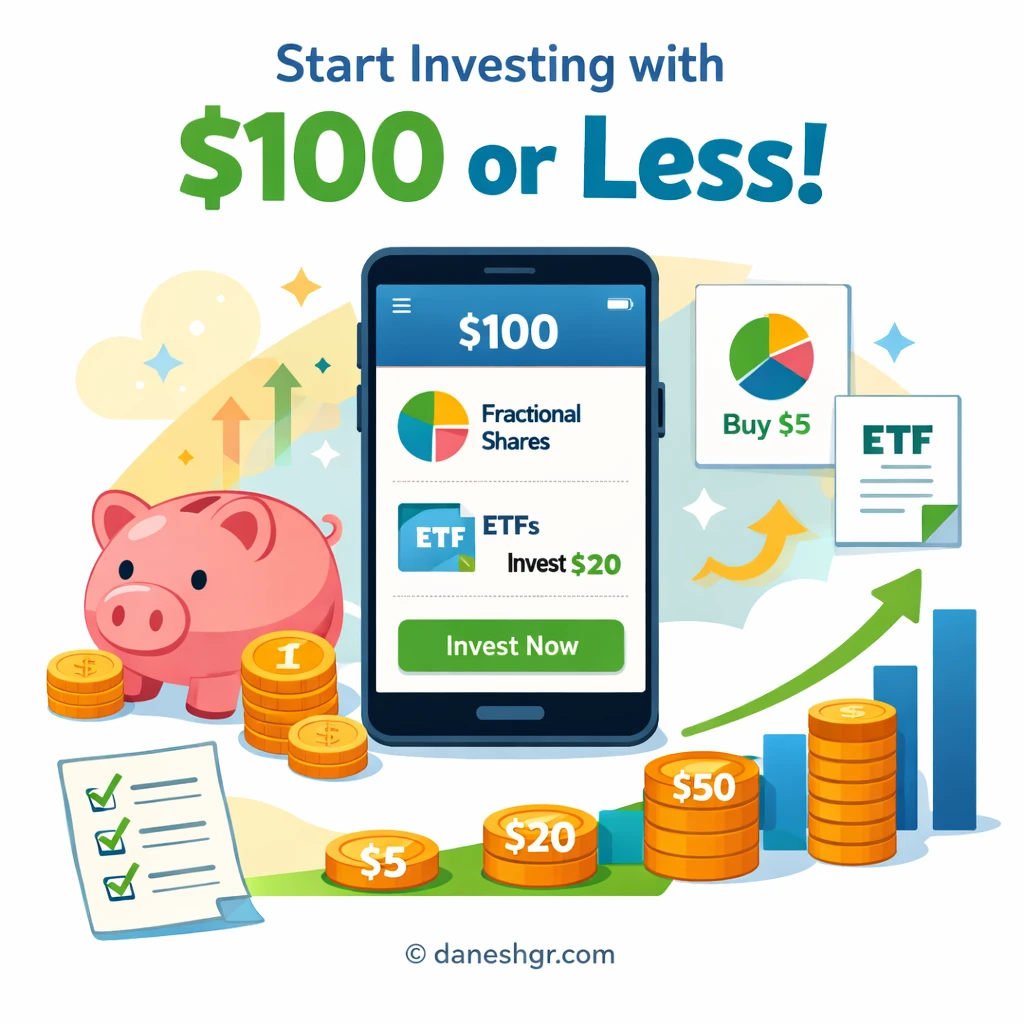
For decades, the world of investing seemed like an exclusive club with a prohibitively high entry fee. The perception that you needed thousands of dollars to start building wealth kept countless potential investors on the sidelines. This guide, authored by Peyman Daneshgar, shatters that myth completely. Today, financial technology (FinTech) has democratized investing, making it accessible to virtually anyone with a smartphone and a small amount of capital. Learning how to start investing with $100 or less is not only possible but is a powerful first step toward financial literacy, independence, and long-term wealth creation. This comprehensive, 10,000-word guide is designed to be the definitive resource on the planet for micro-investing. Whether you’re a student, a gig economy worker, or simply someone who wants their money to work harder, this article will provide you with the knowledge, strategies, and confidence to begin your investment journey today. We will cover everything from mindset and platform selection to specific assets and long-term strategy, ensuring that by the end, you have a clear, actionable plan.

Chapter 1: The Foundational Mindset for Small-Scale Investing
Before you invest your first dollar, you must cultivate the right mindset. This is the most critical step in learning how to start investing with $100 or less.
best robo-advisors for beginners 2024 comparison
1.1 The Power of Starting Small: Compounding is Your Ally
The most potent force in investing is compound interest, which Albert Einstein allegedly called the “eighth wonder of the world.” When you invest, you earn returns not just on your initial capital but also on the accumulated returns from previous periods. Starting with $100 might seem insignificant, but its true power lies in consistency and time.
- Example: If you invest $100 today and add just $25 a month, achieving an average annual return of 7%, you would have over $14,000 in 20 years. The initial amount is less important than the habit.
1.2 Redefining “Afford to Invest”: Prioritizing Your Financial Future
The phrase “I can’t afford to invest” is often a matter of prioritization. How to start investing with $100 or less begins with a small audit of your daily spending. Can you forgo three premium coffees a month? Can you redirect a portion of a streaming subscription? The goal is to identify “leakage” in your finances that can be redirected toward your future.
ETF vs index fund: which is better for a beginner?
1.3 Process Over Perfection: Embracing the Learning Curve
Your first investment goal is not to become a millionaire overnight. It is to learn. Expect to make small, inexpensive mistakes. The education you gain from managing a $100 portfolio is invaluable and far cheaper than the lessons learned by risking thousands later without experience.

1.4 Patience and Long-Term Vision
Micro-investing is a marathon, not a sprint. You are planting a seed, not harvesting a tree. The markets will fluctuate. Your $100 may temporarily become $90 or $110. The key is to ignore short-term noise and focus on your long-term plan. This patient, disciplined approach is the cornerstone of how to start investing with $100 or less successfully.
how to open a brokerage account for the first time
Chapter 2: Essential Financial Pre-Work Before You Invest
Jumping straight into investing without a foundation is like building a house on sand. Complete these steps first.
2.1 The Non-Negotiable First Step: Build a Mini Emergency Fund
Before investing, you must have a buffer. Aim for a starter emergency fund of $500-$1,000 in a high-yield savings account. This protects your $100 investment from being immediately liquidated if an unexpected $200 expense arises. Investing should be done with money you can afford to leave untouched for at least 5 years.
2.2 Understand and Manage High-Interest Debt
If you have credit card debt with an 18% APR, paying it off is a guaranteed 18% return on your money—far higher and risk-free compared to the stock market’s historical average of 7-10%. Prioritize crushing high-interest debt before aggressively investing.
what is dollar-cost averaging and how to set it up
2.3 Set Clear, “SMART” Financial Goals
What is the purpose of this $100 investment?
- Specific: “I want to learn about the stock market.”
- Measurable: “I want to grow this to $150 in 3 years.”
- Achievable: Based on realistic market returns.
- Relevant: Aligns with your life (e.g., saving for future education).
- Time-bound: Set a review date.
This clarity will guide every decision you make as you explore how to start investing with $100 or less.
Chapter 3: Platforms & Tools for the Micro-Investor
The rise of FinTech has created a paradise for small-scale investors. Here are the primary tools for executing your plan on how to start investing with $100 or less.
how to stop impulse buying online
3.1 Micro-Investing Apps (The Easiest Entry Point)
These apps are specifically designed for starting investing with $100 or less. They allow you to invest “spare change” or small, fixed amounts.
- Acorns: Rounds up your everyday purchases to the nearest dollar and invests the difference into a pre-built, diversified portfolio (ETF-based). Minimal effort required.
- Stash: Allows you to buy fractional shares of individual stocks and ETFs based on themes you believe in (e.g., “Clean Energy,” “Tech Innovators”). Excellent for educational, thematic investing.
- Public: A social investing app that focuses on transparency and community, allowing fractional share investing and discussion with other investors.
3.2 Traditional Brokerages with Fractional Shares
Major brokerages have adapted, allowing you to buy pieces of expensive stocks like Amazon or Google.
- Fidelity Investments: Offers fractional shares on thousands of stocks and ETFs with no minimums and zero commission fees. A top choice for serious beginners.
- Charles Schwab: Similar offerings to Fidelity, with robust research tools and educational resources.
- Robinhood: Pioneered commission-free trading and fractional shares. Known for its simple, intuitive interface, though it offers fewer advanced tools.
3.3 Robo-Advisors for Automated, Hands-Off Investing
These platforms use algorithms to build and manage a diversified portfolio for you based on a questionnaire.
- Betterment / Wealthfront: Leaders in the space. They automatically rebalance your portfolio and employ tax-loss harvesting strategies. Many have low or no minimums to start, perfect for investing with $100 or less.
3.4 Direct Investment Platforms
- Stock Fractional Share Programs (DSPPs): Some companies like Coca-Cola, Lowe’s, and Microsoft allow you to buy shares directly from them, often with no minimums.
- TreasuryDirect: The U.S. government’s platform for buying Treasury securities (like I Bonds) directly, with a minimum of $25.
Chapter 4: What Can You Actually Invest In with $100?
Your capital is fully deployable. Here are the best asset classes for someone learning how to start investing with $100 or less.
4.1 Exchange-Traded Funds (ETFs) – The #1 Recommendation
ETFs are the perfect vehicle for a small, diversified portfolio. One ETF share can give you ownership in hundreds of companies.
- Broad Market ETFs: Funds like
VTI(Vanguard Total Stock Market) orSPY(S&P 500 ETF) give you instant exposure to the entire U.S. market. With fractional shares, you can own a piece for much less than the share price. - Sector or Theme ETFs: Want to invest in robotics, genomics, or renewable energy? There’s likely an ETF for that (e.g.,
ARKK,ICLN).
4.2 Fractional Shares of Individual Stocks
You can build a “mini-portfolio” of companies you believe in. Instead of one $100 share, own $25 slices of four different companies (e.g., Apple, Disney, Starbucks, Pfizer). This provides some diversification even with a tiny budget.

4.3 Mutual Funds with Low Minimums
Some mutual fund families, particularly from Vanguard and Fidelity, have lowered their minimum initial investments to $0 or $1 for certain index funds when you open an account with them. Research “Vanguard STAR Fund” or “Fidelity ZERO funds” as examples.
4.4 Savings & Debt Instruments
- High-Yield Savings Accounts (HYSAs): While not “investing” in the classic sense, online banks like Ally, Marcus, or Discover offer significantly higher interest rates than traditional banks. This is the perfect place for your emergency fund.
- Certificates of Deposit (CDs): Offer a fixed interest rate for a fixed term (e.g., 6 months, 1 year). Good for money you know you won’t need for a specific period.
- Series I Savings Bonds: A unique U.S. government bond that protects against inflation. The current annual limit is $10,000, but you can start with $25. They are a safe, long-term savings tool.
4.5 Alternative & Educational Investments
- Cryptocurrency: Many platforms allow you to buy fractions of Bitcoin or Ethereum for a few dollars. Warning: This is a highly volatile, speculative asset class. Only allocate a tiny portion of your $100 if you choose to explore this, and consider it a high-risk learning experiment.
- Practice with Simulators: Before using real money, use a paper trading simulator (offered by many brokerages) to practice stock picking and portfolio management risk-free.
Chapter 5: Building Your First $100 Portfolio – A Step-by-Step Strategy
Let’s move from theory to practice. Here is a concrete plan for how to start investing with $100 or less.
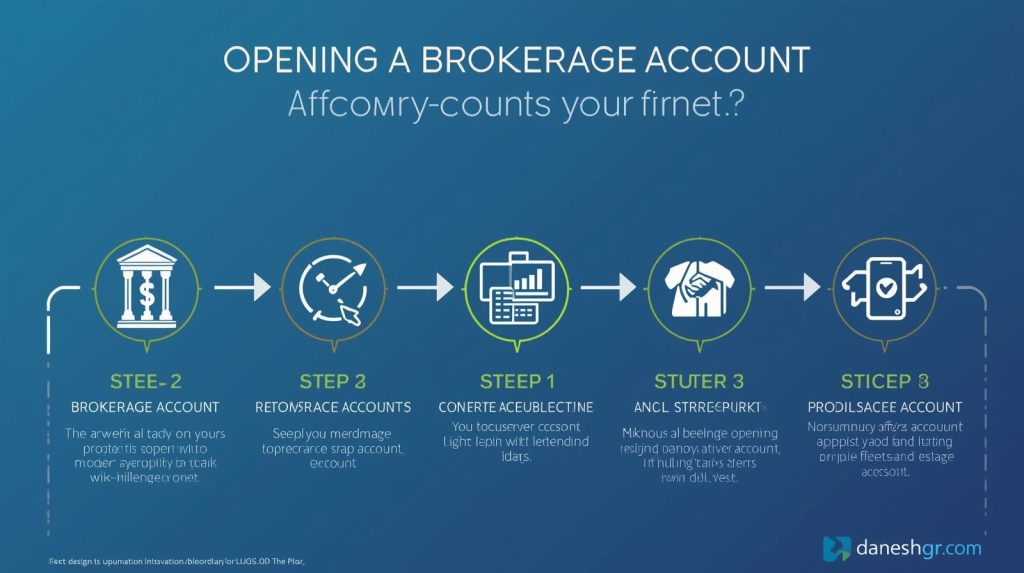
Step 1: Choose Your Platform.
Based on Chapter 3, select one. For a pure beginner, a micro-investing app like Acorns or Stash, or a fractional-share brokerage like Fidelity, is ideal.
Step 2: Determine Your Risk Tolerance & Asset Allocation.
With $100 and a long time horizon (5+ years), you can afford to be more aggressive. A sample allocation could be:
- Aggressive (High Risk/Reward): 100% in a broad-market U.S. stock ETF.
- Moderate: 80% in a U.S. stock ETF, 20% in an International stock ETF.
- Conservative: 60% in a U.S. stock ETF, 40% in a Bond ETF.
For your first $100, simplicity reigns. A single, broad-market ETF like VTI or SPY (or their fractional equivalents) is an excellent, diversified start.
Step 3: Execute Your First Trade.
Log into your chosen platform. Search for the ETF or stock ticker. Instead of selecting “Buy 1 share,” look for the option to “Buy in dollars.” Enter $100 (or $50 if you want to reserve some for another investment). Review and submit the order.
Step 4: Automate Your Future Contributions (The Most Important Step).
The initial $100 is just the spark. Set up an automatic transfer of $25, $50, or whatever you can afford, from your checking account to your investment account every single week or month. This is called dollar-cost averaging (DCA). It removes emotion, builds discipline, and ensures you buy more shares when prices are low and fewer when they are high.
Step 5: Monitor, Learn, and Rebalance (Minimally).
Check your portfolio monthly, not daily. The goal is to observe and learn how markets move, not to panic-sell. Once a year, review your holdings. If your 80/20 stock/bond split has drifted to 90/10 due to stock growth, you might sell a little stock and buy bonds to return to 80/20. With a $100 portfolio, this is less critical; focus more on consistent contributions.
Chapter 6: Advanced Micro-Strategies & Common Pitfalls to Avoid
6.1 Strategies to Maximize Small Capital
- Dividend Reinvestment Plans (DRIPs): Automatically use any dividends you earn to buy more shares (even fractional ones), accelerating compounding.
- Thematic “Sandbox” Investing: Dedicate a small portion (e.g., $20) to invest in a specific trend you’re curious about (e.g., electric vehicle stocks, metaverse companies). This satisfies the urge to “pick stocks” while keeping the bulk of your capital in safer, diversified ETFs.
- Round-Up Amplification: If using a round-up app, add a multiplier (e.g., 2x or 3x your round-ups) to increase your investment rate.
6.2 Critical Pitfalls That Can Derail You
- Chasing “Hot Tips” or Meme Stocks: This is gambling, not investing. It can lead to rapid losses and is the opposite of a sustainable plan for how to start investing with $100 or less.
- Letting Fees Eat Your Returns: Avoid platforms with high monthly fees relative to your balance. A $1 monthly fee on a $100 portfolio is a 12% annual drag! Opt for fee-free trading and no-account-minimum platforms.
- Succumbing to Analysis Paralysis: Don’t wait for the “perfect” time or the “perfect” stock. The best time to start was yesterday; the second-best time is today. Start simple.
- Selling in a Panic: When the market drops, your instinct will be to sell to “stop the losses.” This locks in losses. Remember your long-term horizon and stay the course.
Chapter 7: The Path Forward: Scaling from $100 to $1,000 and Beyond
Your first $100 is a proof of concept. The real journey begins as you scale.
- Increase Your Contribution Rate: Every time you get a raise, tax refund, or side hustle income, direct a percentage of it to your investment account.
- Diversify Across Asset Classes: As your portfolio grows past $1,000, consider adding international stocks, bonds, or real estate ETFs (REITs) for further diversification.
- Deepen Your Knowledge: Read books (The Simple Path to Wealth by JL Collins, The Little Book of Common Sense Investing by John Bogle), follow reputable financial blogs, and take free online courses.
- Consider Tax-Advantaged Accounts: Once you have steady income, open an IRA (Individual Retirement Account). The tax benefits (Traditional IRA: tax-deductible now, Roth IRA: tax-free growth) are immense wealth-building tools.
Frequently Asked Questions (FAQ) on How to Start Investing with $100 or Less
Q1: Is it even worth investing only $100?
A: Absolutely. The primary value is not the immediate dollar amount but the establishment of the investing habit, the power of compounding over decades, and the priceless financial education you gain. A journey of a thousand miles begins with a single step—and a portfolio of a million dollars begins with a single $100 investment.
Q2: What’s the safest way to invest $100?
A: For capital preservation, a High-Yield Savings Account (HYSA) or a U.S. Treasury security (like an I Bond) is safest. For investing in the market with moderate safety, a broad-market ETF provides instant diversification, which is far safer than putting all $100 into one single company’s stock.
Q3: How much can I realistically earn from a $100 investment?
A: With a historical average annual stock market return of ~7%, a single $100 investment could grow to about $200 in 10 years, $400 in 20 years, and $800 in 30 years—with no additional contributions. The realistic “earnings” come from your consistent monthly additions over time.
Q4: Are there any hidden fees I should watch out for?
A: Yes. Watch for: 1) Account maintenance fees, 2) Inactivity fees, 3) High ETF expense ratios (aim for under 0.20%), and 4) Mutual fund load fees. Choose a modern brokerage that advertises “no commission fees” and “no account minimums.”
Q5: Can I lose all my $100?
A: It is very unlikely you would lose all of it if invested in a diversified ETF. However, the value of your investment will fluctuate. It could drop to $80 or rise to $120 in the short term. This is normal market volatility. You only realize a loss if you sell when the price is down.
Q6: Should I invest my $100 all at once or slowly over time?
A: For a beginner, psychological comfort is key. Dollar-Cost Averaging (DCA)—investing $25 per week for four weeks—can reduce the stress of timing the market. For a long-term investor, research shows that investing a lump sum as soon as you have the money has slightly better historical outcomes, but the difference with small sums is negligible. Choose the method that helps you sleep at night and stick with it.
Q7: What’s the difference between saving and investing?
A: Saving is putting money aside in a safe, liquid account (like a HYSA) for short-term goals (<3-5 years). Investing is committing money to assets (like stocks/ETFs) with the expectation of growth over the long term (>5 years) but with the acceptance of short-term risk and volatility.
Conclusion: Your Financial Future Starts Now
You now hold the complete blueprint for how to start investing with $100 or less. The barriers of the past are gone. The only barrier that remains is inaction. The complex world of finance has been simplified, digitized, and miniaturized to fit in your pocket and align with your budget.
Remember, the goal of this first $100 is not retirement. It is activation. It is opening an account, making your first trade, and setting up an automatic contribution. It is about transforming your identity from a passive saver to an active owner of the world’s most innovative companies. The confidence and knowledge you gain from managing this small sum will pay dividends far greater than any single financial return.
Author Peyman Daneshgar urges you to take that first step this week. Choose one platform from Chapter 3, fund it with $100, and purchase a slice of a broad-market ETF. Then, commit to adding to it consistently. In doing so, you are not just allocating capital; you are investing in the most important asset of all: your own financial future and education. Start today.