Author: Peiman Daneshgar
Email: daneshgar781@gmail.com
Table of contents
- 1. What Are Round‑Up Savings Apps?
- 2. How Round‑Up Savings Actually Works
- 3. Why Round‑Up Apps Are So Popular
- 4. Example of How Spare Change Adds Up
- 5. Key Features of Round‑Up Savings Apps
- 6. Pros of Using Round‑Up Savings Apps
- 7. Potential Downsides to Consider
- 8. Tips to Maximize Round‑Up Savings
- 9. Who Should Use Round‑Up Apps?
- 10. Frequently Asked Questions
- 11. Final Thoughts
1. What Are Round‑Up Savings Apps?
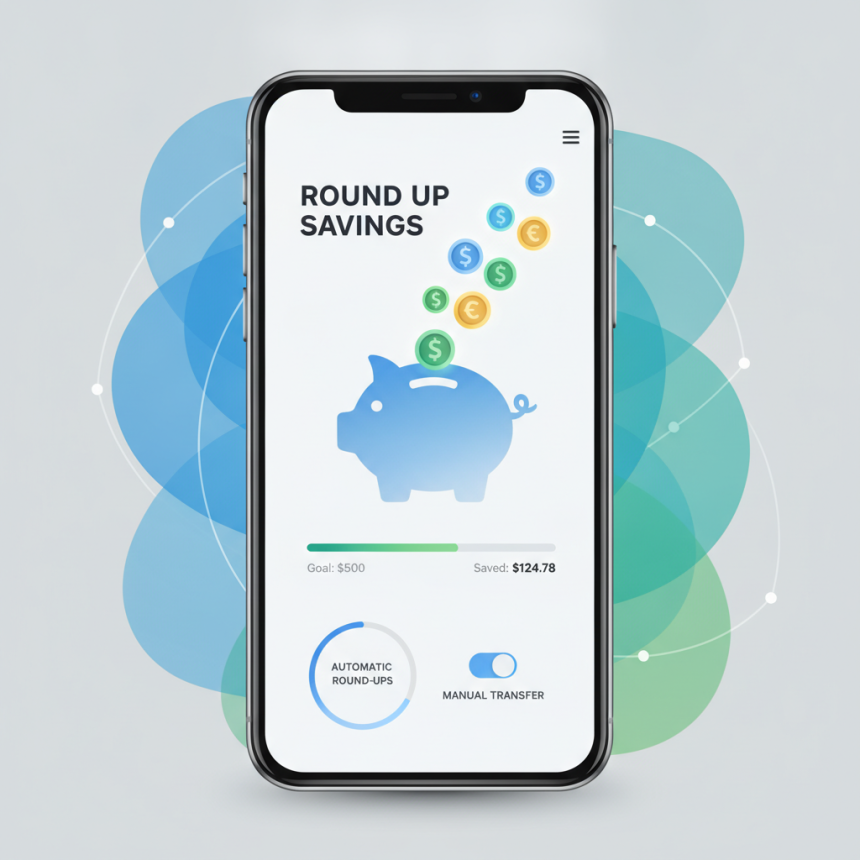
Round‑up savings apps are financial tools that automatically save small amounts of money every time you make a purchase.
The concept is simple.
When you buy something with your debit or credit card, the app rounds the purchase up to the nearest dollar and moves the spare change into a savings or investment account.
For example:
- Coffee costs $3.40
- The app rounds it to $4.00
- $0.60 goes into savings
These tiny contributions accumulate quietly in the background.
Over time, the spare change becomes meaningful savings.
2. How Round‑Up Savings Actually Works
Round‑up savings apps connect to your bank account or debit card.
Each time you make a purchase, the system calculates the difference between the purchase amount and the next whole dollar.
That difference is saved automatically.
Example spending:
- Lunch: $8.25 → save $0.75
- Gas: $42.60 → save $0.40
- Groceries: $23.10 → save $0.90
Total spare change saved from these purchases:
$2.05
The amounts may seem small, but frequent spending can generate steady savings.
52 Week Savings Challenge Rules
3. Why Round‑Up Apps Are So Popular
Many people struggle to save money consistently.
Round‑up apps solve this problem by making saving automatic and painless.
The main reason they work is psychological.
Saving large amounts requires discipline.
Saving a few cents at a time feels effortless.
Because the amounts are small, most people hardly notice them leaving their account.
Yet the habit of automatic saving still develops.
4. Example of How Spare Change Adds Up
Imagine someone makes 30 purchases per week.
If the average round‑up amount is $0.50, the weekly savings would be:
30 × $0.50 = $15
That equals:
- $60 per month
- $720 per year
If the money is invested instead of saved, the long‑term growth could be even larger.
What begins as spare change can eventually become thousands of dollars.
5. Key Features of Round‑Up Savings Apps
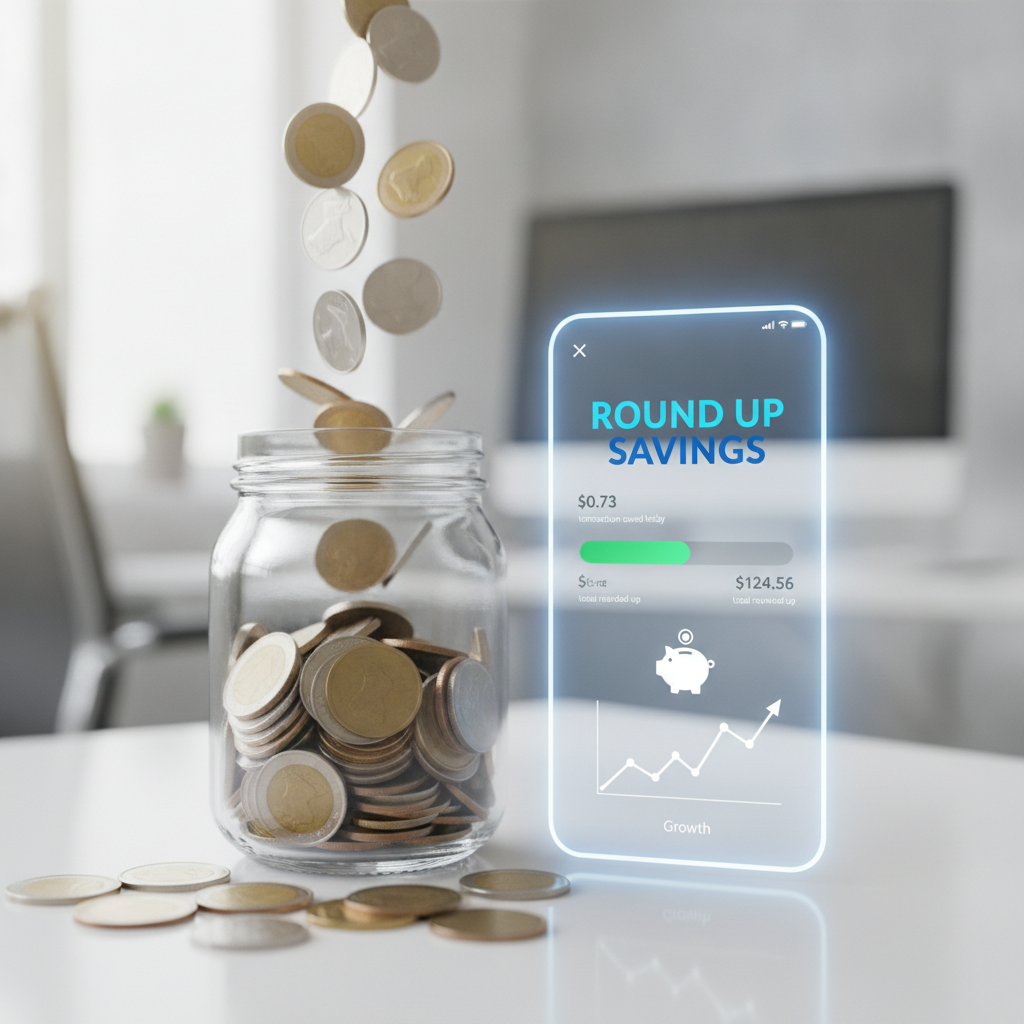
Most round‑up apps include several useful features.
Automatic Round‑Ups
Every purchase triggers small savings automatically.
Multiplier Options
Some apps allow users to multiply their round‑ups by 2x, 5x, or even 10x to accelerate savings.
Investment Options
Certain apps invest spare change into diversified portfolios instead of keeping it as cash.
Goal Tracking
Users can create savings goals such as travel funds, emergency savings, or new gadgets.
Automatic Transfers
Apps often allow additional recurring deposits alongside round‑ups.
6. Pros of Using Round‑Up Savings Apps
Round‑up apps offer several advantages.
Effortless Saving
Money is saved automatically without manual transfers.
Beginner Friendly
They require no financial knowledge or complicated strategies.
Habit Building
Users become more aware of saving money regularly.
Low Barrier to Entry
Even people with limited income can start saving.
For many users, round‑up apps act as a gateway to better financial habits.
7. Potential Downsides to Consider
Despite their benefits, round‑up apps are not perfect.
Some apps charge monthly subscription fees, which can reduce the effectiveness of small savings.
Another limitation is that round‑ups alone may not generate large savings quickly.
They should complement other saving strategies rather than replace them.
Additionally, linking financial accounts to apps requires trusting the platform’s security measures.
Users should always choose reputable providers.
Better Money Habits vs Khan Academy
8. Tips to Maximize Round‑Up Savings
To make the most of round‑up apps, consider these strategies.
Enable round‑up multipliers if your budget allows.
Combine round‑ups with automatic weekly deposits.
Use round‑ups to build a starter emergency fund.
Review the app’s fees to ensure they do not outweigh the benefits.
These steps can turn small digital spare change into meaningful savings.
9. Who Should Use Round‑Up Apps?
Round‑up savings apps are particularly useful for:
People who struggle to save consistently
Beginners learning financial habits
Young adults starting their first savings plan
Anyone who wants automated micro‑savings
However, people with disciplined budgeting habits may prefer traditional savings methods.
Round‑ups are most effective as a supplement, not a complete financial strategy.
10. Frequently Asked Questions
How much money can round‑up apps save?
The amount depends on spending habits, but many users save several hundred dollars per year.
Are round‑up apps safe?
Reputable apps use bank‑level security and encryption, but users should always research platforms before linking accounts.
Can round‑ups be invested instead of saved?
Yes. Some apps automatically invest spare change into diversified portfolios.
Do round‑up apps charge fees?
Some apps charge small monthly fees, while others are free or included with banking services.
11. Final Thoughts
Round‑up savings apps prove that small financial habits can create meaningful results.
By turning everyday purchases into micro‑savings opportunities, these apps make saving effortless and automatic.
Although they won’t replace larger savings strategies, they can play an important role in building financial discipline.
Sometimes the easiest way to start saving is not by making big changes—but by letting spare change do the work quietly in the background.