The Ultimate Guide: What to Look For in a Fixed-Rate Mortgage (2026)
By Peyman Daneshgar
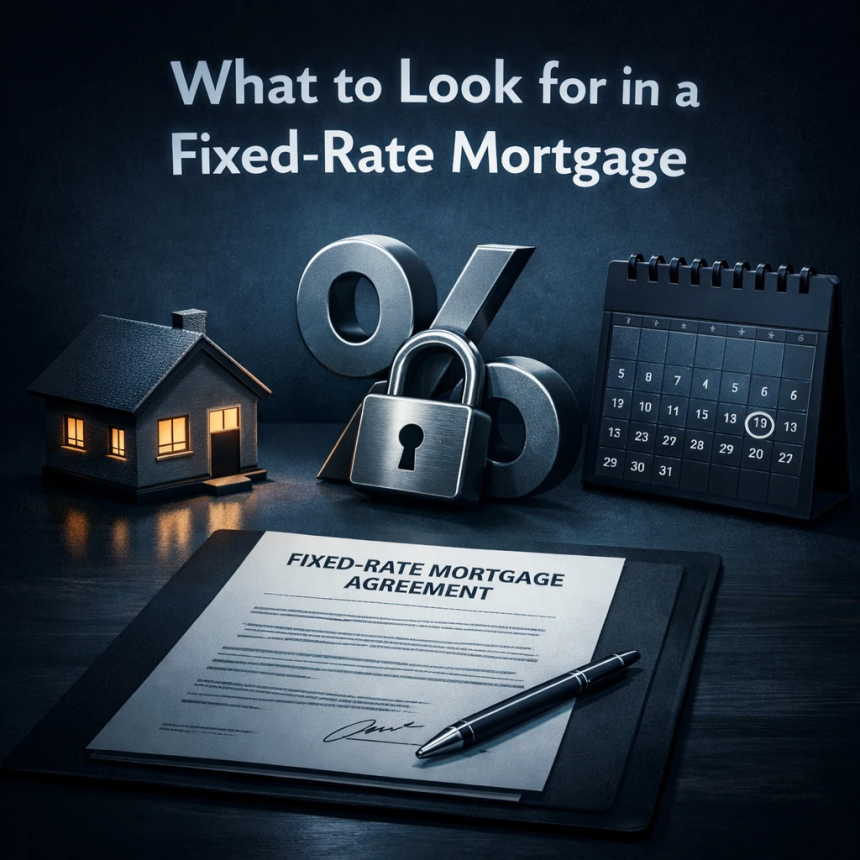
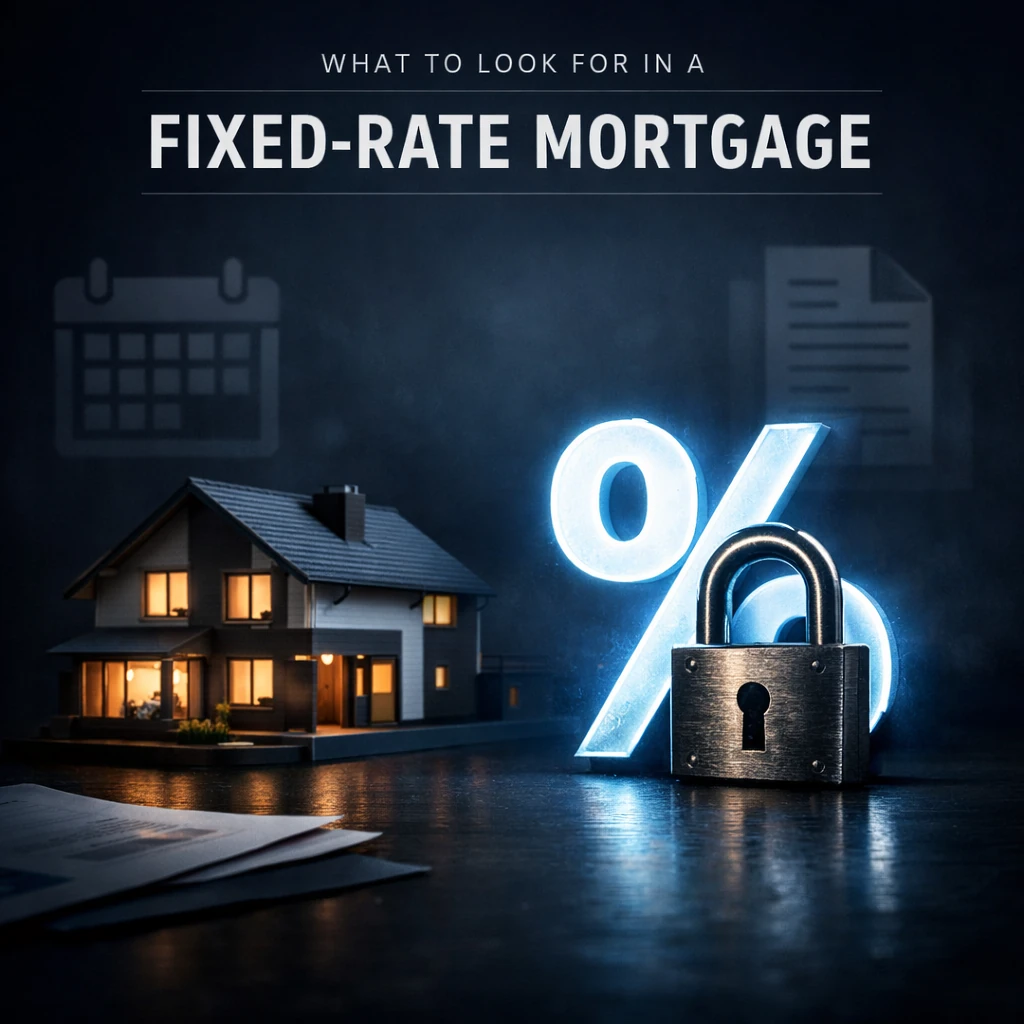
In a world of financial uncertainty, few things offer the peace of mind of a fixed-rate mortgage. It’s the bedrock of American homeownership—a loan that promises your interest rate—and your monthly payment—will never change, no matter what happens to the economy.
But here’s the catch: not all fixed-rate mortgages are created equal. In 2026, with 30-year fixed rates hovering just above 6% and lenders competing aggressively for business , knowing what to look for in a fixed-rate mortgage can save you tens of thousands of dollars over the life of your loan. It’s not just about the interest rate—it’s about the terms, the fees, the flexibility, and how the loan fits into your long-term financial plan.
This guide is the definitive resource for anyone considering a fixed-rate mortgage in 2026. We’ll walk you through the essential factors to evaluate, the questions you must ask, the traps to avoid, and exactly how to compare offers. Whether you’re a first-time homebuyer or a seasoned homeowner looking to refinance, you’ll have a clear roadmap to finding the right loan for your future.
Table of Contents
- What Is a Fixed-Rate Mortgage? (And Why Choose One in 2026)
- The Core of the Matter: Understanding Interest Rates and APR
- Term Length: 30-Year vs. 15-Year vs. 20-Year Fixed-Rate Mortgages
- Beyond the Rate: Fees, Points, and Closing Costs
- Mortgage Insurance: PMI and What It Means for Your Loan
- Prepayment Penalties: Can You Pay Off Your Loan Early?
- Rate Lock: Securing Your Rate from Application to Closing
- How to Compare Fixed-Rate Mortgage Offers
- The 2026 Market: Current Fixed-Rate Mortgage Trends
- Frequently Asked Questions (FAQs)
- Conclusion: Making Your Choice
What Is a Fixed-Rate Mortgage? (And Why Choose One in 2026)
A fixed-rate mortgage is exactly what it sounds like: a home loan where the interest rate remains constant for the entire term . Whether you choose a 15-year, 20-year, or 30-year loan, your rate—and the principal and interest portion of your monthly payment—will never change .
This predictability is the single greatest advantage of a fixed-rate mortgage. When you sign the papers, you lock in your housing cost for decades. If market rates skyrocket to 8% or 10%, your rate stays put. If they plummet to 4%, you have the option to refinance—but you’re never forced to pay more.
Why Choose a Fixed-Rate Mortgage in 2026?
With the average 30-year fixed rate at 6.19% as of February 2026 , and 15-year fixed rates even lower around 5.59% , borrowers face a different market than the pandemic-era lows. Here’s why fixed-rates make sense today:
- Stability in an Uncertain Economy: With lingering inflation concerns and Federal Reserve policy shifts, locking in a predictable payment protects your budget .
- Long-Term Homeownership: If you plan to stay in your home for 7-10 years or more, a fixed-rate mortgage is almost always the right choice .
- Competitive Rates: While rates are higher than a few years ago, they remain historically reasonable, and lenders are competing aggressively for borrowers with strong credit .
- how to invest in S&P 500 from Europe (or UK, Germany, etc.)
The Core of the Matter: Understanding Interest Rates and APR
When you start shopping for a fixed-rate mortgage, you’ll encounter two critical numbers: the interest rate and the Annual Percentage Rate (APR) . Understanding the difference is essential.
Interest Rate
This is the cost of borrowing the principal loan amount, expressed as a percentage . It determines your monthly payment. A 6.0% interest rate on a $300,000 loan gives you a principal and interest payment of about $1,798 per month.
Is Investing in Cryptocurrency Safe for Beginners?
APR (Annual Percentage Rate)
The APR is a broader measure of loan cost. It includes the interest rate plus any lender fees, origination charges, discount points, and certain closing costs . The APR is always higher than the interest rate if there are fees.
Why APR Matters:
APR allows you to compare the “true cost” of loans from different lenders. Lender A might offer a 5.875% interest rate with high fees, while Lender B offers 6.0% with no fees. Lender B’s APR could be lower, making it the better deal over time.
What to Look For: Don’t just compare interest rates. Ask each lender for their APR and compare those numbers side-by-side . As one lender notes, APR “gives you a full picture of loan costs” .
How to Choose Your First Mutual Fund
Term Length: 30-Year vs. 15-Year vs. 20-Year Fixed-Rate Mortgages
Fixed-rate mortgages come in various term lengths. The most common are 30-year, 20-year, and 15-year loans. Your choice dramatically affects your monthly payment and total interest cost.
30-Year Fixed-Rate Mortgage
The most popular choice for homebuyers.
- Pros: Lowest monthly payment, maximizes cash flow, frees up money for other investments .
- Cons: Highest total interest cost over the life of the loan.
- Best For: First-time buyers, those on a tight budget, investors who want to leverage capital elsewhere.
- Current Rates (Feb 2026): Approximately 6.19% .
- investment mistakes to avoid in your 20s
15-Year Fixed-Rate Mortgage
A faster path to full ownership.
- Pros: Lower interest rate than 30-year loans, builds equity much faster, pays off loan in half the time, significant interest savings .
- Cons: Higher monthly payment.
- Best For: Borrowers with stable, higher income who want to own their home outright sooner.
- Current Rates (Feb 2026): Approximately 5.59% .
- snowball vs avalanche method calculator
20-Year Fixed-Rate Mortgage
A middle-ground option.
- Pros: Balances manageable monthly payments with faster equity building than a 30-year.
- Cons: Monthly payment higher than 30-year, but less common than 15- or 30-year loans.
- Best For: Borrowers who want a compromise between payment size and interest savings.
- Current Rates (Feb 2026): Approximately 5.50% .
- how to negotiate lower credit card interest rates
Real-World Comparison: $300,000 Loan
| Loan Term | Interest Rate | Monthly Payment | Total Interest Paid |
|---|---|---|---|
| 30-Year Fixed | 6.19% | $1,834 | $360,000 |
| 20-Year Fixed | 5.50% | $2,063 | $195,000 |
| 15-Year Fixed | 5.59% | $2,464 | $143,000 |
Estimates for illustrative purposes. Actual rates and payments vary.
What to Look For: Consider how long you plan to stay in the home. If it’s your “forever home,” a 15-year term can save a fortune. If you might move in 5-10 years, the 30-year’s lower payment gives you flexibility .
Beyond the Rate: Fees, Points, and Closing Costs
The interest rate is just the beginning. Fixed-rate mortgages come with a host of fees that can add thousands to your upfront costs.
Origination Fees
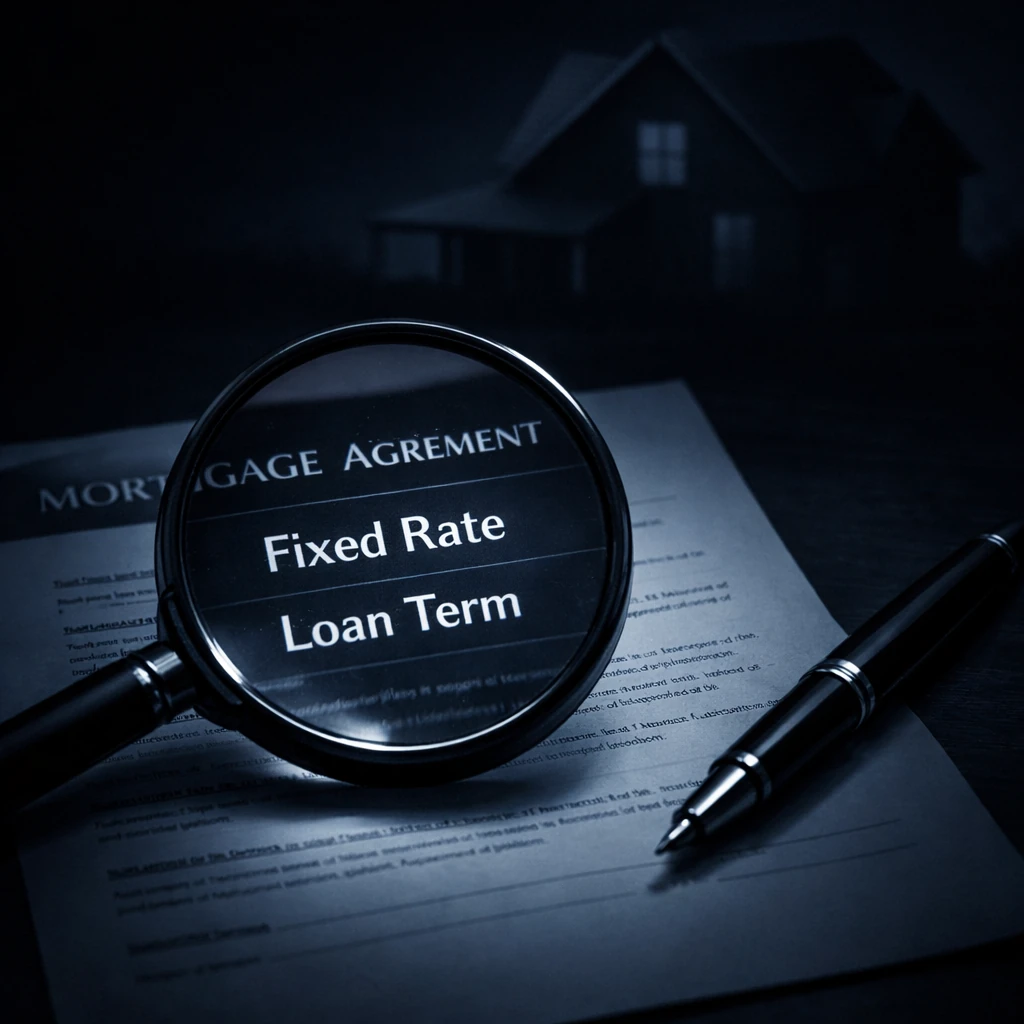
Lenders charge a fee for processing your loan, typically 0.5% to 1% of the loan amount. Some lenders advertise “no origination fee” loans but may have a slightly higher rate.
does debt settlement hurt your credit score?
Discount Points
Points are prepaid interest that lower your rate . One point costs 1% of your loan amount (e.g., $3,000 on a $300,000 loan) and typically reduces your rate by 0.25%.
- When Points Make Sense: If you plan to stay in the home for a long time and want to lower your monthly payment, buying points can be a smart move .
- When to Skip Points: If you have limited cash for closing or expect to refinance or move within a few years, skip the points .
- how to get out of payday loan debt fast
Closing Costs
These include appraisal fees, title insurance, attorney fees, recording fees, and more. Total closing costs typically run 2% to 5% of the loan amount . On a $300,000 loan, that’s $6,000 to $15,000.
What to Look For:
- Ask for a Loan Estimate from each lender, which itemizes all fees .
- Look for lenders offering low-cost mortgages with reduced closing costs. Some banks offer programs with as little as $495 in closing costs .
- Compare the total fees, not just the rate.
Mortgage Insurance: PMI and What It Means for Your Loan
If your down payment is less than 20% of the home’s purchase price, you will likely be required to pay for Private Mortgage Insurance (PMI) . This protects the lender if you default.
How PMI Works
- PMI is added to your monthly payment.
- Cost typically ranges from 0.3% to 1.5% of the original loan amount per year.
- On a $300,000 loan, PMI could cost $75 to $375 per month.
- best debt consolidation loans for good credit 2024
How to Remove PMI
The good news: PMI is not permanent. Once you build 20% equity in your home (either through payments or appreciation), you can request cancellation. It automatically terminates when your loan balance reaches 78% of the original value .
Avoiding PMI
- Make a 20% down payment .
- Some lenders offer “piggyback” loans (80% first mortgage, 10% down payment, 10% second loan) to avoid PMI, though this can be complex.
What to Look For: If you can’t put 20% down, understand the PMI cost and how to remove it. Ask your lender about PMI cancellation policies upfront.
Strategies to Pay Off $30,000 in Student Loans
Prepayment Penalties: Can You Pay Off Your Loan Early?
Some mortgages come with a prepayment penalty, a fee charged if you pay off your loan early—whether by selling the home, refinancing, or making extra payments.
Why Prepayment Penalties Exist
Lenders make money on interest. If you pay off your loan early, they lose expected profits. Prepayment penalties compensate them for that loss.
The Good News
Prepayment penalties are rare on fixed-rate mortgages from reputable lenders. They are more common on subprime or non-qualified mortgages. Many lenders, like Third Federal, explicitly state they have “no prepayment penalty” .
What to Look For
- Read the fine print: Before signing, confirm that your loan has no prepayment penalty.
- Ask directly: “Can I make extra payments or pay off this loan early without any fee?”
- Avoid any loan with a penalty unless you are absolutely certain you won’t pay it off early.
Rate Lock: Securing Your Rate from Application to Closing
Mortgage rates can change daily, even hourly. A rate lock guarantees that the interest rate and points offered to you will be honored for a specific period, typically 30 to 90 days .
Why You Need a Rate Lock
Without a lock, your rate could increase between application and closing, potentially costing you hundreds per month.
What to Look For in a Rate Lock
- Length: Ensure the lock period covers your expected closing date. If you’re buying a new construction home, you may need a longer lock (90+ days) .
- Cost: Some lenders offer free rate locks; others may charge a fee.
- Float-Down Options: Some lenders offer a “float-down” provision. If rates drop during your lock period, you can “float down” to the lower rate, usually for a fee .
- Early Lock: Some lenders, like Third Federal, allow you to lock your rate at preapproval, even before you find a house .
Pro Tip: When comparing lenders, ask about their rate lock policies. A lender that offers a free, long-term lock with a float-down option provides valuable protection.
How to Compare Fixed-Rate Mortgage Offers
To truly know what to look for in a fixed-rate mortgage, you must compare offers systematically. Here’s a step-by-step approach.
Step 1: Get Multiple Quotes
Apply with at least three different lenders—a mix of big banks, credit unions, and online lenders . Submit all applications within a 24-hour window to ensure you’re comparing rates from the same market day .
Step 2: Review the Loan Estimates
Each lender will provide a Loan Estimate form. Compare them line by line :
- Interest Rate and APR: Which is lower?
- Origination Fees: Are they charging points or fees?
- Closing Costs: Which lender has lower total fees?
- Monthly Payment: What’s the full PITI (Principal, Interest, Taxes, Insurance) payment?
Step 3: Consider the Total Cost
Don’t just look at the monthly payment. A lower monthly payment on a 30-year loan may cost you more in total interest than a 15-year loan. Use a mortgage calculator to project total interest over the life of the loan.
Step 4: Evaluate the Lender
Is the lender responsive? Do they answer your questions? A great rate isn’t worth much if the lender can’t close on time.
The 2026 Market: Current Fixed-Rate Mortgage Trends
Understanding the current market helps you know what to look for in a fixed-rate mortgage right now.
Rates in Early 2026
- 30-Year Fixed: Averaging 6.0% to 6.2% .
- 15-Year Fixed: Averaging 5.5% to 5.6% .
- 20-Year Fixed: Available around 5.5% .
Market Dynamics
- Increased Competition: Lenders are competing aggressively for borrowers, particularly those with strong credit and larger down payments . This means rates and fees may be negotiable.
- Stable Outlook: After a period of volatility, rates are expected to remain relatively stable in 2026, though economic news can cause fluctuations .
- Downward Pressure on Rents: Interestingly, while mortgage rates remain elevated, rents are softening in some markets, affecting the rent vs. buy calculus .
Frequently Asked Questions (FAQs)
1. What is the difference between a fixed-rate and an adjustable-rate mortgage (ARM)?
A fixed-rate mortgage has an interest rate that stays the same for the entire loan term. An ARM has a fixed rate for an initial period (e.g., 5, 7, or 10 years), after which the rate adjusts periodically based on market conditions .
2. What credit score do I need for a fixed-rate mortgage in 2026?
For conventional fixed-rate loans, most lenders look for a minimum credit score of 620. For the best rates, aim for 740 or higher . FHA loans may allow scores as low as 580 with a 3.5% down payment.
3. Is a 15-year fixed-rate mortgage better than a 30-year?
It depends on your goals. A 15-year loan saves significantly on total interest but has a higher monthly payment. A 30-year loan offers lower payments and more flexibility .
4. What is PMI and how do I avoid it?
PMI is Private Mortgage Insurance, required if your down payment is less than 20%. You can avoid it by making a 20% down payment or by using a lender who offers a “piggyback” loan structure .
5. Should I pay points to lower my rate?
Pay points if you plan to stay in the home long enough to recoup the upfront cost through monthly savings. Skip points if you have limited cash or expect to move or refinance within a few years .
6. How long does it take to close on a fixed-rate mortgage?
A typical closing takes 30 to 45 days from application to funding. Delays can occur, so a 60-day rate lock provides a buffer .
7. Can I pay off my fixed-rate mortgage early without penalty?
Most reputable lenders do not charge prepayment penalties on fixed-rate mortgages. Always confirm by reading your loan documents or asking your lender directly .
8. What is a rate lock and why do I need one?
A rate lock guarantees your interest rate for a specific period (usually 30-90 days). It protects you from rate increases between application and closing .
9. How do I compare offers from different lenders?
Compare the APR, total closing costs, monthly payment, and loan terms. Use the Loan Estimate form to make an apples-to-apples comparison .
10. What are the best fixed mortgage rates right now?
As of February 2026, competitive 30-year fixed rates are around 6.0% to 6.2% , and 15-year fixed rates are around 5.5% to 5.6% . Your specific rate will depend on your credit, down payment, and lender.
Conclusion: Making Your Choice
Choosing a fixed-rate mortgage is one of the most significant financial decisions you’ll make. By understanding what to look for in a fixed-rate mortgage, you empower yourself to select a loan that provides stability, fits your budget, and aligns with your long-term goals.
Remember the essentials:
- Compare APR, not just the interest rate.
- Choose a term length that balances monthly affordability with long-term savings.
- Understand all fees and closing costs.
- Know your PMI situation and how to remove it.
- Ensure no prepayment penalty locks you in.
- Secure a rate lock that protects you until closing.
- Shop multiple lenders to find the best deal.
The right fixed-rate mortgage isn’t just about the lowest rate—it’s about the loan that gives you confidence and peace of mind for years to come. Take your time, ask the right questions, and choose the loan that helps you build the future you deserve.