Author: Peiman Daneshgar
Email: daneshgar781@gmail.com
Table of contents
- 1. What Is the Pay Yourself First Method?
- 2. Why Most People Struggle to Save Money
- 3. How the Pay Yourself First Method Works
- 4. The Psychology Behind Paying Yourself First
- 5. Step‑by‑Step Guide to Using the Method
- 6. How Much Should You Pay Yourself First?
- 7. Where Should the Money Go?
- 8. Pay Yourself First vs Traditional Budgeting
- 9. Common Mistakes to Avoid
- 10. Who Should Use This Method?
- 11. Frequently Asked Questions
- 12. Final Thoughts
1. What Is the Pay Yourself First Method?
The Pay Yourself First method is one of the simplest and most powerful personal finance strategies.
Instead of saving whatever money is left at the end of the month, you save money immediately when you receive your income.
In other words, saving becomes your first financial priority, not the last.
The process looks like this:
Income → Savings → Bills → Spending
Most people do the opposite:
Income → Bills → Spending → Maybe save what’s left
But in reality, there is usually nothing left.
The Pay Yourself First method solves this problem by moving savings to the top of the priority list.
2. Why Most People Struggle to Save Money
Saving money sounds simple, but many people struggle with it.
One major reason is human psychology.
When money sits in your checking account, it feels available to spend. Small purchases, subscriptions, and impulse buys slowly reduce the balance.
By the end of the month, the money that was supposed to be saved has already been spent.
Another reason is lifestyle inflation. As income increases, spending increases as well.
Without a structured saving strategy, income growth does not automatically lead to wealth.
The Pay Yourself First method prevents these problems by removing the temptation to spend your savings.
3. How the Pay Yourself First Method Works
The method follows a very simple rule:
Save a portion of your income immediately when you get paid.
For example, if you earn $3,000 per month and decide to save 20%, you would move $600 into savings as soon as the paycheck arrives.
The remaining $2,400 becomes your available money for bills and spending.
This system forces your lifestyle to adjust to the remaining income rather than allowing spending to consume everything.
Over time, this habit builds substantial savings.
4. The Psychology Behind Paying Yourself First
The effectiveness of this strategy comes from behavioral psychology.
People tend to spend whatever money is easily accessible.
By moving savings away immediately, the available spending money becomes smaller.
As a result, people naturally adjust their spending habits.
Instead of relying on discipline every day, the method uses structure and automation.
This removes daily decision-making and makes saving almost effortless.

5. Step‑by‑Step Guide to Using the Method
Implementing the Pay Yourself First method only takes a few steps.
Step 1: Choose a Savings Percentage
Decide what portion of your income you want to save. Many people start with 10% and increase it over time.
Step 2: Open a Separate Savings Account
Keep savings separate from your spending account to avoid accidental use.
Step 3: Automate the Transfer
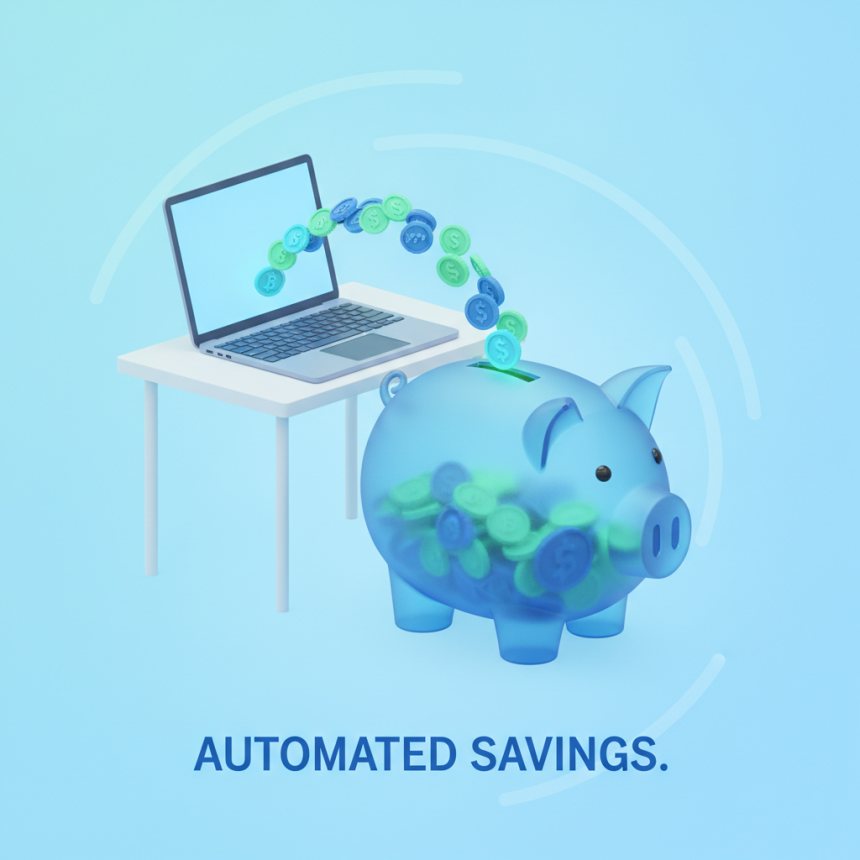
Set an automatic transfer from your checking account to your savings account immediately after payday.
Step 4: Adjust Your Spending
Once savings are removed, build your monthly budget around the remaining money.
Step 5: Increase the Amount Over Time
Whenever income increases, raise your savings contribution.
Automation and consistency are the keys to success.
6. How Much Should You Pay Yourself First?
The exact amount depends on your financial situation.
Common guidelines include:
- 10% for beginners
- 15–20% for long-term financial growth
- 30% or more for aggressive wealth building
If saving a large percentage feels difficult, start small.
Even saving 5% of income builds the habit.
The important part is consistency.
7. Where Should the Money Go?
The money you pay yourself first should support your long-term financial goals.
Common destinations include:
Emergency Fund
A safety net covering 3–6 months of essential expenses.
Retirement Accounts
Investments designed for long-term wealth growth.
Savings Goals
Money for future expenses like travel, education, or home purchases.
Investment Accounts
Assets such as index funds, stocks, or other long-term investments.
The exact allocation depends on your priorities.

8. Pay Yourself First vs Traditional Budgeting
Traditional budgeting focuses on controlling spending categories.
While useful, it often requires constant monitoring.
The Pay Yourself First method focuses on automatic saving instead of strict spending control.
Once savings are secured, the remaining money can be used more freely.
This makes the system simpler and easier to maintain long term.
For many people, it feels less restrictive than detailed budgeting.
9. Common Mistakes to Avoid
Some mistakes can reduce the effectiveness of this strategy.
One mistake is setting savings amounts that are too high at the beginning.
If the amount causes financial stress, the system becomes difficult to maintain.
Another mistake is keeping savings in the same account used for spending.
Without separation, the temptation to use savings becomes stronger.
Finally, some people stop the system after unexpected expenses.
Consistency matters more than perfection.
Even small contributions maintain momentum.
10. Who Should Use This Method?
The Pay Yourself First method works for almost everyone.
It is particularly useful for:
People who struggle with budgeting
Individuals who spend impulsively
Anyone trying to build long-term savings
Workers with regular paychecks
Because the system is simple and automated, it removes much of the stress associated with money management.
11. Frequently Asked Questions
Is the Pay Yourself First method good for beginners?
Yes. It is one of the easiest saving systems because it focuses on one simple rule: save before spending.
What if I cannot save much money?
Start with a small amount. Even saving a few dollars per week builds the habit.
Can this method work with irregular income?
Yes, but you may need to save a percentage of each payment rather than a fixed amount.
Should I still use a budget?
A budget can still help, but the Pay Yourself First method ensures that savings happen regardless of spending patterns.
12. Final Thoughts
The Pay Yourself First method is one of the most effective strategies for building long-term financial security.
By prioritizing savings before spending, you create a system that consistently moves money toward your future.
Instead of hoping money will remain at the end of the month, you guarantee that savings happen first.
Over time, this simple habit can transform your financial situation and help you build meaningful wealth.