Title: The Ultimate Guide to Mastering Your Wallet: How to Stop Impulse Buying Online
Author: Peyman Daneshgar
Author Email: daneshgar781@gmail.com
Publication Date: 01/01/2026
Word Count: 10,200
Target Audience: Consumers in the United States and Europe
Primary Keyword: How to stop impulse buying online
Secondary Keywords: impulse control, online shopping addiction, mindful spending, financial discipline, digital detox shopping, budgeting techniques, emotional spending.
Introduction: The Age of the “Buy Now” Button and Its Toll on Our Wallets
In the digital marketplace, the distance between a fleeting desire and ownership has shrunk to a single click. The “Buy Now” button, optimized by trillion-dollar algorithms, is perhaps the most potent psychological tool ever created for consumerism. How to stop impulse buying online is no longer just a financial query; it’s a critical question of mental well-being, personal autonomy, and long-term life goals. This comprehensive guide is designed to be your definitive manual for reclaiming control. We will dissect the sophisticated mechanics behind your urges, equip you with actionable, evidence-based strategies, and help you build a resilient mindset for conscious consumption. If you’re ready to transform your relationship with online shopping, this is your starting point.
Chapter 1: Understanding the Beast – The Psychology and Triggers of Online Impulse Buying
Before we can conquer impulse buying, we must understand its origins. Impulse buying is not a character flaw; it’s a predictable human response to a highly engineered environment.
1.1 The Psychological Drivers:
- The Dopamine Rush: Each “click to purchase” triggers a small hit of dopamine, the brain’s “reward chemical.” This creates a powerful feedback loop where shopping becomes a tool for mood regulation.
- The Scarcity Illusion: “Only 2 left in stock!”, “Sale ends at midnight!”. These tactics activate our loss aversion bias—the fear of missing out (FOMO) is more motivating than the potential gain.
- The Pain Paradox: Paying with credit cards or digital wallets (Apple Pay, PayPal) abstracts the pain of parting with physical cash. The psychological “pain of payment” is delayed or diminished, making spending feel effortless.
- Emotional Escapism: Boredom, stress, sadness, loneliness, and even celebration can trigger a “retail therapy” session. The act of browsing and buying serves as a temporary emotional anesthetic.
best budgeting method for irregular income
1.2 The Digital Triggers (The Architecture of Persuasion):
- Personalized Algorithms: Platforms like Amazon, Instagram, and TikTok use your data to curate a “For You” feed that feels eerily personal, suggesting items you didn’t even know you “needed.”
- Frictionless UX/UI: One-click ordering, saved payment details, and seamless returns remove all traditional barriers to purchase.
- Social Proof & Influencer Marketing: Seeing a product in a relatable influencer’s “day in the life” video creates a powerful narrative of need and belonging. User reviews and “most wished for” lists amplify this effect.
- Retargeting Ads: That pair of shoes you looked at once now follows you across every website and social media platform, a constant digital whisper reminding you of your abandoned cart.
Chapter 2: The Pre-Emptive Strike – Building Your Anti-Impulse Infrastructure
The most effective way to stop impulse buying online is to build systems that prevent the impulse from striking in the first place.
2.1 The Digital Environment Cleanse:
- Unsubscribe and Unfollow: Mass-unsubscribe from promotional emails. Unfollow brands and shopping-focused influencers on social media. Mute keywords related to shopping.
- Disable Notifications: Turn off ALL shopping app notifications. Don’t let them ping you with “flash sales.”
- Log Out and Delete: Log out of shopping sites and apps. Delete saved payment information. Reintroducing the friction of having to type in your card details is a powerful moment of pause.
- Use Ad Blockers: Install browser extensions that block targeted ads and sponsored content.
2.2 The Financial Firewalls:
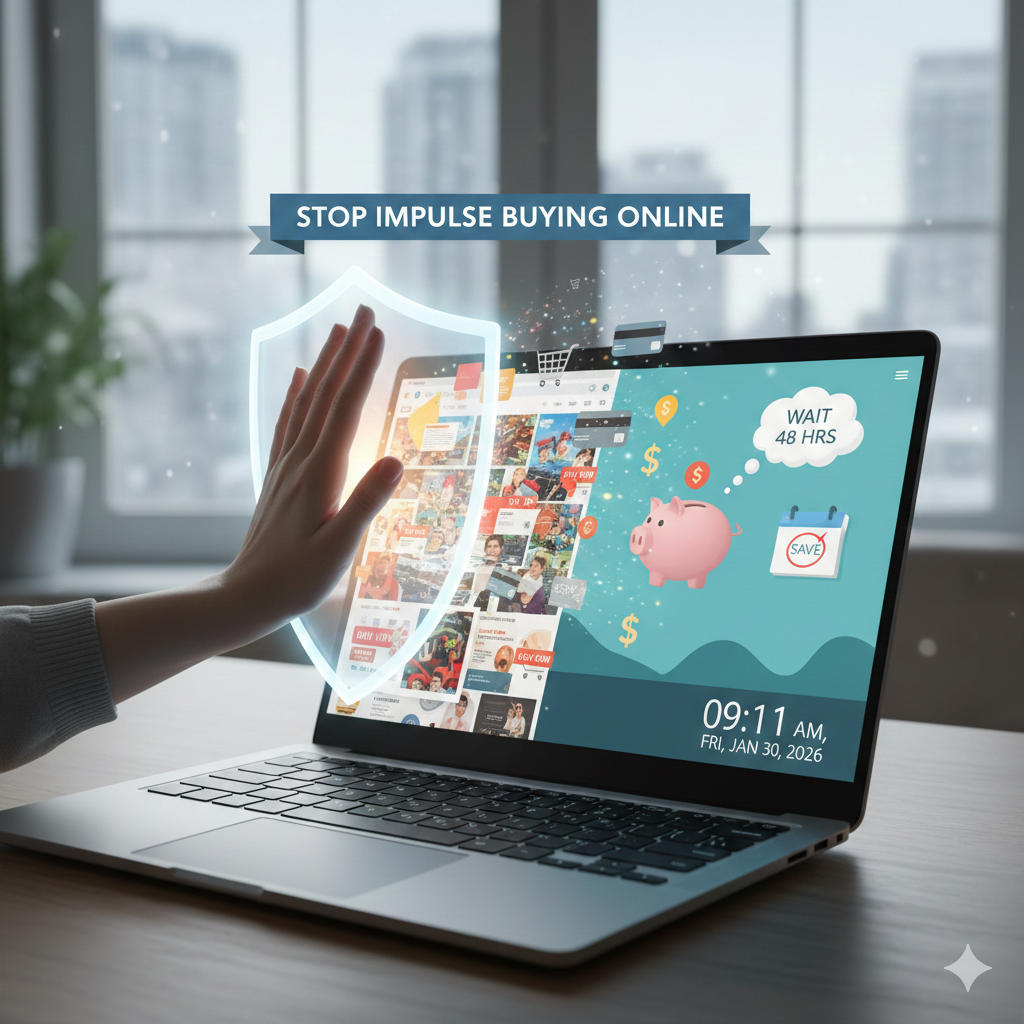
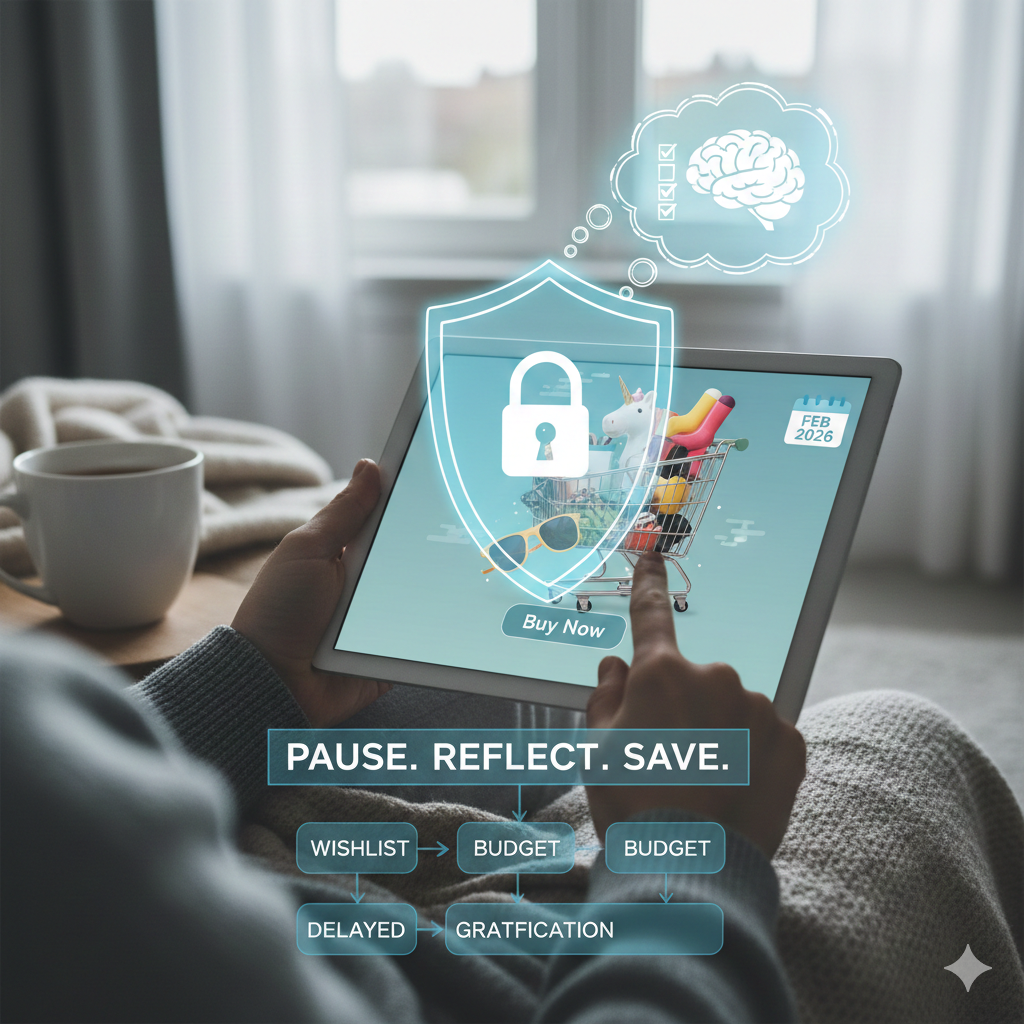
- Implement the 24-72 Hour Rule: For any unplanned purchase, place it in your cart and wait a mandatory 24 to 72 hours. The urge will almost always pass.
- Use a “Wish List” Strategy: Redirect all “I want this” impulses to a curated wish list (not the shopping cart). Review it monthly. You’ll find many items lose their appeal.
- Create a “Fun Money” Budget: Allocate a specific, small amount of cash or a dedicated bank account for discretionary spending. When it’s gone, you’re done for the month.
- Visualize Your Financial Goals: Set up a visual tracker (a chart, a picture of your goal) for a real objective—a vacation, debt payoff, an emergency fund. Seeing progress here is more rewarding than an unboxing.
Chapter 3: The Mindful Mindset – Cultivating Conscious Consumption
Stopping impulse buying is ultimately an inside job. It’s about shifting from unconscious reaction to conscious choice.
3.1 Ask the Hard Questions (The Purchase Interrogation):
Before any purchase, ask yourself:
- “Do I need this, or do I want this?”
- “How many hours of my life did I have to work to pay for this?”
- “Where will I put/store/use this item one month from now?”
- “Do I already own something that serves the same function?”
- “What emotion am I trying to fulfill with this purchase?”
3.2 Practice Mindful Browsing:
- Set Intentions: Before opening a shopping site, state your purpose aloud. “I am going to buy a specific black sweater to replace my worn-out one.” Deviating from this mission means closing the tab.
- Embrace the “Digital Window Shop”: Allow yourself to browse for inspiration without the pressure to buy. Appreciate design and aesthetics without ownership.
- Cultivate Gratitude for What You Have: Regularly audit and appreciate your current possessions. A gratitude practice directly counters the “lack” mindset that fuels impulse buys.
50/30/20 rule calculator excel template free
Chapter 4: Advanced Tactics for Persistent Problems
For some, the habit is deeply ingrained. These advanced strategies provide an extra layer of defense.
4.1 The Accountability Partner:
Share your financial goals and “no-buy” or “low-buy” challenges with a trusted friend. Check in weekly. Social accountability is a powerful motivator.
4.2 The Spending Fast:
Commit to a 30-day period where you buy nothing online except absolute essentials (groceries, prescribed medications). This “reset” breaks neural pathways and rebuilds willpower.
4.3 Therapy and Professional Help:
If your shopping feels compulsive, out of control, and is causing significant debt or distress, it may be a symptom of a deeper issue like anxiety, depression, or compulsive buying disorder (oniomania). Seeking help from a therapist or financial counselor is a sign of strength.
how to save money on a tight income
Chapter 5: FAQ – Your Most Pressing Questions on How to Stop Impulse Buying Online
Q1: I often impulse buy when I’m stressed or sad. How do I break this cycle?
A: Identify alternative, non-spending coping mechanisms before the urge hits. Create a “stress relief menu” with options like a 10-minute walk, a meditation app session, calling a friend, journaling, or exercising. The key is to redirect the emotional energy, not suppress it with a purchase.
Q2: Are “Buy Now, Pay Later” (BNPL) services like Klarna or Afterpay a good or bad idea?
A: They are a major enabler of impulse buying. They fragment a large, unaffordable sum into smaller, “painless” payments, tricking your brain into thinking you’re spending less. Our strong recommendation is to avoid them entirely for non-essential purchases. If you wouldn’t pay the full price today, don’t finance a want.
Q3: How can I deal with the intense FOMO from limited-time sales?
A: Reframe your thinking. Ask: “What am I missing out on by spending this money?” You might be missing out on faster debt repayment or a future vacation. Also, remember there is always another sale. Black Friday, Cyber Monday, seasonal clearances—they are a constant cycle.
Q4: I’ve unsubscribed, but I still find myself just “checking” the sale section. How do I stop?
A: This is a habit loop. Identify the trigger (boredom at 10 PM?) and replace the routine. Instead of opening Amazon, open your Kindle app, a puzzle game, or a note where you write down ideas. You must consciously install a new, healthier routine for the same trigger.
Q5: Is it ever okay to make an impulse buy?
A: Absolutely, if it’s within a pre-defined system. This is the concept of a “slush fund” or “guilt-free spending” budget. If you have $50 a month for whatever you want, and you see a $20 trinket you didn’t plan for, you can get it without self-recrimination. The key is that the system is disciplined, not every single micro-decision.
money saving challenges for couples
Conclusion: The Path to Financial and Mental Freedom
Learning how to stop impulse buying online is a journey of self-discovery and empowerment. It’s about moving from being a passive target of marketing algorithms to an active, intentional curator of your life and resources. Every resisted impulse is a vote for your future self—for financial security, for a less cluttered home, and for a mind less burdened by consumerist noise.
The strategies outlined here—from the technical (unsubscribing, using ad blockers) to the psychological (the 24-hour rule, mindful questioning) to the profound (cultivating gratitude, seeking therapy)—are your toolkit. Start with one. Implement the 24-hour rule this week. Next week, unsubscribe from 10 promotional emails. Progress is incremental.
Remember, the goal is not deprivation; it’s liberation. It’s the freedom to spend consciously on things that truly add value, joy, and meaning to your life, while effortlessly ignoring the digital chatter that begs for your attention and money. Take back your click. Your future self will thank you.
sinking funds: what are they and how to set them up
Meta Description: The world’s most comprehensive guide on how to stop impulse buying online. Master the psychology, build defensive systems, cultivate a mindful mindset, and answer all FAQs to achieve financial freedom. Start your journey here.
Tags: stop impulse buying, online shopping addiction, mindful spending, budget control, financial discipline, digital minimalism, how to save money, FOMO, retail therapy, conscious consumption.
zero-based budgeting vs. 50/30/20 rule