The Ultimate Guide: How to Open a Brokerage Account for the First Time
Author: Peyman Daneshgar
Email: daneshgar781@gmail.com
Table of Contents
- Introduction to Brokerage Accounts
- Why Opening a Brokerage Account is Your First Step to Wealth Building
- Types of Brokerage Accounts: Finding Your Perfect Match
- Pre-Opening Checklist: What You Need Before You Begin
- Step-by-Step Guide: How to Open a Brokerage Account
- Top Brokerage Platforms Comparison
- Funding Your Account: Methods and Strategies
- Making Your First Trade: A Beginner’s Walkthrough
- Common Mistakes First-Time Investors Make
- Advanced Account Features to Grow Into
- Tax Considerations and Reporting
- Security and Protecting Your Investments
- Frequently Asked Questions (FAQs)
- Conclusion: Your Journey Begins Now
what is dollar-cost averaging and how to set it up
1. Introduction to Brokerage Accounts
A brokerage account is your gateway to the financial markets, serving as the essential vehicle through which you buy and sell securities like stocks, bonds, mutual funds, and exchange-traded funds (ETFs). When you learn how to open a brokerage account for the first time, you’re not just completing a financial transaction—you’re opening a door to potential wealth creation, financial education, and long-term economic participation.
In today’s digital age, opening a brokerage account has never been more accessible. With online platforms, mobile apps, and reduced barriers to entry, individuals from all walks of life can now participate in markets that were once reserved for the wealthy or institutional investors. This comprehensive guide will walk you through every aspect of how to open a brokerage account for the first time, ensuring you have the knowledge and confidence to begin your investment journey.
Understanding how to open a brokerage account properly sets the foundation for your entire investment experience. A well-chosen account with the right features can save you thousands in fees over your lifetime, provide access to valuable educational resources, and align with your specific financial goals. Whether you’re saving for retirement, building an emergency fund, or seeking to grow your wealth, mastering the process of opening a brokerage account is your critical first step.
how to stop impulse buying online
2. Why Opening a Brokerage Account is Your First Step to Wealth Building
The Power of Investing
When you successfully learn how to open a brokerage account for the first time, you unlock the potential of compound growth. Historical data shows that the S&P 500 has delivered an average annual return of approximately 10% before inflation over the long term. This means that $10,000 invested today could grow to over $67,000 in 20 years without any additional contributions—simply through the power of compound growth.
Financial Independence
Opening a brokerage account represents more than just account creation; it’s a declaration of financial independence. Unlike employer-sponsored retirement accounts, a standard brokerage account gives you complete control over your investment choices, contribution amounts, and withdrawal timing. This flexibility makes understanding how to open a brokerage account particularly valuable for those with varied financial goals.
Inflation Protection
With inflation eroding purchasing power, keeping significant savings in traditional bank accounts often results in losing value over time. Learning how to open a brokerage account for the first time allows you to invest in assets that historically outpace inflation, preserving and growing your wealth in real terms.
Educational Value
The process of opening a brokerage account and beginning to invest provides invaluable financial education. You’ll learn about market dynamics, risk management, economic indicators, and portfolio construction—knowledge that serves you throughout your financial life.
how to save for a house down payment in 2 years
3. Types of Brokerage Accounts: Finding Your Perfect Match
Before diving into the specifics of how to open a brokerage account for the first time, you must understand the different account types available. Each serves different purposes and comes with unique tax implications.
Individual Taxable Accounts
These are standard brokerage accounts with no special tax advantages. You can deposit after-tax money, and you’ll pay taxes on dividends and capital gains. Understanding this account type is fundamental when learning how to open a brokerage account as it’s the most flexible option with no contribution limits or withdrawal restrictions.
Retirement Accounts
- Traditional IRA: Contributions may be tax-deductible, investments grow tax-deferred, and withdrawals in retirement are taxed as ordinary income.
- Roth IRA: Contributions are made with after-tax dollars, but qualified withdrawals in retirement are completely tax-free.
- Rollover IRA: For transferring funds from employer-sponsored retirement plans.
Specialized Accounts
- Custodial Accounts (UTMA/UGMA): For investing on behalf of minors.
- Joint Accounts: Shared ownership between two or more individuals.
- Trust Accounts: Managed by a trustee for beneficiaries.
When considering how to open a brokerage account for the first time, most beginners start with either a taxable individual account or a Roth IRA, depending on their goals and timeline.
4. Pre-Opening Checklist: What You Need Before You Begin
Proper preparation is crucial before opening a brokerage account. This checklist ensures you have everything needed for a smooth account creation process.
Personal Identification
- Government-issued photo ID (driver’s license or passport)
- Social Security Number (SSN) or Tax Identification Number (TIN)
- Date of birth
- Contact information (address, phone number, email)
Financial Information
- Employment information and occupation
- Annual income and net worth estimates
- Investment objectives (growth, income, preservation)
- Risk tolerance assessment
- Bank account details for funding
Knowledge Preparation
- Basic understanding of investment types
- Clear financial goals and timeline
- Familiarity with brokerage terminology
- Emergency fund already established (3-6 months of expenses)
Decision Points
- Type of account you want to open
- Initial deposit amount
- Brokerage platform selection criteria
- Investment strategy approach
When learning how to open a brokerage account for the first time, gathering these items beforehand can reduce the application time to under 15 minutes in most cases.
zero-based budgeting vs. 50/30/20 rule
5. Step-by-Step Guide: How to Open a Brokerage Account
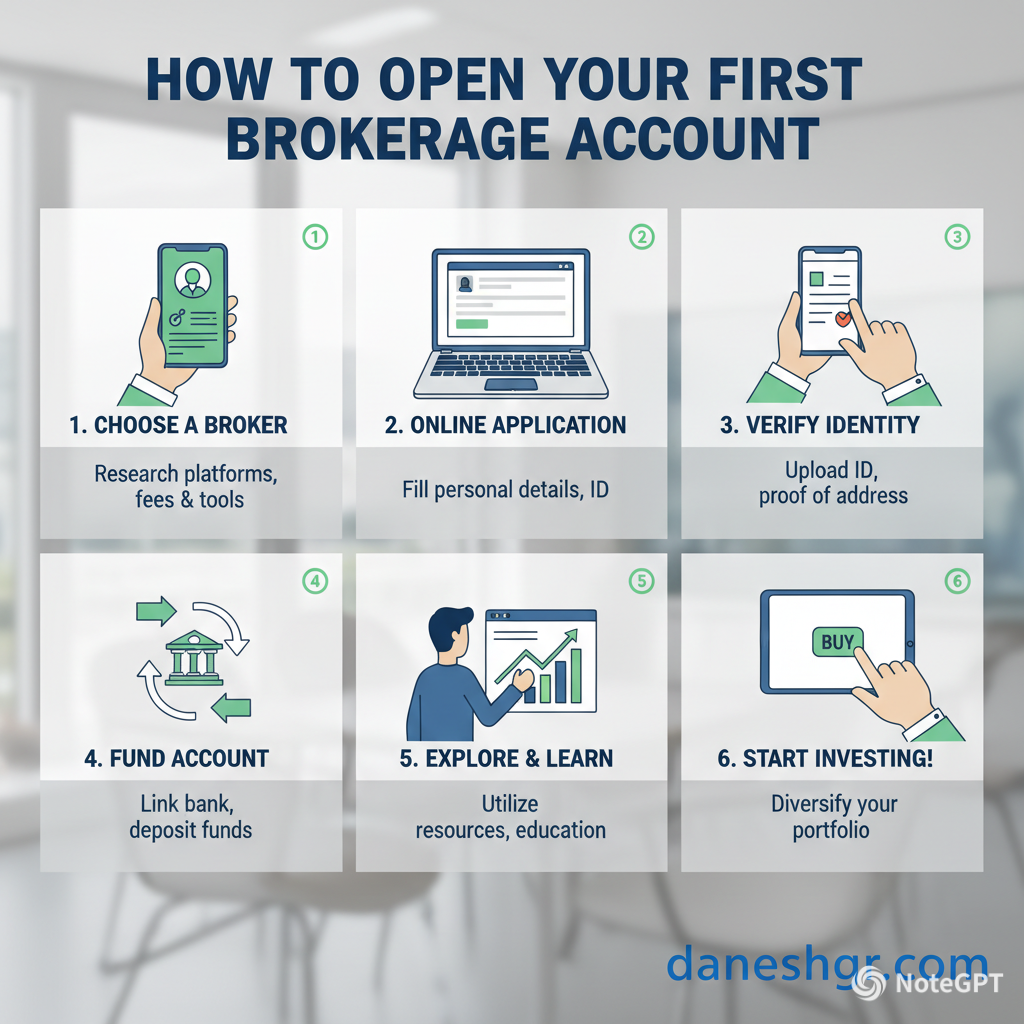
Now we reach the core of how to open a brokerage account for the first time. Follow these detailed steps to ensure a successful account opening.
Step 1: Research and Select Your Brokerage Platform
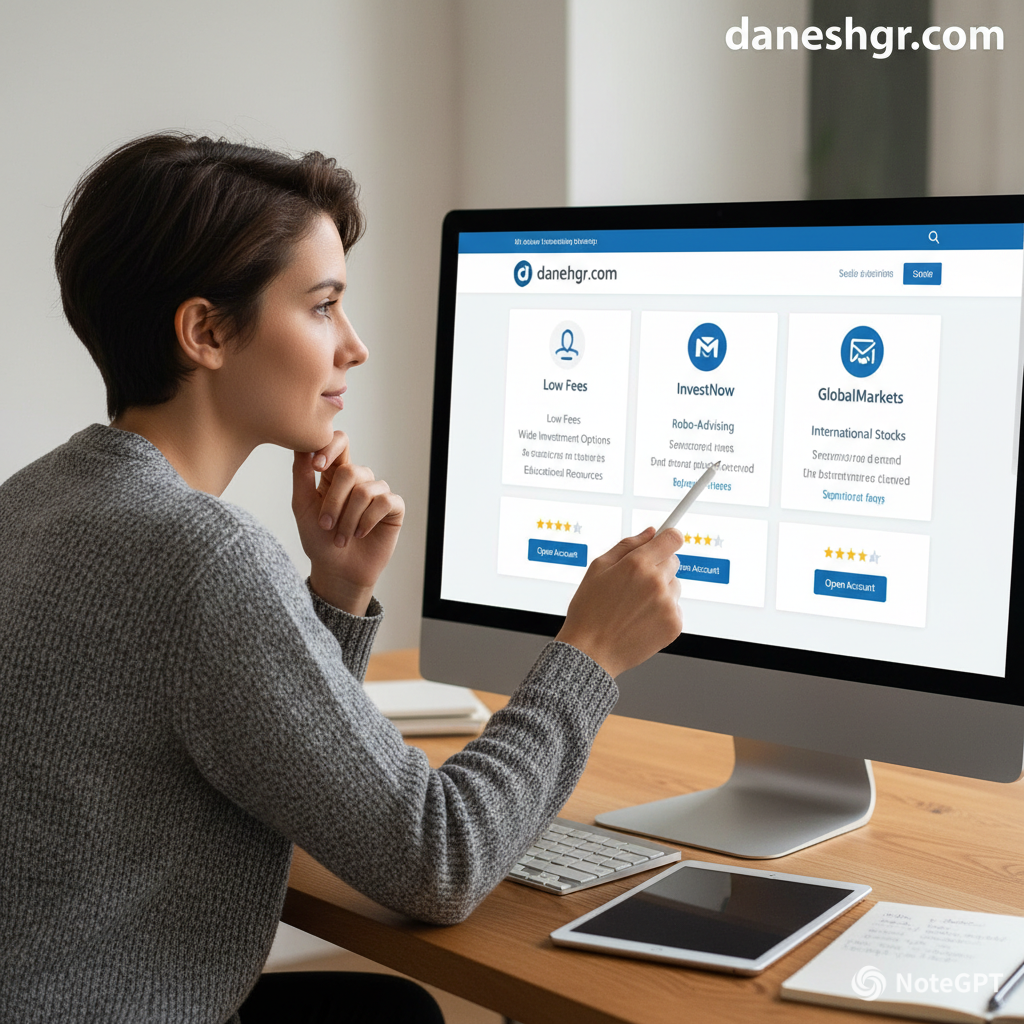
Choosing where to open your brokerage account is the most important decision in the process. Consider these factors:
- Commission and fee structure
- Account minimums
- Available investment products
- Trading platform usability
- Research and educational resources
- Customer service reputation
- Mobile app functionality
Step 2: Begin the Online Application
Most brokerage account openings now occur entirely online:
- Navigate to the brokerage website and find the account opening section
- Select the specific account type you want to open
- Provide basic personal information (name, address, contact details)
- Enter your Social Security Number for tax reporting purposes
Step 3: Complete Financial Profile
As part of learning how to open a brokerage account, you’ll need to provide financial information:
- Employment status and occupation
- Annual income range
- Total net worth (excluding primary residence)
- Liquid net worth (cash and easily convertible assets)
- Investment experience level
- Risk tolerance assessment
Step 4: Choose Account Features
When opening a brokerage account, you’ll select various features:
- Dividend reinvestment plans (DRIP)
- Margin trading approval (not recommended for beginners)
- Options trading permissions (advanced feature)
- Paperless statements and confirmations
- Two-factor authentication for security
sinking funds: what are they and how to set them up
Step 5: Review and Sign Agreements
Critical step in how to open a brokerage account for the first time:
- Carefully review the account agreement
- Understand the fee schedule
- Read the margin agreement if applicable
- Review the options trading agreement if selected
- Electronically sign all required documents
Step 6: Fund Your Account
After opening a brokerage account, you need to fund it:
- Link your bank account via Plaid or manual verification
- Initiate an electronic funds transfer (ETF)
- Consider starting amount (many recommend $500-$1,000 minimum)
- Set up recurring deposits if desired
Step 7: Account Verification and Activation
Final steps in how to open a brokerage account:
- Wait for micro-deposit verification if manually linking bank
- Confirm email and phone verification
- Wait for account approval (typically 1-3 business days)
- Receive welcome email with account details
- Set up login credentials and security features
6. Top Brokerage Platforms Comparison
Understanding where to execute how to open a brokerage account for the first time requires comparing the leading platforms.
Fidelity Investments
- Strengths: Comprehensive research, zero expense ratio index funds, excellent customer service
- Account Minimum: $0 for most accounts
- Commission: $0 for online stock/ETF trades
- Best For: Beginner to intermediate investors seeking robust educational resources
Charles Schwab
- Strengths: Broad product selection, excellent banking integration, strong research tools
- Account Minimum: $0
- Commission: $0 for online stock/ETF trades
- Best For: Investors wanting a full-service financial institution relationship
Vanguard
- Strengths: Low-cost proprietary funds, investor-owned structure, long-term focus
- Account Minimum: $0 for brokerage account (but $1,000-$3,000 for most funds)
- Commission: $0 for online stock/ETF trades
- Best For: Buy-and-hold investors focused on low-cost index funds
TD Ameritrade (now part of Charles Schwab)
- Strengths: Powerful thinkorswim platform, extensive educational content
- Account Minimum: $0
- Commission: $0 for online stock/ETF trades
- Best For: Active traders and those wanting advanced charting tools
E*TRADE
- Strengths: User-friendly platform, strong options trading tools
- Account Minimum: $0
- Commission: $0 for online stock/ETF trades
- Best For: Mobile-first investors and options traders
Interactive Brokers
- Strengths: Low margin rates, international market access, professional tools
- Account Minimum: $0 for IBKR Lite
- Commission: $0 for US stocks/ETFs on IBKR Lite
- Best For: Active traders and those seeking international exposure
Robinhood
- Strengths: Simple interface, fractional shares, cryptocurrency trading
- Account Minimum: $0
- Commission: $0 for stock/ETF/options trades
- Best For: Absolute beginners and mobile-only users
When deciding how to open a brokerage account for the first time, consider starting with Fidelity, Charles Schwab, or Vanguard for their educational resources and reputation.
7. Funding Your Account: Methods and Strategies
After successfully opening a brokerage account, funding it properly is crucial for beginning your investment journey.
Funding Methods
- Electronic Funds Transfer (EFT): The most common method, linking your bank account for free transfers
- Wire Transfer: Faster but usually incurs fees from both banks
- Check Deposit: Mobile check deposit through brokerage apps
- Account Transfer: Moving assets from another brokerage (ACAT transfer)
- Rollover: Transferring retirement assets from 401(k) or other qualified plans
Initial Deposit Strategies
When executing how to open a brokerage account for the first time, consider these funding approaches:
- Minimum Start: Begin with the platform’s minimum (often $0) to familiarize yourself
- Meaningful Start: Deposit enough to make diversified investments ($1,000-$3,000)
- Percentage Approach: Commit a percentage of your savings (10-20%)
- Dollar-Cost Averaging Entry: Plan regular contributions rather than a single lump sum
Recurring Contributions
One of the smartest moves after learning how to open a brokerage account is setting up automatic investments:
- Establish weekly, bi-weekly, or monthly transfers
- Start with an amount that doesn’t strain your budget ($50-$200/month)
- Increase contributions with income growth
- Take advantage of dollar-cost averaging benefits
8. Making Your First Trade: A Beginner’s Walkthrough
After opening a brokerage account and funding it, the next exciting step is making your first investment.
Pre-Trade Preparation
- Research Potential Investments: Use brokerage research tools to analyze options
- Define Your Strategy: Are you buying individual stocks, ETFs, or mutual funds?
- Start with ETFs: Broad market ETFs are ideal for first-time investors
- Determine Allocation: How much of your portfolio will this investment represent?
Placing Your First Order
When you’ve learned how to open a brokerage account and are ready to trade:
- Navigate to the Trading Platform: Find the trade ticket on your brokerage website or app
- Enter the Symbol: Input the ticker symbol of your chosen investment (e.g., VTI for Vanguard Total Stock Market ETF)
- Select Order Type:
- Market Order: Buys immediately at current market price
- Limit Order: Sets maximum price you’re willing to pay
- For beginners, market orders are simplest for highly liquid ETFs
- Specify Quantity: Number of shares or dollar amount (if fractional shares available)
- Review and Submit: Double-check details before confirming
- Order Confirmation: You’ll receive an order ID and confirmation
Post-Trade Actions
After your first trade following opening a brokerage account:
- Monitor order execution (usually instantaneous for market orders)
- Review confirmation in your account activity
- Understand settlement (T+2 for stocks and ETFs)
- Avoid the temptation to constantly check prices
- Begin planning your next investment
Beginner-Friendly First Investments
- Total US Stock Market ETF: VTI, ITOT, or SCHB
- S&P 500 ETF: VOO, IVV, or SPY
- Total International Stock ETF: VXUS or IXUS
- Target Date Fund: If available in your brokerage account
9. Common Mistakes First-Time Investors Make
Even after successfully learning how to open a brokerage account for the first time, beginners often make these errors:
Trading Too Frequently
The temptation to constantly buy and sell after opening a brokerage account can be strong. However, frequent trading increases costs, creates tax liabilities, and often underperforms buy-and-hold strategies. Studies show individual investors significantly underperform the market largely due to overtrading.
Chasing Performance
Buying investments because they’ve recently risen significantly (“chasing winners”) often leads to buying at peaks. A disciplined approach following a well-researched plan yields better long-term results after opening a brokerage account.
Lack of Diversification
Putting all funds into a single stock or sector magnifies risk. Proper diversification across asset classes, industries, and geographies is essential for risk management.
Timing the Market
Attempting to buy at the absolute bottom and sell at the absolute top is statistically improbable. Time in the market generally beats timing the market.
Neglecting Fees
Even with zero-commission trades, other fees can erode returns:
- Expense ratios on funds and ETFs
- Inactivity fees (on some platforms)
- Mutual fund transaction fees
- Account transfer fees
Emotional Decision-Making
Allowing fear or greed to drive investment decisions after opening a brokerage account often leads to poor outcomes. Developing an investment policy statement can help maintain discipline.
Inadequate Research
Investing based on tips, headlines, or social media recommendations without independent research is risky. Your brokerage account provides research tools—use them.
10. Advanced Account Features to Grow Into
After mastering how to open a brokerage account for the first time, you can explore these advanced features as your knowledge grows:
Margin Trading
Borrowing money from your brokerage to invest amplifies both gains and losses. Not recommended until you have substantial experience.
Options Trading
Contracts that give the right to buy or sell securities at specific prices. Requires separate approval and carries substantial risk.
Advanced Order Types
- Stop Loss Orders: Automatically sell if price drops to a specified level
- Trailing Stop Orders: Stop loss that follows price upward
- One-Cancels-Other (OCO): Links two orders where execution of one cancels the other
International Investing
Access to foreign markets through ADRs, international ETFs, or direct foreign listings.
Automated Investing
- Robo-advisors: Algorithm-based portfolio management
- Automatic Rebalancing: Maintains target asset allocation
- Tax-Loss Harvesting: Automated selling at a loss to offset gains
Retirement Planning Tools
- Retirement calculators: Project future account values
- Withdrawal planners: Sustainable withdrawal strategies
- Social Security integration: Coordinated claiming strategies
11. Tax Considerations and Reporting
Understanding tax implications is crucial after opening a brokerage account.
Taxable Events
Triggered by:
- Selling investments for a profit (capital gains)
- Selling investments for a loss (capital losses)
- Receiving dividends or interest payments
Capital Gains Classification
- Short-term: Assets held one year or less, taxed as ordinary income
- Long-term: Assets held more than one year, taxed at preferential rates (0%, 15%, or 20% depending on income)
Tax Forms
After opening a brokerage account, you’ll receive:
- Form 1099-B: Reports proceeds from broker transactions
- Form 1099-DIV: Reports dividends and distributions
- Form 1099-INT: Reports interest income
- Form 1099-MISC: Reports miscellaneous income
Tax-Efficient Investing Strategies
- Hold investments long-term to qualify for lower capital gains rates
- Place tax-inefficient investments in retirement accounts
- Use tax-loss harvesting to offset gains with losses
- Consider municipal bonds for tax-free interest in taxable accounts
- Qualified dividends receive preferential tax treatment
Estimated Tax Payments
If you generate significant investment income after opening a brokerage account, you may need to make quarterly estimated tax payments to avoid penalties.
12. Security and Protecting Your Investments
After learning how to open a brokerage account for the first time, securing it is paramount.
Account Security Best Practices
- Strong, Unique Password: At least 12 characters with mix of letters, numbers, symbols
- Two-Factor Authentication (2FA): Essential for all financial accounts
- Biometric Login: Use fingerprint or facial recognition where available
- Secure Network: Never access your brokerage account on public Wi-Fi without VPN
- Regular Monitoring: Review account statements and activity weekly
- Alerts and Notifications: Set up transaction alerts for all activity

Protection Against Fraud
- SIPC Insurance: Protects up to $500,000 (including $250,000 cash) if brokerage fails
- Additional Insurance: Many brokerages carry supplemental private insurance
- Fraud Guarantees: Most major brokerages reimburse unauthorized transactions
Phishing Awareness
- Never click links in unsolicited emails claiming to be from your brokerage
- Always navigate directly to the brokerage website
- Verify email sender addresses carefully
- Brokerages will never ask for passwords via email
Estate Planning Considerations
- Beneficiary Designations: Keep these current on all accounts
- Transfer on Death (TOD): Allows assets to pass directly to beneficiaries without probate
- Document Access: Ensure trusted individuals know how to access accounts if needed
13. Frequently Asked Questions (FAQs)
Q1: How old do I need to be to open a brokerage account?
A: You must be at least 18 years old to open a standard individual brokerage account in your own name. Minors can have custodial accounts opened by parents or guardians.
Q2: Can I open a brokerage account if I have bad credit?
A: Yes, credit checks are not typically part of opening a brokerage account. Brokerages are more concerned with your identity verification and financial profile than credit score.
Q3: How much money do I need to open a brokerage account?
A: Many brokerages now have $0 minimums to open an account. However, you’ll need some funds to actually invest—anywhere from $1 for fractional shares to $1,000+ for some mutual funds.
Q4: Is my money safe in a brokerage account?
A: Brokerage accounts are protected by SIPC insurance up to $500,000 (including $250,000 cash). Many firms carry additional private insurance. This protects against brokerage failure, not market losses.
Q5: Can I have multiple brokerage accounts?
A: Yes, you can have as many brokerage accounts as you want across different platforms. This can be useful for separating different investment strategies or trying multiple platforms.
Q6: How long does it take to open a brokerage account?
A: Most online applications take 10-15 minutes to complete, with approval within 1-3 business days. Funding adds additional time depending on method (instant for some bank links, 3-5 days for transfers).
Q7: Are there hidden fees in brokerage accounts?
A: While commission-free trading is now standard, watch for:
- Account maintenance fees (often waived with minimum balance)
- Inactivity fees (on some platforms)
- Mutual fund transaction fees
- Wire transfer fees
- Paper statement fees
Q8: Can I open a brokerage account as a non-U.S. resident?
A: It depends on the brokerage and your country of residence. Some platforms accept international clients with proper documentation, while others only serve U.S. residents.
Q9: What’s the difference between a brokerage account and a retirement account?
A: A standard brokerage account is taxable with no restrictions on withdrawals. Retirement accounts (like IRAs) offer tax advantages but have contribution limits and withdrawal restrictions before retirement age.
Q10: Can I lose more money than I deposit in a brokerage account?
A: In a cash account (no margin), you cannot lose more than you deposit. With margin accounts, you could potentially owe more than your deposit if using leverage.
Q11: How do I choose between a traditional and Roth IRA?
A: Traditional IRAs offer immediate tax deductions but taxed withdrawals. Roth IRAs use after-tax money but offer tax-free growth. Generally, Roth is better if you expect to be in a higher tax bracket in retirement.
Q12: What happens to my brokerage account if I die?
A: With proper beneficiary designation, assets transfer directly to beneficiaries without probate. Without designation, assets go through estate proceedings.
Q13: Can I transfer my brokerage account to another firm?
A: Yes, through the ACAT system. The receiving brokerage typically handles the transfer process, which takes 5-7 business days for most assets.
Q14: Do I need to report my brokerage account on taxes if I don’t sell anything?
A: You still need to report dividend and interest income even if you don’t sell. Your brokerage will provide the necessary tax forms.
14. Conclusion: Your Journey Begins Now
Learning how to open a brokerage account for the first time represents a significant milestone in your financial journey. By following this comprehensive guide, you’ve equipped yourself with the knowledge to make informed decisions, avoid common pitfalls, and begin building wealth through the financial markets.
Remember that opening a brokerage account is just the beginning. The real work—and rewards—come from consistent investing, continuous learning, and disciplined strategy execution. Start with a plan that aligns with your goals, risk tolerance, and timeline. Begin with simple, diversified investments as you build confidence and knowledge.
The process of how to open a brokerage account has been demystified, and the barriers to entry have never been lower. Whether you’re investing $50 or $50,000 to start, taking that first step puts you ahead of the majority who never begin at all. Your future self will thank you for the financial foundation you’re building today.
As you move forward after opening a brokerage account, continue educating yourself, stay disciplined during market fluctuations, and regularly review and adjust your strategy as your life circumstances evolve. The world of investing offers endless opportunities for those willing to learn, plan, and act with patience and purpose.
Your journey to financial growth starts with learning how to open a brokerage account for the first time—and now you have the knowledge to begin with confidence.
Disclaimer: This article is for educational purposes only and does not constitute financial advice. Investing involves risk including potential loss of principal. Consider consulting with a qualified financial professional before making investment decisions. Past performance is no guarantee of future results. Author: Peyman Daneshgar, Email: daneshgar781@gmail.com
This response is AI-generated, for reference only.