The Ultimate Guide: How to Rollover an Old 401(k) to an IRA
By Peiman Daneshgar
Table of Contents
- Introduction
- Why Roll Over Your 401(k)? The Key Benefits
- Your Four Options for an Old 401(k)
- 2026 Rule Changes You Must Know
- Step-by-Step: How to Rollover an Old 401(k) to an IRA
- Direct Rollover vs. Indirect Rollover: Choose Wisely
- Traditional vs. Roth: Tax Considerations for Your Rollover
- Special Situations and Complexities
- Common Mistakes and How to Avoid Them
- Frequently Asked Questions
- Conclusion
Introduction
If you’ve changed jobs recently—or even years ago—you likely have a retirement account sitting with a former employer. That old 401(k) might be an afterthought, but it represents a significant opportunity to take control of your financial future. Knowing how to rollover an old 401(k) to an IRA is one of the most valuable skills in retirement planning.
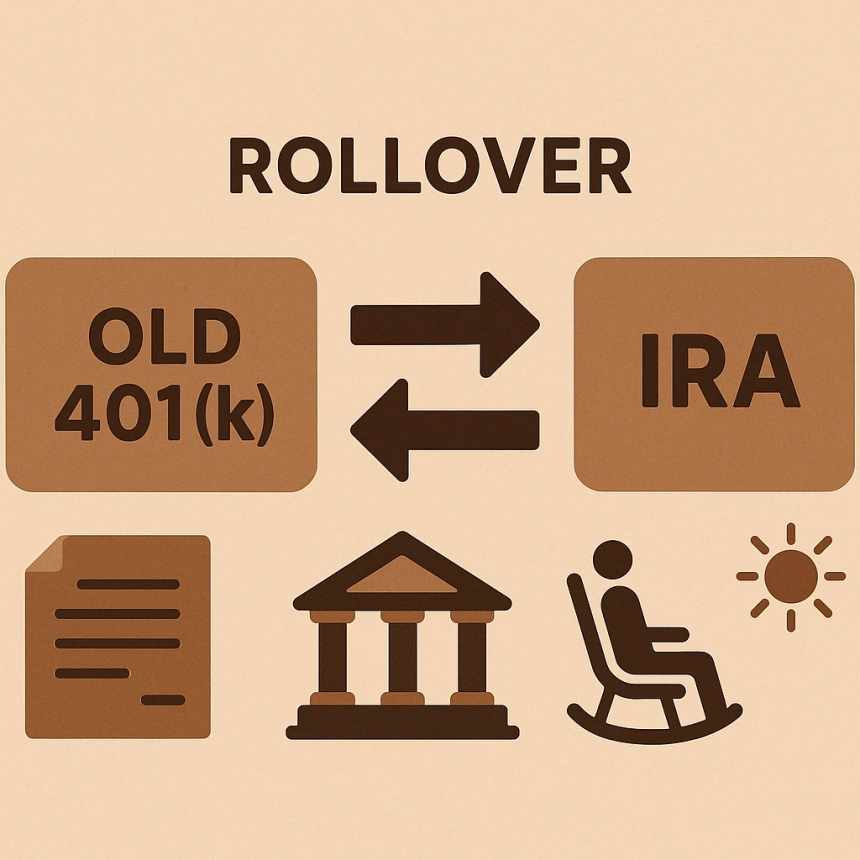
A 401(k) rollover is the process of moving funds from an employer-sponsored retirement plan into an Individual Retirement Account (IRA) . This transaction, when done correctly, allows you to maintain the tax-advantaged status of your savings while gaining more control over your investments .
In the current financial landscape of 2026, with updated IRS rules and new contribution limits, understanding the nuances of a rollover is more important than ever. This comprehensive guide will walk you through every step of how to rollover an old 401(k) to an IRA, helping you avoid costly mistakes and make informed decisions about your retirement savings.
Why Roll Over Your 401(k)? The Key Benefits
Before diving into the mechanics, it’s essential to understand why rolling over your old 401(k) to an IRA is often the smartest move.
ETF vs index fund: which is better for a beginner?
1. Consolidate and Simplify Your Finances
If you’ve had multiple jobs, you might have several 401(k) accounts scattered across different plan administrators. Juggling multiple accounts makes it harder to track your overall asset allocation and plan for retirement . Rolling everything into one IRA gives you a single, unified view of your retirement savings.
2. Access to Better Investment Options
Most employer-sponsored 401(k) plans offer a limited menu of pre-selected mutual funds. An IRA, on the other hand, opens the door to thousands of investment choices, including individual stocks, bonds, ETFs, and alternative assets .
With a self-directed IRA, you can even invest in assets like real estate, private equity, or precious metals—options typically not available in a 401(k) .
how to open a brokerage account for the first time
3. Potentially Lower Fees
401(k) plans often come with administrative fees that you might not even be aware of. When you leave a company, you may lose the benefit of subsidized fees that active employees receive . By moving to an IRA, you can choose a low-cost provider and potentially reduce the drag of fees on your returns.
4. Greater Control and Flexibility
With an IRA, you’re in the driver’s seat. You can work directly with a financial advisor to manage your investments, or you can take a DIY approach. You’re not subject to the decisions of your former employer’s plan committee .
5. No Annual Contribution Limits on Rollovers
Unlike regular IRA contributions (which are capped at $7,500 for 2026), rollovers have no dollar limit. You can move your entire 401(k) balance, no matter how large, into an IRA .
what is dollar-cost averaging and how to set it up
6. Stretch IRA and Estate Planning Benefits
IRAs, particularly Roth IRAs, offer more flexible estate planning options than most 401(k)s. For example, Roth IRAs have no Required Minimum Distributions (RMDs) during the owner’s lifetime, allowing the assets to grow for heirs .
Your Four Options for an Old 401(k)
When you leave a job, you generally have four choices for your 401(k). Understanding each is critical to deciding how to rollover an old 401(k) to an IRA—or whether to roll over at all.
Option 1: Leave It in Your Former Employer’s Plan
If your former employer allows it, you can simply leave your money where it is .
Pros:
- No immediate decision required
- May have access to institutional share classes with lower fees
- You can take penalty-free withdrawals as early as age 55 if you leave your job during or after the year you turn 55
- how to stop impulse buying online
Cons:
- You can no longer contribute to the account
- Investment options are limited to the plan’s menu
- Fees may increase once you’re no longer an employee
- Managing multiple accounts becomes complicated
Option 2: Roll Over to an IRA
This is the most popular and flexible option. You move the funds to a Traditional or Roth IRA at a financial institution of your choice .
Pros:
- Unlimited investment choices
- Consolidation of multiple accounts
- Professional management options
- Roth conversions and advanced tax strategies become available
Cons:
- Lose the ability to take 401(k) loans
- May lose some ERISA creditor protections (though rollover IRAs often retain strong protection)
- how to save for a house down payment in 2 years
Option 3: Roll Over to Your New Employer’s 401(k)
If your new employer’s plan accepts rollovers, you can move your old 401(k) into it .
Pros:
- Keeps all retirement savings in one workplace account
- May allow for 401(k) loans in the future
- Maintains ERISA’s strong creditor protections
- May allow you to delay RMDs past age 73 if you’re still working
Cons:
- Investment options are limited to the new plan’s menu
- Fees may be higher than an IRA
- Less control over investments
- zero-based budgeting vs. 50/30/20 rule
Option 4: Cash Out
You can take the money as a distribution, but this is almost always a terrible idea .
Consequences:
- The entire amount becomes taxable as ordinary income
- You’ll pay a 10% early withdrawal penalty if you’re under 59½
- You permanently lose decades of potential compound growth
- You rob your future self of retirement security
2026 Rule Changes You Must Know
The IRS has issued updated guidance for 2026 that affects how rollovers work. Before you learn how to rollover an old 401(k) to an IRA, familiarize yourself with these changes.
Updated Safe Harbor Notices
The IRS has released new model 402(f) notices—the disclosure you receive when taking an eligible rollover distribution. These updated notices reflect changes from the SECURE Act and SECURE 2.0 Act, including :
- New exceptions to the 10% early withdrawal penalty (for emergency expenses, domestic abuse victims, terminal illness, and qualified disaster recovery)
- Increased ages for Required Minimum Distributions
- Elimination of RMDs for designated Roth accounts in plans
- Higher dollar limits for mandatory cash-outs
- best cash envelope system wallets 2024
Roth 401(k) to Roth IRA Clarifications
The IRS has clarified that when you roll over a Roth 401(k) to a Roth IRA, the five-year holding period for qualified distributions does not carry over . Your new Roth IRA begins its own five-year clock, even if you had satisfied the requirement in your 401(k).
SECURE 2.0 Changes
Several SECURE 2.0 provisions now affect rollovers, including :
- New distribution options for emergency expenses
- Changes to how plan loan offsets are treated
- Updated rules for surviving spouses
Contribution Limits for 2026
While not directly related to rollovers, knowing the current limits helps with overall planning:
- 401(k) employee contribution limit: $24,500 ($32,500 with catch-up for age 50+)
- IRA contribution limit: $7,500 ($8,600 with catch-up for age 50+)
- sinking funds: what are they and how to set them up
Step-by-Step: How to Rollover an Old 401(k) to an IRA
Now that you understand the context, let’s walk through the actual process of how to rollover an old 401(k) to an IRA.
Step 1: Decide on the Type of IRA
First, determine whether you’ll roll into a Traditional IRA or a Roth IRA. This decision has significant tax implications .
- Traditional IRA: If you have a traditional (pre-tax) 401(k), rolling into a Traditional IRA maintains the tax-deferred status. You’ll pay taxes when you withdraw in retirement .
- Roth IRA: If you roll a traditional 401(k) into a Roth IRA, you’ll owe income taxes on the entire converted amount in the year of the rollover. This is called a Roth conversion .
If you have a Roth 401(k), you can roll those funds directly into a Roth IRA, generally without additional taxes .
Step 2: Open an IRA (or Identify an Existing One)
If you don’t already have an IRA, you’ll need to open one. Choose a reputable provider like Vanguard, Fidelity, Charles Schwab, or a self-directed IRA custodian if you want alternative investments .
If you already have an IRA, you can use that account—but be aware that comingling rollover funds with regular contributions may affect your ability to later roll the money into another employer’s plan .
Step 3: Contact Both Providers and Initiate a Direct Rollover
This is the most critical step. You want a direct rollover, where funds move directly from your 401(k) to your IRA without you ever touching the money .
Process:
- Contact your new IRA provider—they will guide you through their rollover process
- Complete the necessary paperwork (often a “Rollover Certification Form”)
- Contact your old 401(k) plan administrator and request a direct rollover
- The plan administrator will issue a check payable to your new IRA custodian (not to you) or transfer funds electronically
Check payee format example: “[Receiving Trustee] FBO [Your Name] IRA”
money saving challenges for couples
Step 4: Wait for the Transfer to Process
Processing times vary, but expect anywhere from a few days to a couple of weeks. During this time, your money is out of the market—something to consider if you’re concerned about missing a market move .
Step 5: Invest the Funds
Once the money arrives in your IRA, it will likely sit as cash. You must actively choose your investments. Don’t forget this step—leaving the money in cash means you miss out on potential growth .
Direct Rollover vs. Indirect Rollover: Choose Wisely
When learning how to rollover an old 401(k) to an IRA, you’ll encounter two methods. One is safe; the other is fraught with risk.
Direct Rollover (Recommended)
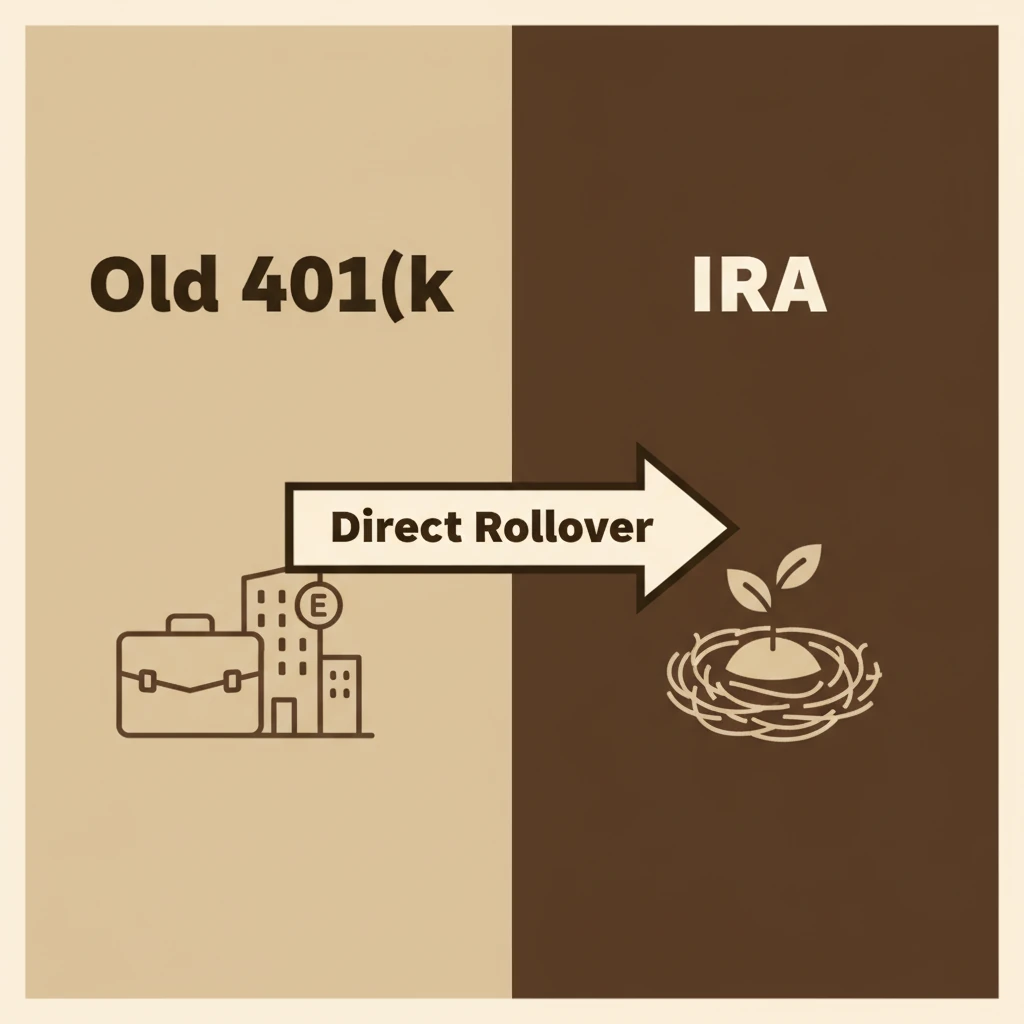
In a direct rollover, funds move directly from your 401(k) to your IRA .
Advantages:
- No taxes are withheld
- No risk of missing the 60-day deadline
- Simple and straightforward
- Cannot accidentally trigger a taxable event
Indirect Rollover (Risky)
In an indirect rollover, your 401(k) plan sends you a check made payable to you. You then have 60 days to deposit the full amount into an IRA .
Dangers:
- The plan must withhold 20% for federal taxes
- To avoid taxes, you must come up with the 20% from other funds to deposit the full amount within 60 days
- If you miss the 60-day deadline, the distribution becomes taxable and subject to penalties
- You can only do one indirect rollover per 12-month period across all your IRAs
- how to save money on a tight income
The 20% Trap Example:
- Your 401(k) balance: $100,000
- Plan sends you a check for: $80,000 (withholding $20,000 for taxes)
- To avoid taxes, you must deposit $100,000 into an IRA within 60 days
- You need to find $20,000 from elsewhere to make up the difference
- If you only deposit $80,000, the $20,000 is treated as a taxable distribution, plus potential penalties
Verdict: Always choose a direct rollover.
Traditional vs. Roth: Tax Considerations for Your Rollover
The type of IRA you choose dramatically affects the tax outcome of your rollover.
Rolling Over a Traditional 401(k)
| Destination | Tax Consequence |
|---|---|
| Traditional IRA | No taxes due now; withdrawals taxed as ordinary income in retirement |
| Roth IRA | Full amount taxable as income in the year of conversion |
Rolling Over a Roth 401(k)
| Destination | Tax Consequence |
|---|---|
| Roth IRA | No taxes due on your contributions and earnings (assuming no after-tax contributions in the plan) |
| Traditional IRA | Not recommended—would undo the tax-free treatment of your Roth savings |
Employer Match Complications
If you have a Roth 401(k), remember that employer matching contributions are always made on a pre-tax basis . That means your Roth 401(k) actually contains two types of money:
- Your Roth contributions (after-tax)
- Employer match money (pre-tax)
When you roll over a Roth 401(k), you have two options for the employer match portion :
- Roll it into a Traditional IRA (no immediate taxes)
- Convert it to a Roth IRA by paying taxes on that amount now
Suze Orman’s Warning on Large Conversions
Financial expert Suze Orman recently called a plan to convert a $1.6 million 401(k) to a Roth IRA “crazy,” because of the massive immediate tax bill .
Key takeaway: Roth conversions trigger taxes in the year you convert. For large balances, consider converting gradually over several years to manage your tax bracket .
Special Situations and Complexities
After-Tax Contributions in Your 401(k)
If your 401(k) includes after-tax contributions (different from Roth contributions), IRS Notice 2014-54 allows you to split the rollover :
- Send pre-tax amounts and earnings to a Traditional IRA
- Send after-tax contributions to a Roth IRA
This preserves tax-deferred status for your pre-tax money while allowing after-tax funds to grow tax-free in a Roth.
Required Minimum Distributions (RMDs)
If you’re age 73 or older, you cannot roll over your Required Minimum Distribution . The RMD amount must be distributed to you before any rollover can occur.
Outstanding Plan Loans
If you have an outstanding loan from your 401(k), leaving your job typically triggers a “loan offset” .
- Ordinary loan offset: You have 60 days to roll over the outstanding loan amount to an IRA
- Qualified Plan Loan Offset (QPLO): If tied to job loss or plan termination, you may have until your tax return due date (including extensions) to complete the rollover
Small Balance “Cash-Outs”
If your 401(k) balance is small, the plan may automatically distribute it :
- Under $1,000: Plan may issue a check directly to you
- $1,000 – $7,000: Plan may automatically roll it into an IRA in your name
Plan ahead to avoid an automatic rollover to an account you didn’t choose .
Common Mistakes and How to Avoid Them
Mistake 1: Missing the 60-Day Deadline
Solution: Always choose a direct rollover. Never take possession of the funds unless absolutely necessary .
Mistake 2: Not Understanding the Tax Consequences of a Roth Conversion
Solution: Before converting a traditional 401(k) to a Roth IRA, calculate the tax bill. Consider converting gradually over multiple years .
Mistake 3: Forgetting to Invest the Rolled-Over Funds
Solution: As soon as the money lands in your IRA, log in and choose your investments. Don’t let it sit in cash .
Mistake 4: Commingling Rollover Funds with Regular Contributions
Solution: If you might want to roll the money into a future employer’s 401(k), keep your rollover IRA separate from your regular IRA contributions .
Mistake 5: Attempting Multiple IRA Rollovers in One Year
Solution: Remember the one-per-year limit on indirect rollovers. Direct rollovers are exempt from this limit .
Mistake 6: Ignoring the Five-Year Rule for Roth IRAs
Solution: When you roll a Roth 401(k) to a Roth IRA, a new five-year clock starts for the Roth IRA. Plan accordingly .
Mistake 7: Not Checking Fees
Solution: Compare all-in fees between your 401(k) and your new IRA. Even a 0.3% difference can cost thousands over time .
Frequently Asked Questions
Q1: What is a 401(k) rollover?
A 401(k) rollover is the transfer of funds from an employer-sponsored retirement plan to an Individual Retirement Account (IRA) or another employer’s plan. When done correctly, it maintains the tax-advantaged status of your savings .
Q2: How do I roll over my 401(k) to an IRA without penalty?
To avoid penalties, use a direct rollover. Instruct your 401(k) plan administrator to transfer the funds directly to your IRA custodian. You never touch the money, so no taxes or penalties are withheld .
Q3: Can I roll over a 401(k) to a Roth IRA?
Yes, but if you have a traditional (pre-tax) 401(k), rolling to a Roth IRA is a taxable conversion. You’ll owe income tax on the full amount in the year you convert .
Q4: What is the 60-day rule for rollovers?
If you receive a distribution from your 401(k) (an indirect rollover), you have 60 days to deposit the full amount into an IRA. If you miss the deadline, the distribution becomes taxable and may be subject to penalties .
Q5: How much tax is withheld from a 401(k) rollover?
For an indirect rollover, the plan must withhold 20% for federal taxes. To avoid taxes, you must deposit the full original amount (including the 20%) into an IRA within 60 days .
Q6: Can I roll over my 401(k) while still working?
Generally, no. Most plans only allow in-service distributions after age 59½ or under specific circumstances. Typically, rollovers happen after you leave your job .
Q7: What is the difference between a rollover and a transfer?
A rollover moves funds from an employer plan (like a 401(k)) to an IRA. A transfer moves funds from one IRA to another IRA .
Q8: Are there limits on how much I can roll over?
No. Unlike annual contributions, there is no limit on the amount you can roll over from a 401(k) to an IRA .
Q9: Can I split my 401(k) rollover between a Traditional and Roth IRA?
Yes. This is particularly useful if you have after-tax contributions in your 401(k). You can send pre-tax money to a Traditional IRA and after-tax or Roth money to a Roth IRA .
Q10: What happens to my 401(k) if I don’t roll it over?
You can leave it in your former employer’s plan (if permitted), roll it to a new employer’s plan, or roll it to an IRA. If you do nothing and have a small balance, the plan may automatically distribute or roll over your funds .
Q11: What is the five-year rule for Roth IRA rollovers?
When you roll over a Roth 401(k) to a Roth IRA, a new five-year clock starts for the Roth IRA. You must satisfy this five-year rule before you can take tax-free withdrawals of earnings .
Q12: Should I consult a financial advisor before rolling over?
Yes. Given the tax implications and complexity, consulting a qualified financial advisor or tax professional is highly recommended .
Conclusion
Knowing how to rollover an old 401(k) to an IRA is an essential skill for anyone serious about retirement planning. The process, when done correctly, can consolidate your accounts, expand your investment options, and give you greater control over your financial future.
The golden rule is simple: always choose a direct rollover. This one decision protects you from taxes, penalties, and the stress of the 60-day deadline.
In the 2026 tax environment, with updated IRS rules and new SECURE 2.0 provisions, taking the time to understand your options is more important than ever. Whether you’re changing jobs, retiring, or simply optimizing your finances, a well-executed rollover can set you on the path to a more secure and flexible retirement.
Your retirement savings represent years of hard work. By mastering how to rollover an old 401(k) to an IRA, you ensure that money continues working hard for you.
This article is for informational purposes only and does not constitute financial, tax, or legal advice. Tax laws are complex and subject to change. You should consult with a qualified financial professional or tax advisor before making any decisions about your retirement accounts.
The Ultimate Guide: How to Rollover an Old 401(k) to an IRA
By Peiman Daneshgar
Table of Contents
- Introduction
- Why Roll Over Your 401(k)? The Key Benefits
- Your Four Options for an Old 401(k)
- 2026 Rule Changes You Must Know
- Step-by-Step: How to Rollover an Old 401(k) to an IRA
- Direct Rollover vs. Indirect Rollover: Choose Wisely
- Traditional vs. Roth: Tax Considerations for Your Rollover
- Special Situations and Complexities
- Common Mistakes and How to Avoid Them
- Frequently Asked Questions
- Conclusion
Introduction
If you’ve changed jobs recently—or even years ago—you likely have a retirement account sitting with a former employer. That old 401(k) might be an afterthought, but it represents a significant opportunity to take control of your financial future. Knowing how to rollover an old 401(k) to an IRA is one of the most valuable skills in retirement planning.
A 401(k) rollover is the process of moving funds from an employer-sponsored retirement plan into an Individual Retirement Account (IRA) . This transaction, when done correctly, allows you to maintain the tax-advantaged status of your savings while gaining more control over your investments .
In the current financial landscape of 2026, with updated IRS rules and new contribution limits, understanding the nuances of a rollover is more important than ever. This comprehensive guide will walk you through every step of how to rollover an old 401(k) to an IRA, helping you avoid costly mistakes and make informed decisions about your retirement savings.
Why Roll Over Your 401(k)? The Key Benefits
Before diving into the mechanics, it’s essential to understand why rolling over your old 401(k) to an IRA is often the smartest move.
1. Consolidate and Simplify Your Finances
If you’ve had multiple jobs, you might have several 401(k) accounts scattered across different plan administrators. Juggling multiple accounts makes it harder to track your overall asset allocation and plan for retirement . Rolling everything into one IRA gives you a single, unified view of your retirement savings.
2. Access to Better Investment Options
Most employer-sponsored 401(k) plans offer a limited menu of pre-selected mutual funds. An IRA, on the other hand, opens the door to thousands of investment choices, including individual stocks, bonds, ETFs, and alternative assets .
With a self-directed IRA, you can even invest in assets like real estate, private equity, or precious metals—options typically not available in a 401(k) .
3. Potentially Lower Fees
401(k) plans often come with administrative fees that you might not even be aware of. When you leave a company, you may lose the benefit of subsidized fees that active employees receive . By moving to an IRA, you can choose a low-cost provider and potentially reduce the drag of fees on your returns.
4. Greater Control and Flexibility
With an IRA, you’re in the driver’s seat. You can work directly with a financial advisor to manage your investments, or you can take a DIY approach. You’re not subject to the decisions of your former employer’s plan committee .
5. No Annual Contribution Limits on Rollovers
Unlike regular IRA contributions (which are capped at $7,500 for 2026), rollovers have no dollar limit. You can move your entire 401(k) balance, no matter how large, into an IRA .
6. Stretch IRA and Estate Planning Benefits
IRAs, particularly Roth IRAs, offer more flexible estate planning options than most 401(k)s. For example, Roth IRAs have no Required Minimum Distributions (RMDs) during the owner’s lifetime, allowing the assets to grow for heirs .
Your Four Options for an Old 401(k)
When you leave a job, you generally have four choices for your 401(k). Understanding each is critical to deciding how to rollover an old 401(k) to an IRA—or whether to roll over at all.
Option 1: Leave It in Your Former Employer’s Plan
If your former employer allows it, you can simply leave your money where it is .
Pros:
- No immediate decision required
- May have access to institutional share classes with lower fees
- You can take penalty-free withdrawals as early as age 55 if you leave your job during or after the year you turn 55
Cons:
- You can no longer contribute to the account
- Investment options are limited to the plan’s menu
- Fees may increase once you’re no longer an employee
- Managing multiple accounts becomes complicated
Option 2: Roll Over to an IRA
This is the most popular and flexible option. You move the funds to a Traditional or Roth IRA at a financial institution of your choice .
Pros:
- Unlimited investment choices
- Consolidation of multiple accounts
- Professional management options
- Roth conversions and advanced tax strategies become available
Cons:
- Lose the ability to take 401(k) loans
- May lose some ERISA creditor protections (though rollover IRAs often retain strong protection)
Option 3: Roll Over to Your New Employer’s 401(k)
If your new employer’s plan accepts rollovers, you can move your old 401(k) into it .
Pros:
- Keeps all retirement savings in one workplace account
- May allow for 401(k) loans in the future
- Maintains ERISA’s strong creditor protections
- May allow you to delay RMDs past age 73 if you’re still working
Cons:
- Investment options are limited to the new plan’s menu
- Fees may be higher than an IRA
- Less control over investments
Option 4: Cash Out
You can take the money as a distribution, but this is almost always a terrible idea .
Consequences:
- The entire amount becomes taxable as ordinary income
- You’ll pay a 10% early withdrawal penalty if you’re under 59½
- You permanently lose decades of potential compound growth
- You rob your future self of retirement security
2026 Rule Changes You Must Know
The IRS has issued updated guidance for 2026 that affects how rollovers work. Before you learn how to rollover an old 401(k) to an IRA, familiarize yourself with these changes.
Updated Safe Harbor Notices
The IRS has released new model 402(f) notices—the disclosure you receive when taking an eligible rollover distribution. These updated notices reflect changes from the SECURE Act and SECURE 2.0 Act, including :
- New exceptions to the 10% early withdrawal penalty (for emergency expenses, domestic abuse victims, terminal illness, and qualified disaster recovery)
- Increased ages for Required Minimum Distributions
- Elimination of RMDs for designated Roth accounts in plans
- Higher dollar limits for mandatory cash-outs
Roth 401(k) to Roth IRA Clarifications
The IRS has clarified that when you roll over a Roth 401(k) to a Roth IRA, the five-year holding period for qualified distributions does not carry over . Your new Roth IRA begins its own five-year clock, even if you had satisfied the requirement in your 401(k).
SECURE 2.0 Changes
Several SECURE 2.0 provisions now affect rollovers, including :
- New distribution options for emergency expenses
- Changes to how plan loan offsets are treated
- Updated rules for surviving spouses
Contribution Limits for 2026
While not directly related to rollovers, knowing the current limits helps with overall planning:
- 401(k) employee contribution limit: $24,500 ($32,500 with catch-up for age 50+)
- IRA contribution limit: $7,500 ($8,600 with catch-up for age 50+)
Step-by-Step: How to Rollover an Old 401(k) to an IRA
Now that you understand the context, let’s walk through the actual process of how to rollover an old 401(k) to an IRA.
Step 1: Decide on the Type of IRA
First, determine whether you’ll roll into a Traditional IRA or a Roth IRA. This decision has significant tax implications .
- Traditional IRA: If you have a traditional (pre-tax) 401(k), rolling into a Traditional IRA maintains the tax-deferred status. You’ll pay taxes when you withdraw in retirement .
- Roth IRA: If you roll a traditional 401(k) into a Roth IRA, you’ll owe income taxes on the entire converted amount in the year of the rollover. This is called a Roth conversion .
If you have a Roth 401(k), you can roll those funds directly into a Roth IRA, generally without additional taxes .
Step 2: Open an IRA (or Identify an Existing One)
If you don’t already have an IRA, you’ll need to open one. Choose a reputable provider like Vanguard, Fidelity, Charles Schwab, or a self-directed IRA custodian if you want alternative investments .
If you already have an IRA, you can use that account—but be aware that comingling rollover funds with regular contributions may affect your ability to later roll the money into another employer’s plan .
Step 3: Contact Both Providers and Initiate a Direct Rollover
This is the most critical step. You want a direct rollover, where funds move directly from your 401(k) to your IRA without you ever touching the money .
Process:
- Contact your new IRA provider—they will guide you through their rollover process
- Complete the necessary paperwork (often a “Rollover Certification Form”)
- Contact your old 401(k) plan administrator and request a direct rollover
- The plan administrator will issue a check payable to your new IRA custodian (not to you) or transfer funds electronically
Check payee format example: “[Receiving Trustee] FBO [Your Name] IRA”
Step 4: Wait for the Transfer to Process
Processing times vary, but expect anywhere from a few days to a couple of weeks. During this time, your money is out of the market—something to consider if you’re concerned about missing a market move .
Step 5: Invest the Funds
Once the money arrives in your IRA, it will likely sit as cash. You must actively choose your investments. Don’t forget this step—leaving the money in cash means you miss out on potential growth .
Direct Rollover vs. Indirect Rollover: Choose Wisely
When learning how to rollover an old 401(k) to an IRA, you’ll encounter two methods. One is safe; the other is fraught with risk.
Direct Rollover (Recommended)
In a direct rollover, funds move directly from your 401(k) to your IRA .
Advantages:
- No taxes are withheld
- No risk of missing the 60-day deadline
- Simple and straightforward
- Cannot accidentally trigger a taxable event
Indirect Rollover (Risky)
In an indirect rollover, your 401(k) plan sends you a check made payable to you. You then have 60 days to deposit the full amount into an IRA .
Dangers:
- The plan must withhold 20% for federal taxes
- To avoid taxes, you must come up with the 20% from other funds to deposit the full amount within 60 days
- If you miss the 60-day deadline, the distribution becomes taxable and subject to penalties
- You can only do one indirect rollover per 12-month period across all your IRAs
The 20% Trap Example:
- Your 401(k) balance: $100,000
- Plan sends you a check for: $80,000 (withholding $20,000 for taxes)
- To avoid taxes, you must deposit $100,000 into an IRA within 60 days
- You need to find $20,000 from elsewhere to make up the difference
- If you only deposit $80,000, the $20,000 is treated as a taxable distribution, plus potential penalties
Verdict: Always choose a direct rollover.
Traditional vs. Roth: Tax Considerations for Your Rollover
The type of IRA you choose dramatically affects the tax outcome of your rollover.
Rolling Over a Traditional 401(k)
| Destination | Tax Consequence |
|---|---|
| Traditional IRA | No taxes due now; withdrawals taxed as ordinary income in retirement |
| Roth IRA | Full amount taxable as income in the year of conversion |
Rolling Over a Roth 401(k)
| Destination | Tax Consequence |
|---|---|
| Roth IRA | No taxes due on your contributions and earnings (assuming no after-tax contributions in the plan) |
| Traditional IRA | Not recommended—would undo the tax-free treatment of your Roth savings |
Employer Match Complications
If you have a Roth 401(k), remember that employer matching contributions are always made on a pre-tax basis . That means your Roth 401(k) actually contains two types of money:
- Your Roth contributions (after-tax)
- Employer match money (pre-tax)
When you roll over a Roth 401(k), you have two options for the employer match portion :
- Roll it into a Traditional IRA (no immediate taxes)
- Convert it to a Roth IRA by paying taxes on that amount now
Suze Orman’s Warning on Large Conversions
Financial expert Suze Orman recently called a plan to convert a $1.6 million 401(k) to a Roth IRA “crazy,” because of the massive immediate tax bill .
Key takeaway: Roth conversions trigger taxes in the year you convert. For large balances, consider converting gradually over several years to manage your tax bracket .
Special Situations and Complexities
After-Tax Contributions in Your 401(k)
If your 401(k) includes after-tax contributions (different from Roth contributions), IRS Notice 2014-54 allows you to split the rollover :
- Send pre-tax amounts and earnings to a Traditional IRA
- Send after-tax contributions to a Roth IRA
This preserves tax-deferred status for your pre-tax money while allowing after-tax funds to grow tax-free in a Roth.
Required Minimum Distributions (RMDs)
If you’re age 73 or older, you cannot roll over your Required Minimum Distribution . The RMD amount must be distributed to you before any rollover can occur.
Outstanding Plan Loans
If you have an outstanding loan from your 401(k), leaving your job typically triggers a “loan offset” .
- Ordinary loan offset: You have 60 days to roll over the outstanding loan amount to an IRA
- Qualified Plan Loan Offset (QPLO): If tied to job loss or plan termination, you may have until your tax return due date (including extensions) to complete the rollover
Small Balance “Cash-Outs”
If your 401(k) balance is small, the plan may automatically distribute it :
- Under $1,000: Plan may issue a check directly to you
- $1,000 – $7,000: Plan may automatically roll it into an IRA in your name
Plan ahead to avoid an automatic rollover to an account you didn’t choose .
Common Mistakes and How to Avoid Them
Mistake 1: Missing the 60-Day Deadline
Solution: Always choose a direct rollover. Never take possession of the funds unless absolutely necessary .
Mistake 2: Not Understanding the Tax Consequences of a Roth Conversion
Solution: Before converting a traditional 401(k) to a Roth IRA, calculate the tax bill. Consider converting gradually over multiple years .
Mistake 3: Forgetting to Invest the Rolled-Over Funds
Solution: As soon as the money lands in your IRA, log in and choose your investments. Don’t let it sit in cash .
Mistake 4: Commingling Rollover Funds with Regular Contributions
Solution: If you might want to roll the money into a future employer’s 401(k), keep your rollover IRA separate from your regular IRA contributions .
Mistake 5: Attempting Multiple IRA Rollovers in One Year
Solution: Remember the one-per-year limit on indirect rollovers. Direct rollovers are exempt from this limit .
Mistake 6: Ignoring the Five-Year Rule for Roth IRAs
Solution: When you roll a Roth 401(k) to a Roth IRA, a new five-year clock starts for the Roth IRA. Plan accordingly .
Mistake 7: Not Checking Fees
Solution: Compare all-in fees between your 401(k) and your new IRA. Even a 0.3% difference can cost thousands over time .
Frequently Asked Questions
Q1: What is a 401(k) rollover?
A 401(k) rollover is the transfer of funds from an employer-sponsored retirement plan to an Individual Retirement Account (IRA) or another employer’s plan. When done correctly, it maintains the tax-advantaged status of your savings .
Q2: How do I roll over my 401(k) to an IRA without penalty?
To avoid penalties, use a direct rollover. Instruct your 401(k) plan administrator to transfer the funds directly to your IRA custodian. You never touch the money, so no taxes or penalties are withheld .
Q3: Can I roll over a 401(k) to a Roth IRA?
Yes, but if you have a traditional (pre-tax) 401(k), rolling to a Roth IRA is a taxable conversion. You’ll owe income tax on the full amount in the year you convert .
Q4: What is the 60-day rule for rollovers?
If you receive a distribution from your 401(k) (an indirect rollover), you have 60 days to deposit the full amount into an IRA. If you miss the deadline, the distribution becomes taxable and may be subject to penalties .
Q5: How much tax is withheld from a 401(k) rollover?
For an indirect rollover, the plan must withhold 20% for federal taxes. To avoid taxes, you must deposit the full original amount (including the 20%) into an IRA within 60 days .
Q6: Can I roll over my 401(k) while still working?
Generally, no. Most plans only allow in-service distributions after age 59½ or under specific circumstances. Typically, rollovers happen after you leave your job .
Q7: What is the difference between a rollover and a transfer?
A rollover moves funds from an employer plan (like a 401(k)) to an IRA. A transfer moves funds from one IRA to another IRA .
Q8: Are there limits on how much I can roll over?
No. Unlike annual contributions, there is no limit on the amount you can roll over from a 401(k) to an IRA .
Q9: Can I split my 401(k) rollover between a Traditional and Roth IRA?
Yes. This is particularly useful if you have after-tax contributions in your 401(k). You can send pre-tax money to a Traditional IRA and after-tax or Roth money to a Roth IRA .
Q10: What happens to my 401(k) if I don’t roll it over?
You can leave it in your former employer’s plan (if permitted), roll it to a new employer’s plan, or roll it to an IRA. If you do nothing and have a small balance, the plan may automatically distribute or roll over your funds .
Q11: What is the five-year rule for Roth IRA rollovers?
When you roll over a Roth 401(k) to a Roth IRA, a new five-year clock starts for the Roth IRA. You must satisfy this five-year rule before you can take tax-free withdrawals of earnings .
Q12: Should I consult a financial advisor before rolling over?
Yes. Given the tax implications and complexity, consulting a qualified financial advisor or tax professional is highly recommended .
Conclusion
Knowing how to rollover an old 401(k) to an IRA is an essential skill for anyone serious about retirement planning. The process, when done correctly, can consolidate your accounts, expand your investment options, and give you greater control over your financial future.
The golden rule is simple: always choose a direct rollover. This one decision protects you from taxes, penalties, and the stress of the 60-day deadline.
In the 2026 tax environment, with updated IRS rules and new SECURE 2.0 provisions, taking the time to understand your options is more important than ever. Whether you’re changing jobs, retiring, or simply optimizing your finances, a well-executed rollover can set you on the path to a more secure and flexible retirement.
Your retirement savings represent years of hard work. By mastering how to rollover an old 401(k) to an IRA, you ensure that money continues working hard for you.