By: Peiman Daneshgar | Email: daneshgar781@gmail.com**
Published: February 24, 2026**
Table of Contents
- What Is a Bear Market and How Long Do They Last? (The Truth About Market Crashes)
- Introduction: The 401(k) Check You Regretted
- What This Article Will Actually Give You
- Part 1: What Actually Is a Bear Market? (The Simple Definition)
- Part 2: How Long Do Bear Markets Last? (The Real Data)
- Part 3: How Far Do Markets Fall? (The Painful Math)
- Part 4: The Recovery Time—How Long to Get Your Money Back
- Part 5: Why Bear Markets Happen (The 4 Main Causes)
- Part 6: What You Should Do in a Bear Market (The Flowchart)
- Part 7: What You Should NEVER Do in a Bear Market
- Part 8: The 2026 Bear Market—What’s Happening Now
- Frequently Asked Questions
- The Emotional Bottom Line
Introduction: The 401(k) Check You Regretted
I know that feeling.
You log into your 401(k) account. You haven’t checked in a while—maybe a few months, maybe longer. You know the market has been shaky, but you’ve been avoiding looking.
Then you see it.
The number is… smaller. Way smaller. You scroll down, looking for the “total gain” number, hoping you’re misreading. But you’re not. You’ve lost 20%. Maybe 30%. Maybe more.
Your stomach drops. You start doing the math—how many years of contributions just disappeared? How long will it take to get back to even? Should you have sold earlier? Should you sell now?
Sound familiar?
You’re not alone. Every few years, the market does this. It goes up for years, making you feel like a genius. Then it drops, making you feel like a failure. And every time, millions of people panic and make decisions they regret.
Here’s the thing: Bear markets are not bugs in the system. They’re features. They’re normal, predictable, and temporary. And if you understand them, you can stop panicking and start using them to your advantage.
how to read stock market news without panicking
🧠 Quick Reality Check:
Since 1926, there have been 27 bear markets . That’s one every 3-4 years on average. The average bear market lasts about 9-12 months and drops about 30-35%. The average bull market lasts several years and gains over 100%. You don’t have to avoid bear markets—you just have to survive them.
What This Article Will Actually Give You
Here’s the deal. Most bear market articles are either doomsday predictions or so academic you need a finance degree.
This one is different.
By the time you finish reading, you’ll know:
- Exactly what a bear market is (the simple definition) .
- How long they last (real data, not guesses) .
- How far markets fall (the numbers that won’t make you panic) .
- How long recovery takes (so you know what to expect) .
- What you should do (and what you should NEVER do) .
- The 2026 situation —where we are now .
This is the playbook. Let’s run it.
Federal Reserve interest rate hike explained for beginners
Part 1: What Actually Is a Bear Market? (The Simple Definition)
The 20% Rule
A bear market is officially defined as a decline of 20% or more from a recent peak , sustained over a period of time
.what is a recession and how should I prepare my finances?
It’s not a one-day drop. It’s a prolonged downturn. When the market falls 20% and stays down, that’s a bear market.
Correction vs. Bear Market
| Term | Definition | Frequency |
|---|---|---|
| Correction | 10-19% drop | About once every 2 years |
| Bear market | 20%+ drop | About once every 3-4 years |
| Crash | Sudden, sharp drop | Rare |
The Origin of “Bear” and “Bull”
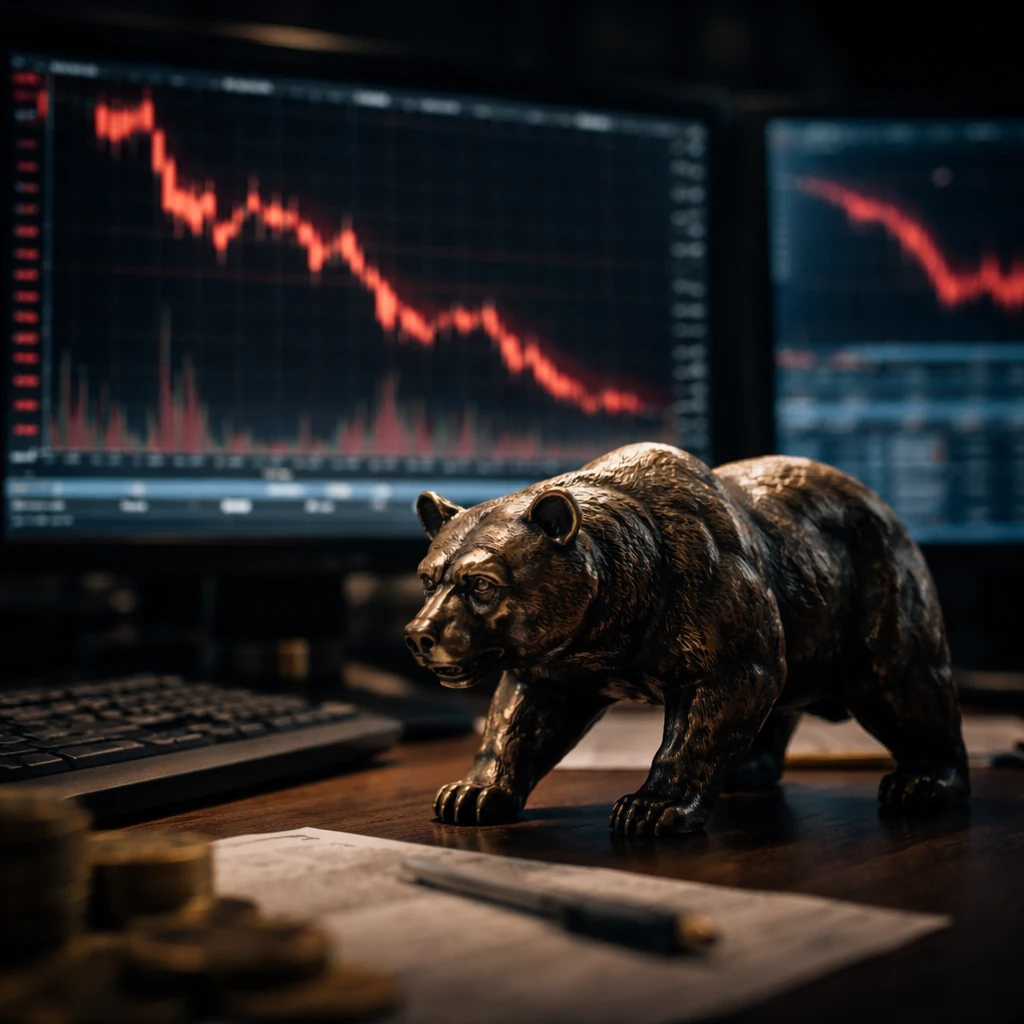
The terms come from how the animals attack:
- A bull attacks by thrusting its horns upward (rising market)
- A bear attacks by swiping its paws downward (falling market)
- how does inflation affect my savings and investments?
Part 2: How Long Do Bear Markets Last? (The Real Data)
The Numbers You Need to Know
| Average Bear Market | Duration |
|---|---|
| Since 1926 | 9-12 months |
| Since World War II | About 10 months |
| The worst ones | Up to 2-3 years |
The Bear Market Timeline (Since 1929)
| Bear Market | Duration | Decline |
|---|---|---|
| 1929-1932 (Great Depression) | 33 months | -86% |
| 1937-1938 | 13 months | -49% |
| 1973-1974 (Oil crisis) | 21 months | -45% |
| 2000-2002 (Dot-com) | 31 months | -49% |
| 2007-2009 (Financial crisis) | 17 months | -52% |
| 2020 (COVID) | 1 month | -34% |
| 2022 | 10 months | -25% |
The 2022 Bear Market
The most recent bear market before 2026 was in 2022. It lasted about 10 months , from January to October, with the S&P 500 dropping about 25% from peak to trough.
The 2026 Situation (Where We Are Now)
As of February 2026, we’re not in a bear market. The S&P 500 is down about 8% from its recent highs , which is a correction—not a bear market. But headlines may make it feel worse.
how to set SMART financial goals

Part 3: How Far Do Markets Fall? (The Painful Math)
Average Bear Market Declines
Since 1926, the average bear market decline is about 30-35% .
The Worst Bear Markets in History
| Event | Decline |
|---|---|
| Great Depression (1929-1932) | -86% |
| Financial Crisis (2007-2009) | -52% |
| Dot-com Bust (2000-2002) | -49% |
| 1970s Stagflation | -45% |
| COVID Crash (2020) | -34% |
| 2022 Bear Market | -25% |
What a 30% Drop Actually Means for Your Portfolio
| Portfolio Value Before Drop | After 30% Drop |
|---|---|
| $100,000 | $70,000 |
| $250,000 | $175,000 |
| $500,000 | $350,000 |
| $1,000,000 | $700,000 |
It hurts. But remember: these are paper losses. You haven’t lost anything until you sell.
financial checklist for newlyweds
Part 4: The Recovery Time—How Long to Get Your Money Back
Average Recovery Times
| Bear Market | Time to Recover |
|---|---|
| Average (all bear markets) | About 2 years |
| 2020 COVID crash | 4 months |
| 2022 bear market | 15 months |
| 2008 financial crisis | 4 years |
| 2000 dot-com bust | 5 years |
The Math of Getting Even
If you lose 20%, you need a 25% gain to get back to even.
If you lose 30%, you need a 43% gain .
If you lose 40%, you need a 67% gain .
If you lose 50%, you need a 100% gain .
This is why avoiding big losses matters. But also why selling at the bottom is so destructive.
The Difference Between Price Recovery and Total Return
If you keep investing through the bear market, you recover faster because you’re buying at lower prices. This is called dollar-cost averaging , and it’s your friend.
how to prepare your finances for a recession
Part 5: Why Bear Markets Happen (The 4 Main Causes)
1. Recession
When the economy shrinks, corporate profits fall, and stocks drop. This is the most common cause.
2. Rising Interest Rates
When the Fed raises rates, borrowing gets expensive, profits get squeezed, and stocks fall. This was the main cause of the 2022 bear market.
3. Bubbles Popping
When asset prices get too high (dot-com stocks, housing), they eventually crash back to reality.
4. External Shocks
Pandemics, wars, oil crises—unexpected events that disrupt the economy.
what is a fiduciary financial advisor and do I need one?
Part 6: What You Should Do in a Bear Market (The Flowchart)
If You’re a Long-Term Investor (5+ Years from Retirement):
| Question | Answer |
|---|---|
| Should I sell? | No. Selling locks in losses. |
| Should I keep investing? | Yes. You’re buying at lower prices. |
| Should I check my portfolio daily? | No. That way lies madness. |
| Should I increase contributions? | If you can, yes. This is when wealth is built. |
If You’re Near Retirement (0-5 Years Out):
| Question | Answer |
|---|---|
| Should I panic? | No. But review your plan. |
| Do I have cash to live on? | You should have 2-3 years of expenses in cash/bonds. |
| Should I delay retirement? | Possibly, if the drop is severe. |
If You’re Already Retired:
| Question | Answer |
|---|---|
| Should I change my withdrawals? | If you can, reduce spending temporarily. |
| Do I have a cash cushion? | You should. Use it instead of selling stocks. |
| Will I be okay? | Historically, yes. But review with an advisor. |
The Golden Rule
Time in the market beats timing the market.
should I pay off debt or save for an emergency fund first?
Part 7: What You Should NEVER Do in a Bear Market
Don’t Panic Sell
This is the #1 mistake. Selling turns a paper loss into a real loss. And you’ll probably miss the recovery.
Don’t Try to Time the Bottom
You won’t catch it. Nobody does. Even the pros fail at this.
Don’t Stop Investing
If you stop your 401(k) contributions during a bear market, you’re missing the best buying opportunities. Keep investing.
Don’t Check Your Portfolio Daily
The daily noise will drive you crazy. Check once a quarter. Your future self will thank you.
teaching kids about money: age-appropriate activities
Part 8: The 2026 Bear Market—What’s Happening Now
Current Market Status
As of February 2026:
- S&P 500: Down about 8% from recent highs
- This is a correction, not a bear market
- The economy is growing slowly
- Inflation is cooling
- The Fed is signaling possible rate cuts
What the Experts Are Saying
Opinions are divided:
- Some say we’ll avoid a bear market entirely
- Others predict a mild recession and bear market later in 2026
- Most agree that any downturn will be less severe than 2008 or 2020
The Historical Context
Even if we enter a bear market, history says:
- It will likely last less than a year
- The drop will probably be 20-30%
- Recovery will follow within 1-2 years
Frequently Asked Questions
Q: What is a bear market?
A: A decline of 20% or more from a recent peak, sustained over time .
Q: How long do bear markets last?
A: On average, about 9-12 months. Some last longer, some shorter .
Q: How far do markets fall in a bear market?
A: Average decline is about 30-35%. The worst in modern history was 2008 at 52% .
Q: How long does it take to recover from a bear market?
A: Average recovery time is about 2 years. The worst (2000) took 5 years .
Q: Should I sell during a bear market?
A: No. Selling locks in losses. Stay invested .
Q: Should I keep investing during a bear market?
A: Yes. You’re buying at lower prices. This is how wealth is built .
Q: What’s the difference between a correction and a bear market?
A: A correction is a 10-19% drop. A bear market is 20%+ .
Q: Are we in a bear market right now (2026)?
A: No. As of February 2026, we’re in a correction (down about 8%) .
Q: What causes bear markets?
A: Recessions, rising interest rates, bubbles popping, and external shocks .
Q: How do I protect my portfolio in a bear market?
A: Diversification, having cash for near-term needs, and staying invested .
Q: Is this time different?
A: No. It never is. Markets always recover .
The Emotional Bottom Line
Look, I’m not going to pretend that watching your portfolio drop 20-30% is easy.
It’s not. It’s painful. It tests your resolve. It makes you question every financial decision you’ve ever made.
But here’s the thing: Bear markets are not the end of the world. They’re part of the cycle.
They’ve happened before. They’ll happen again. And every single time, the market has recovered and gone on to new highs.
The people who panic and sell lose. The people who stay calm and keep investing win. That’s not a cliché—it’s data.
So the next time you see “BEAR MARKET” in the headlines, remember:
- You knew this would happen someday
- It’s normal
- It will end
- Your plan still works
And if you’re really scared, turn off the news, stop checking your portfolio, and go for a walk.
The market will be there when you get back.
You’ve got this.