Author: Peiman Daneshgar
Email: daneshgar781@gmail.com
Estimated reading time: 10 minutes
Table of contents
- 1. What Is a 30 Day Spending Freeze?
- 2. Why a Spending Freeze Works So Well
- 3. The Real Goal of a No-Spend Challenge
- 4. What You Can Buy During a Spending Freeze
- 5. What You Cannot Buy During a Spending Freeze
- 6. How to Prepare Before Day One
- 7. Creating Your Personal Spending Freeze Rules
- 8. Common Triggers That Break a Spending Freeze
- 9. How to Survive the Hardest Days
- 10. What to Do Instead of Shopping
- 11. How to Handle Social Events During the Freeze
- 12. What to Do If You Slip Up
- 13. How Much Money Can You Save in 30 Days?
- 14. How to Use the Money You Save
- 15. Frequently Asked Questions
- 16. Final Thoughts
1. What Is a 30 Day Spending Freeze?
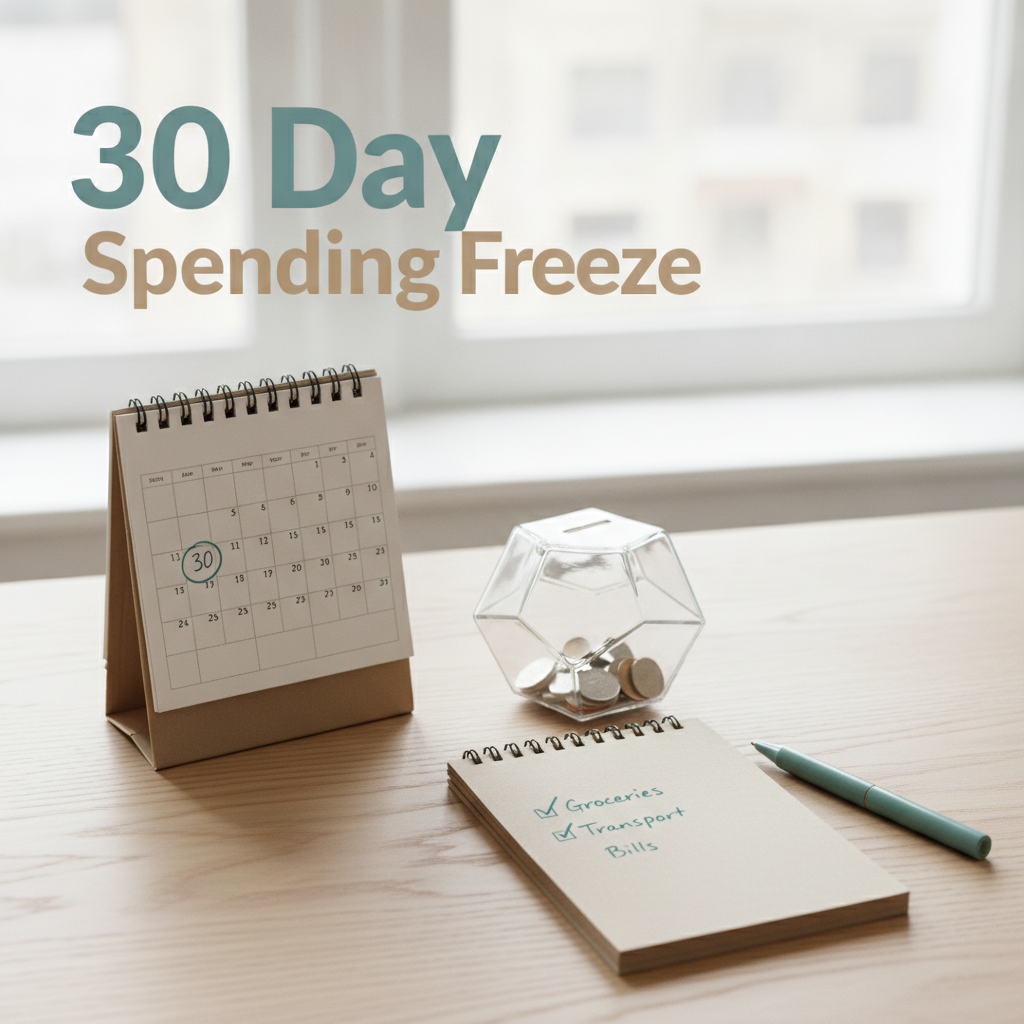
A 30 Day Spending Freeze is a personal financial challenge where you stop all non-essential spending for one full month.
It does not mean you stop spending money entirely. You still pay for necessary expenses such as:
- Rent or mortgage
- Utilities
- Groceries
- Transportation
- Insurance
- Minimum debt payments
- Medical needs
What you stop buying are the extra things that quietly drain your money:
- Takeout coffee
- Restaurant meals
- Online impulse purchases
- Clothing you do not need
- Home decor
- Entertainment spending
- Random convenience purchases
A spending freeze is less about punishment and more about awareness. It helps you step out of automatic consumption and examine how often you spend out of boredom, stress, habit, or emotion.
2. Why a Spending Freeze Works So Well
Most people do not lose money because of one giant financial mistake. They lose money through small, repeated, emotionally driven purchases.
A spending freeze works because it interrupts this pattern.
For 30 days, you create a hard boundary between what is necessary and what is optional. That boundary forces you to notice:
- how often you shop without thinking,
- how often boredom leads to spending,
- how much advertising influences your behavior,
- and how many purchases are based on mood rather than need.
The challenge also creates immediate financial relief. Even a person with an average spending pattern can often save a meaningful amount in just one month simply by cutting food delivery, entertainment purchases, convenience buys, and online shopping.
But the biggest benefit is not just the saved money. The biggest benefit is behavior change.
3. The Real Goal of a No-Spend Challenge
The true purpose of a 30 Day Spending Freeze is not to prove that you can suffer for a month.
The real goal is to reset your relationship with money.
Many people discover that they were spending for reasons unrelated to actual need. Shopping becomes entertainment. Delivery becomes routine. Small treats become daily habits. Sales become excuses. Convenience becomes expensive.
The freeze helps you:
- break autopilot spending,
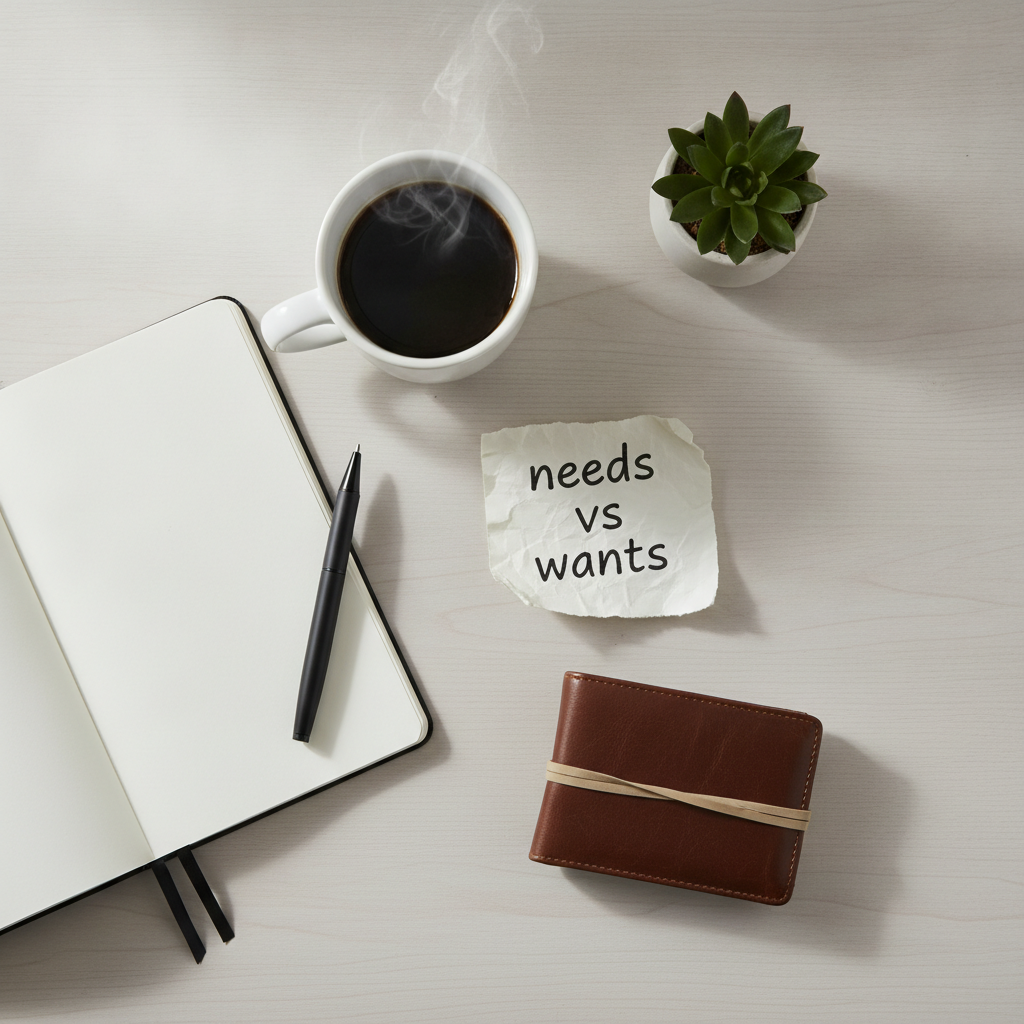
- separate wants from needs,
- identify emotional spending triggers,
- become more intentional with your money,
- and redirect cash toward savings goals.
At the end of 30 days, the ideal outcome is not simply “I spent less.”
The ideal outcome is: “I understand my spending better, and now I control it.”
4. What You Can Buy During a Spending Freeze
A successful freeze depends on realistic rules. If the challenge is too strict, you may quit early.
In general, allowed spending includes essential living expenses.
These usually include:
Housing
- Rent
- Mortgage payments
- Required home fees
Utilities
- Electricity
- Water
- Gas
- Internet if required for work or family needs
- Phone bill
Food
- Basic groceries
- Household essentials like dish soap or toilet paper
- Necessary baby supplies
Transportation
- Fuel
- Public transportation
- Necessary car maintenance
- Parking for work
Health and Safety
- Prescription medication
- Medical appointments
- Emergency expenses
Financial Obligations
- Minimum debt payments
- Insurance premiums
- Childcare if necessary for work
The rule is simple: if the expense protects your basic life, work, health, or safety, it usually stays.
Saving vs Investing: Understanding the Key Differences
5. What You Cannot Buy During a Spending Freeze
During the freeze, you remove purchases that are optional, emotional, or convenience-based.
These often include:
- Fast food and takeout
- Restaurant meals
- Snacks bought impulsively
- Clothing and accessories
- Beauty products you do not need immediately
- Home decor
- Hobby shopping
- Books you are not going to read this month
- Electronics and gadgets
- Random online deals
- Streaming add-ons or extra subscriptions
- Entertainment purchases
- “Treat yourself” spending
This is where the challenge becomes powerful. These small expenses often feel harmless on their own, but together they can represent a major leak in your financial life.
6. How to Prepare Before Day One
Preparation matters more than motivation.
If you start a spending freeze without planning, you will rely entirely on willpower. That usually fails.
Before the challenge begins:
Clean out your kitchen
Make a list of what food you already have. Use what is in your pantry, freezer, and refrigerator before buying extra items.
Plan your meals
Create simple meals for the week so you are not tempted to order food because you “have nothing to eat.”
Set your rules in writing
Decide exactly what counts as essential and what does not. Ambiguity creates loopholes.
Remove temptation
- Delete shopping apps
- Unsubscribe from marketing emails
- Turn off notifications from stores
- Remove saved payment methods
- Avoid casual browsing on shopping sites
Tell people around you
Let close friends or family know you are doing a spending freeze. This reduces social pressure and helps you stay accountable.
Choose your financial purpose
Give the challenge a mission. Are you saving for:
- an emergency fund,
- debt payoff,
- a travel goal,
- a bill buffer,
- or simply peace of mind?
When the challenge has a clear purpose, it feels more meaningful.
Cash Stuffing Method Explained
7. Creating Your Personal Spending Freeze Rules
Every person’s version of a spending freeze should fit their life.
A single person living alone will have different needs from a parent with children. Someone with a long commute will have different transportation costs from someone who works remotely.
That is why your challenge should include personal rules.
A strong rule set usually answers these questions:
- Are groceries allowed without restriction, or only basic grocery spending?
- Can you replace an item if it is truly necessary?
- Are pre-planned social events allowed?
- Can you buy gifts if an occasion appears during the month?
- Are digital subscriptions paused or kept?
- What qualifies as an emergency?
The more clearly you define your rules, the fewer arguments you will have with yourself later.
8. Common Triggers That Break a Spending Freeze
A spending freeze is not usually broken by need. It is broken by emotion and convenience.
Common triggers include:
Stress
After a hard day, spending can feel like relief.
Boredom
Many people shop because they have nothing else to do.
Social media
Scrolling online exposes you to endless products, trends, and “must-have” items.
Sales and discounts
A sale creates urgency, even when the purchase was never necessary.
Social pressure
Friends suggesting restaurants, shopping trips, or casual spending can weaken your discipline.
Reward thinking
People often justify spending because they feel they deserve a treat.
Learning your trigger pattern is one of the most valuable parts of the challenge.
9. How to Survive the Hardest Days
Not every day of a spending freeze feels hard. Usually, the most difficult moments are emotional ones.
To survive those moments:
Delay the urge
Tell yourself you can revisit the purchase after 24 hours. Most urges weaken with time.
Replace the habit
If you normally browse online stores at night, replace that routine with something else:
- reading,
- walking,
- journaling,
- organizing a room,
- or watching something you already own.
Use a “want list”
Write down everything you want to buy during the freeze. This helps release the mental pressure without spending.
Revisit your goal
Look at the reason you started. Whether it is saving $300, reducing debt, or regaining control, reconnect with the bigger purpose.
Make progress visible
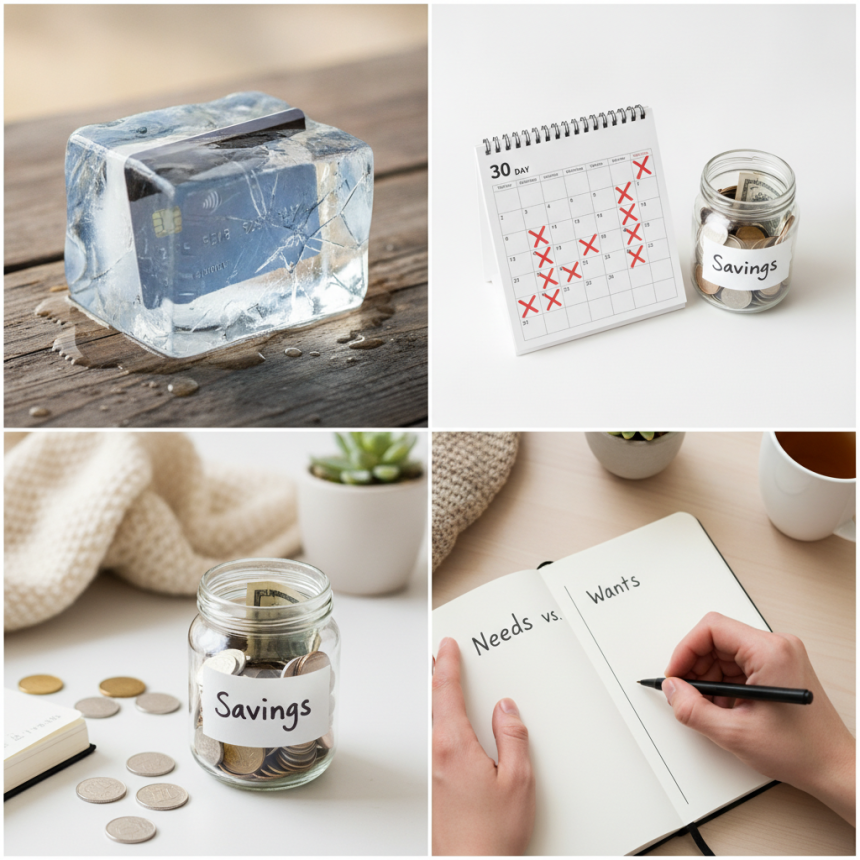
Use a calendar, checklist, or habit tracker. Crossing off each successful day creates momentum.
10. What to Do Instead of Shopping
One reason spending becomes habitual is that it fills emotional and mental space.
If you remove shopping, you need replacement activities.
Here are strong alternatives:
- Cook meals at home
- Take walks
- Exercise
- Read books you already own
- Start a free challenge
- Clean or organize your home
- Learn a skill online
- Call a friend
- Journal your spending urges
- Explore free community events
- Use what you already have before buying more
The challenge becomes easier when you stop focusing only on what you cannot do and start enjoying what you can do for free.
11. How to Handle Social Events During the Freeze
Social life can be one of the biggest obstacles.
You may get invited to:
- coffee meetups,
- restaurant dinners,
- shopping trips,
- birthdays,
- entertainment outings.
The solution is not always isolation. The solution is planning.
You can:
- suggest lower-cost alternatives,
- meet for a walk instead of dinner,
- eat at home before going out,
- skip unnecessary outings for one month,
- or set a small, pre-approved social budget if needed.
What matters is intentionality. Do not let spontaneous social pressure erase your progress.
12. What to Do If You Slip Up
Many people fail one day and then quit the challenge completely.
That is a mistake.
A spending freeze does not need perfection to be valuable.
If you slip up:
- Admit it honestly.
- Write down what happened.
- Identify the trigger.
- Continue the next day.
Do not turn one unplanned purchase into a full weekend or full month of careless spending.
Progress is always more important than perfection.
13. How Much Money Can You Save in 30 Days?
The amount depends on your habits.
If you normally spend on:
- coffee,
- takeout,
- food delivery,
- online shopping,
- convenience snacks,
- subscriptions,
- and entertainment,
you may save far more than expected.
For example:
- $5 coffee, 5 times a week = $100/month
- Two $25 takeout meals per week = $200/month
- One $50 impulse online purchase per week = $200/month
- Extra entertainment and convenience spending = $100/month
That is $600 in one month from a few common habits.
For many people, a spending freeze becomes the fastest way to find “hidden money” in their budget.
14. How to Use the Money You Save
Do not let the saved money disappear into general spending again.
Give it a destination immediately.
Smart options include:
- building an emergency fund,
- paying off credit card debt,
- creating a monthly bill buffer,
- starting a sinking fund,
- funding a future goal,
- or investing after basic stability is in place.
Saved money becomes much more powerful when it has a job.
15. Frequently Asked Questions
Is a 30 Day Spending Freeze realistic?
Yes, if the rules are practical and based on your real life. It should be challenging but not impossible.
Can I still buy groceries?
Yes. Groceries are usually allowed, but it is best to focus on basic planned meals rather than comfort purchases and convenience food.
What if I have children?
Your freeze should fit your responsibilities. Essential family spending is allowed. The goal is to cut non-essential spending, not to ignore real needs.
What if I fail halfway through?
Do not quit. Continue the challenge and learn from the moment that caused the slip.
Should I cancel all subscriptions?
Not necessarily all, but you should review them carefully. Pause or cancel anything you do not truly need this month.
16. Final Thoughts
A 30 Day Spending Freeze is one of the most effective ways to regain control of your money in a short period of time.
It works because it reveals the difference between living and consuming.
For one month, you stop feeding unnecessary habits and start paying attention. You discover what drives your spending, what your real needs are, and how much money quietly escapes through convenience, boredom, and emotional purchases.
Most importantly, a spending freeze teaches a skill that lasts longer than 30 days: intentional spending.
When the month ends, you do not have to stay in full freeze mode forever. But if you complete the challenge honestly, you will likely spend with more awareness, save with more purpose, and feel more in control of your financial life.