By: Peiman Daneshgar | Email: daneshgar781@gmail.com**
Published: February 26, 2026**
Table of Contents
- Bank Fees Explained: The Complete Guide to Understanding Your Statement
- Introduction: The $37 Mystery Charge
- What This Article Will Actually Give You
- Part 1: Why Banks Charge Fees (The Honest Truth)
- Part 2: Monthly Maintenance Fees—The “You Paid to Keep Your Money Here” Fee
- Part 3: Overdraft and NSF Fees—The Most Expensive Mistakes
- Part 4: ATM Fees—The “Convenience” Tax
- Part 5: Minimum Balance Fees—The “You’re Too Poor” Penalty
- Part 6: Paper Statement Fees—The “Go Green or Pay Up” Fee
- Part 7: Foreign Transaction and International Fees—The Travel Tax
- Part 8: Wire Transfer and Bank Check Fees—The “Move Your Money” Cost
- Part 9: Stop Payment Fees—The “Changed Your Mind” Charge
- Part 10: Dormancy and Inactivity Fees—The “You Forgot About Us” Fee
- Part 11: Account Closing Fees—The Exit Penalty
- Part 12: How to Fight Back—Getting Fees Waived
- Part 13: The Fee-Free Banking Options
- Part 14: How to Set Up Your Accounts to Avoid Fees Automatically
- Frequently Asked Questions
- The Emotional Bottom Line
Introduction: The $37 Mystery Charge
I know that feeling.
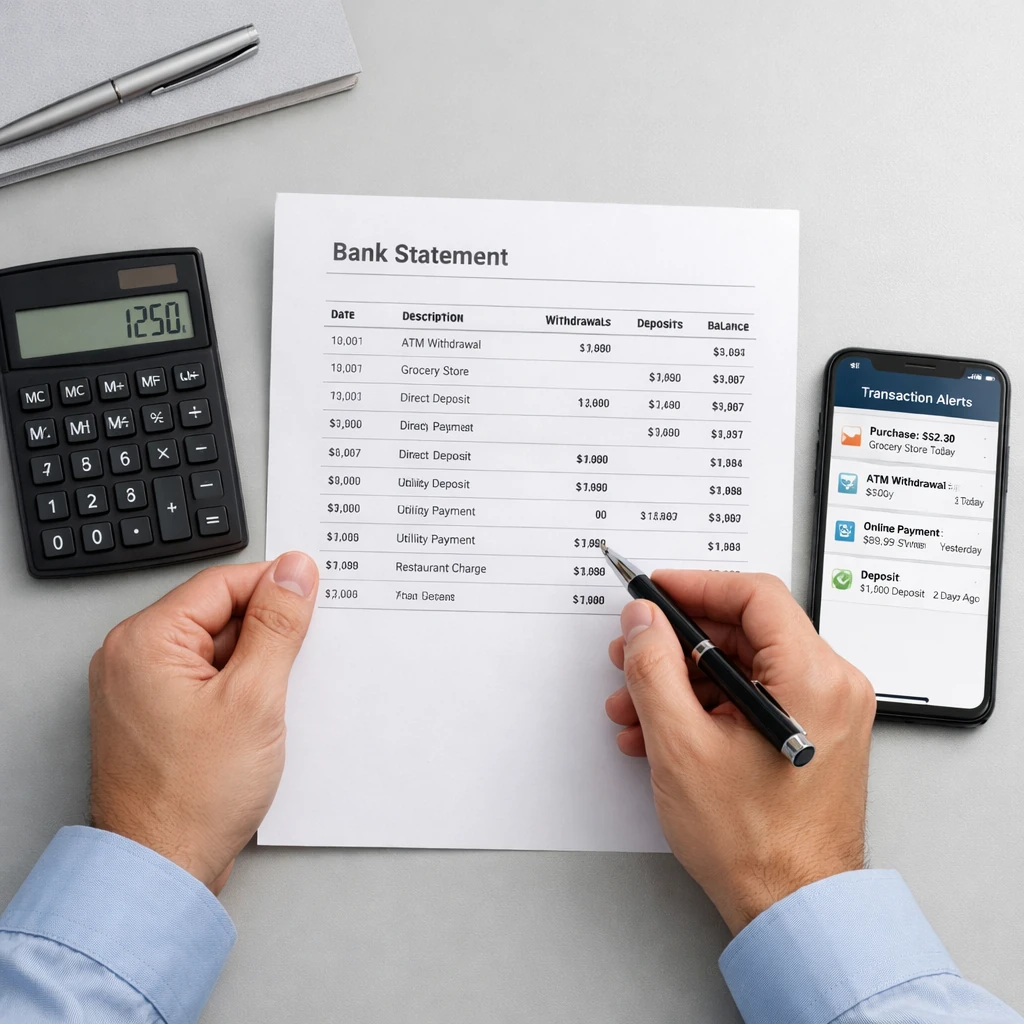
You’re sitting at your kitchen table, scrolling through your bank statement, and you see it. A line item that makes no sense. “$12.00 Monthly Service Fee.” “$35.00 Overdraft Fee.” “$3.50 ATM Surcharge.”
You stare at it. You try to remember what you did to deserve this. You didn’t buy anything. You didn’t take out a loan. You just… kept your money in the bank. And they charged you for it.
Maybe it’s just a few dollars. No big deal, right? But then you start adding them up. The $12 here, the $35 there, the $3 every time you use the wrong ATM. Suddenly you realize you’ve paid hundreds of dollars this year for the privilege of… having a bank account.
high-deductible health plan with HSA pros and cons
And you wonder: Is this normal? Are these fees real? Can I get them back?
Sound familiar?
You’re not alone. Banks made over $15 billion in overdraft fees alone in recent years . And the average American pays hundreds of dollars annually in bank fees without even realizing it .
Here’s the thing: Most bank fees are optional. Not in the sense that you can refuse to pay them, but in the sense that you can avoid them entirely by knowing the rules, choosing the right account, and setting up your banking habits correctly.
how to shop for car insurance and get the best rate
🧠 Quick Reality Check:
Banks are businesses. They make money from fees. But they also have to compete for your business. That means you have power—the power to choose fee-free accounts, the power to negotiate, and the power to walk away.
What This Article Will Actually Give You
Here’s the deal. Most bank fee articles are either too basic or written by banks themselves.
This one is different.
By the time you finish reading, you’ll know:
- Every major bank fee—what it is, why it exists, and how much it costs .
- Exactly how to avoid each fee (no vague advice, actual steps) .
- The “just ask” strategy to get fees waived when they happen .
- Which banks don’t charge fees at all .
- How to set up your accounts so fees never happen in the first place .
This is the playbook. Let’s run it.
is pet insurance worth the cost?
Part 1: Why Banks Charge Fees (The Honest Truth)
The Business Model You’re Funding
Banks aren’t charities. They’re businesses. They make money in two main ways:
- Lending your money out at higher rates than they pay you
- Charging you fees for services
When interest rates are low, fees become more important to their bottom line .
understanding your home insurance deductible
The “Small Amounts Add Up” Reality
Here’s something that might surprise you: Banks make billions from fees that seem tiny. A $3 ATM fee doesn’t sound like much. But when millions of customers pay it, suddenly it’s real money .
The Fee-to-Revenue Ratio
For some banks, fees account for 40% or more of their revenue . That’s not a side business—that’s a core part of how they operate.
But here’s the good news: You don’t have to be part of their fee revenue stream.
long-term care insurance: who needs it?
Part 2: Monthly Maintenance Fees—The “You Paid to Keep Your Money Here” Fee
What It Is
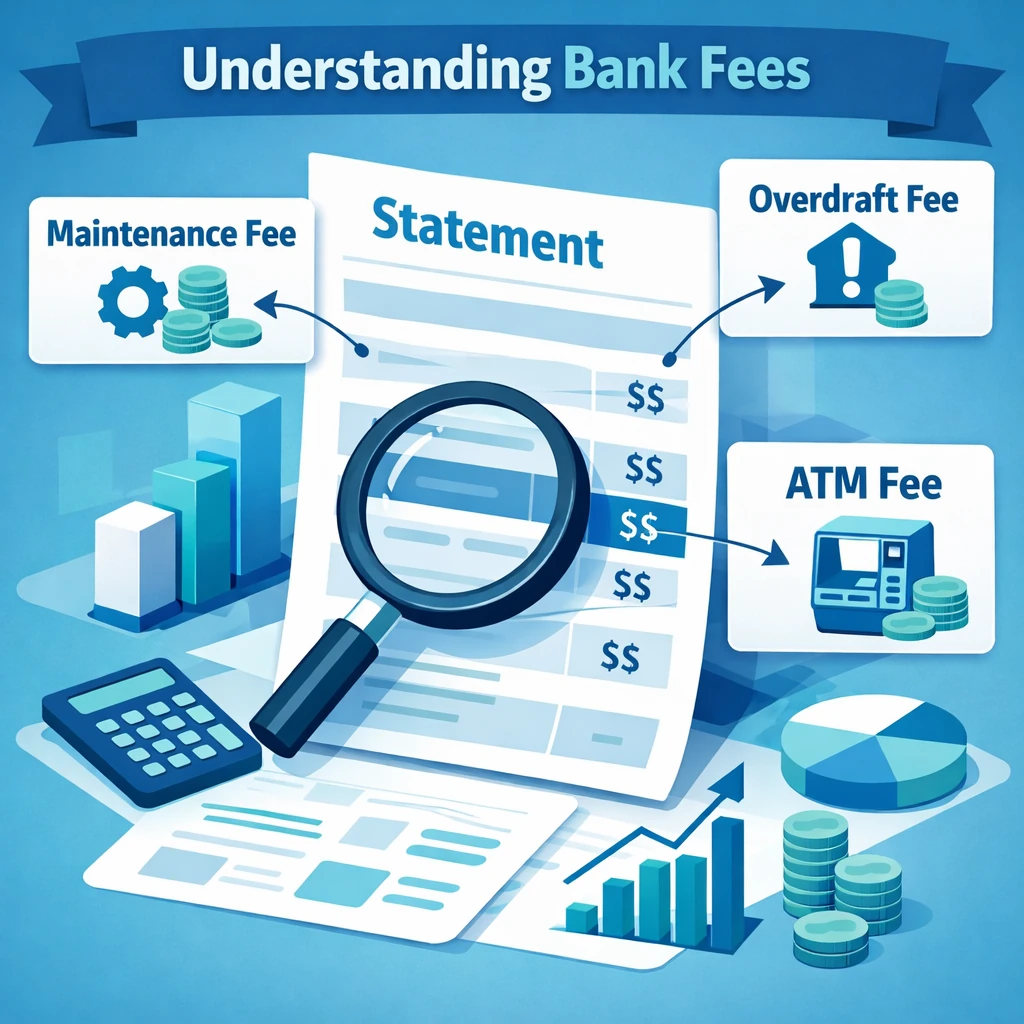
A monthly maintenance fee (also called a monthly service fee) is exactly what it sounds like: money the bank charges you every month for the privilege of having an account with them .
how to create a financial plan step by step
Think about that for a second. They’re charging you to hold your money. It’s like paying rent to a landlord who’s also holding your security deposit.
How Much It Costs
| Bank | Typical Fee | Waiver Requirements |
|---|---|---|
| Chase Total Checking | $12 | $1,500 daily balance OR $500+ direct deposits OR $5,000+ across accounts |
| Wells Fargo Everyday Checking | $10 | $500 minimum balance OR $500+ direct deposits OR age 17-24 |
| Bank of America Advantage SafeBalance | $4.50 | $500 minimum balance OR Preferred Rewards OR student under 24 |
| U.S. Bank Smartly Checking | $12 | $1,000+ direct deposits OR $1,500 avg balance OR age 24/65+ |
| TD Bank Complete Checking | $15 | $500 daily balance OR $500+ direct deposits OR $5,000 across accounts |
How to Avoid It
- Maintain the minimum balance: Keep enough money in your account to meet the requirement. Set up an alert to warn you if you’re getting close .
- Set up direct deposit: Many banks waive fees if you have regular direct deposits, often as low as $500/month .
- Combine accounts: Some banks let you count balances across multiple accounts (checking, savings, investments) toward the minimum .
- Ask for student or senior discounts: Many banks waive fees for students (often under 24 or 25) and seniors (over 62 or 65) .
- Sign up for rewards programs: Banks like Bank of America waive fees for customers in their Preferred Rewards program .
- net worth calculator for millennials
The Fee-Free Alternative
Here’s a radical idea: Choose a bank that doesn’t charge monthly fees at all. Online banks like Capital One 360, Ally, and Discover Bank typically have no monthly fees. Many credit unions also offer fee-free checking .
Part 3: Overdraft and NSF Fees—The Most Expensive Mistakes
Overdraft Fees (The Bank Covers You)
When you spend more money than you have in your account, and the bank covers the transaction anyway, they charge you an overdraft fee . This typically costs $30-35 per transaction .
NSF Fees (The Bank Says No)
Non-sufficient funds (NSF) fees happen when you try to spend money you don’t have, but the bank rejects the transaction . You still get charged a fee—usually similar to an overdraft fee—but the payment doesn’t go through.
The Real Cost of a $4 Coffee
Let’s say you buy a $4 coffee when you have $2 in your account. With a $35 overdraft fee, that coffee just cost you $39. If you buy three things before realizing your mistake? That’s three fees—over $100 for maybe $20 in purchases.
financial milestones you should hit by age 25, 30, 40
How to Avoid Overdraft and NSF Fees
- Opt out of overdraft protection: By law, you can choose whether your bank covers debit card and ATM transactions that would overdraw your account. If you opt out, the transaction is simply declined—no fee .
- Set up low-balance alerts: Most banks let you get text or email alerts when your balance drops below a certain amount .
- Link a backup account: You can link a savings account to automatically transfer funds when your checking runs low. Some banks charge a small fee for this, but it’s much less than an overdraft fee .
- Keep a buffer: Simply keep an extra $100-200 in your checking account as a cushion.
- Track your balance manually: Old school, but effective. Check your account before spending.
- what does renters insurance actually cover?
Part 4: ATM Fees—The “Convenience” Tax
How Double Fees Work
Using an out-of-network ATM typically triggers two fees :
- The ATM owner’s surcharge (usually $2-4)
- Your bank’s out-of-network fee (usually $2-3)
That’s $4-7 to withdraw your own money .
What It Costs
| Fee Type | Typical Amount |
|---|---|
| ATM owner surcharge | $2.00 – $4.00 |
| Your bank’s fee | $2.00 – $3.00 |
| Total per withdrawal | $4.00 – $7.00 |
How to Avoid ATM Fees
- Stick to your bank’s ATMs: Most banks have ATM locators in their apps .
- Choose a bank that reimburses fees: Some online banks and investment accounts reimburse ATM fees from any machine .
- Get cash back at stores: When you make a purchase at a grocery store or drugstore, you can often get cash back for free .
- Withdraw larger amounts less often: Instead of $20 five times, take out $100 once. Fewer transactions = fewer chances for fees.
Part 5: Minimum Balance Fees—The “You’re Too Poor” Penalty
What It Is
Some banks charge a fee if your account balance falls below a certain threshold. This is different from the monthly maintenance fee, though they’re often combined .
Typical Requirements
- Minimum daily balance: Often $500, $1,000, or $1,500
- Average monthly balance: Sometimes used instead of daily minimum
- Combined balances: Some banks let you combine checking and savings to meet the requirement
How to Avoid It
- Choose an account with no minimum balance requirement
- Keep enough in the account to stay above the threshold
- Set up alerts to warn you when you’re getting close
- Use combined balances if your bank offers that option
Part 6: Paper Statement Fees—The “Go Green or Pay Up” Fee
What It Costs
Many banks now charge $2 to $5 per month if you want paper statements mailed to you . National Bank of Canada, for example, charges $3.50 per month for paper statements .
The Easy Fix
Switch to electronic statements. They’re free, more secure, and better for the environment. Most banks make this easy to do in online banking .
Part 7: Foreign Transaction and International Fees—The Travel Tax
What It Is
When you use your debit or credit card outside your home country, many banks charge a foreign transaction fee . This is usually a percentage of the purchase amount, not a flat fee.
How Much It Costs
- Typical fee: 1% to 3% of the transaction amount
- On a $1,000 trip: That’s $10 to $30 in fees
How to Avoid It
- Get a card with no foreign transaction fees: Many travel credit cards and some debit cards waive these fees .
- Withdraw local currency from in-network ATMs: If your bank has international partners, you might avoid fees.
- Use local currency when offered: When traveling, always choose to pay in the local currency, not your home currency (dynamic currency conversion adds fees).
Part 8: Wire Transfer and Bank Check Fees—The “Move Your Money” Cost
Domestic Wires
Sending money domestically via wire transfer typically costs $20 to $30 .
International Wires
International wires are more expensive, often $40 to $50 or more . Some banks also charge a percentage on top.
Cashier’s Checks and Money Orders
- Cashier’s checks: $5 to $15
- Money orders: $2 to $5 at banks, cheaper at post offices and grocery stores
Cheaper Alternatives
- Zelle, Venmo, PayPal: Free for most transfers up to certain limits
- ACH transfers: Usually free but take 2-3 business days
- Personal checks: Free (or cost of the checks themselves)
Part 9: Stop Payment Fees—The “Changed Your Mind” Charge
What It Costs
If you ask your bank to stop payment on a check you wrote, they’ll charge a stop payment fee , typically $20 to $35 .
How to Avoid It
- Keep accurate records: Know what checks you’ve written and when they might clear
- Use online bill pay instead of paper checks: You can cancel or modify payments easily
- Contact the payee first: If you lost a check, ask if they’ll wait for a replacement before paying a stop fee
Part 10: Dormancy and Inactivity Fees—The “You Forgot About Us” Fee
What It Is
Some banks charge a fee if you don’t use your account for a certain period—typically 6 to 12 months . This is also called a “dormancy fee.”
Eastern Colorado Bank charges $10 per month after one year of inactivity . Some banks charge $20 per quarter .
How to Avoid It
- Set up one automatic transaction per month: Even a small recurring transfer or bill payment keeps the account active .
- Close accounts you don’t use: If you have an old account sitting empty, close it.
- Check account terms: Some accounts, like Bank On certified accounts, specifically exclude dormancy fees .
Part 11: Account Closing Fees—The Exit Penalty
What It Is
Some banks charge a fee if you close your account within a certain timeframe—usually 90 days to 6 months of opening .
China Construction Bank charges $30 if you close within 3 months .
How to Avoid It
- Ask before opening: Always ask about early closure fees before opening an account.
- Keep accounts open long enough: If there’s a fee, just wait out the period.
- Choose banks without closure fees: Most online banks and credit unions don’t charge these.
Part 12: How to Fight Back—Getting Fees Waived
Here’s something most people don’t know: Bank employees often have the power to reverse fees . You just have to ask.
The “Just Ask” Strategy
If you get hit with a fee, call your bank and politely ask them to waive it. Be nice. Explain what happened. If it’s your first offense, they’ll often do it as a courtesy .
The “Loyal Customer” Card
If you’ve been with the bank for years, mention that. Longtime customers have more leverage .
The “Competitor Threat” Move
If the bank won’t budge, mention that you’re considering moving your accounts to a competitor with better terms. Banks don’t want to lose your business .
What to Say
“Hi, I noticed a [$35 overdraft fee] on my account. I think I just lost track of my balance for a moment. This isn’t typical for me—I’ve been a customer for [X years]. Would you be able to waive this fee as a one-time courtesy?”
Success rate: Surprisingly high.
Part 13: The Fee-Free Banking Options
Online Banks
| Bank | Monthly Fee | ATM Fees | Notes |
|---|---|---|---|
| Capital One 360 | $0 | No fees at 70,000+ ATMs | No minimums |
| Ally Bank | $0 | Reimburses up to $10/month | No minimums |
| Discover Bank | $0 | No fees at 60,000+ ATMs | No minimums |
| Charles Schwab | $0 | Unlimited ATM fee reimbursement | Requires brokerage account |
Credit Unions
Credit unions are not-for-profit and often have much lower fees than banks . Many offer free checking with no minimums. The National Credit Union Administration has a credit union locator.
Community Banks
Local community banks often have lower fees than mega-banks. They may also be more willing to work with you on fee waivers.
The Bank On Initiative
The Bank On Initiative certifies bank accounts that meet specific standards for affordability and consumer protection . These accounts have:
- No overdraft fees
- Low monthly fees (usually under $5)
- No hidden charges
- Electronic payments and bill pay included
Eastern Colorado Bank’s Bank On account, for example, has no overdraft fees and no NSF fees .
Part 14: How to Set Up Your Accounts to Avoid Fees Automatically
The Auto-Pilot Setup
Once you have a fee-free account (or an account with clear waiver requirements), set it up to stay fee-free automatically:
- Enable low-balance alerts so you never accidentally overdraft .
- Set up direct deposit if that waives your monthly fee .
- Link a savings account as overdraft backup (if available) .
- Schedule a recurring transfer if you need to maintain minimum balance or activity .
- Turn off overdraft on debit cards so transactions are declined instead of fee’d .
The “One Bank” Strategy
Keep all your accounts at one bank. This makes it easier to:
- Meet combined balance minimums
- Transfer money instantly between accounts
- Build a relationship that helps with fee waivers
Frequently Asked Questions
Q: What’s the most common bank fee?
A: Monthly maintenance fees are the most common, but overdraft fees are often the most expensive .
Q: How much does the average person pay in bank fees?
A: The average American pays hundreds of dollars annually in bank fees, though this varies widely by banking habits .
Q: Can you get bank fees waived?
A: Yes. Call your bank, be polite, explain the situation, and ask. First-time offenses are often waived .
Q: What’s the difference between overdraft and NSF fees?
A: Overdraft fees happen when the bank pays the transaction anyway. NSF fees happen when the bank rejects it .
Q: Are online banks really fee-free?
A: Many online banks have no monthly fees and no minimum balance requirements. They often also have large ATM networks or fee reimbursement .
Q: Do credit unions have fewer fees?
A: Generally, yes. Credit unions are not-for-profit and often have lower fees than traditional banks .
Q: What’s a dormancy fee?
A: A fee charged when you don’t use your account for a certain period, usually 6-12 months .
Q: How do I avoid ATM fees?
A: Use your bank’s ATMs, choose a bank with fee reimbursement, or get cash back at stores .
Q: What’s the Bank On initiative?
A: A program certifying affordable bank accounts with no overdraft fees and low monthly costs .
Q: Can I negotiate fees with my bank?
A: Yes. Longtime customers have more leverage, but anyone can ask .
The Emotional Bottom Line
Look, I’m not going to pretend that reading your bank statement is fun.
It’s not. It’s tedious. It’s full of small charges that feel like death by a thousand cuts. And it’s easy to just ignore them and hope they go away.
But here’s the thing: Those small charges add up to real money. Money that could be in your pocket instead of the bank’s.
The average person spends hundreds a year on bank fees. Over a decade, that’s thousands. Over a lifetime, it’s a meaningful chunk of your retirement savings.
But you don’t have to. With a little knowledge, a few phone calls, and some smart setup, you can reduce your bank fees to zero. Not “almost zero.” Zero.
Choose a fee-free account. Set up direct deposit. Keep an eye on your balance. Ask for waivers when fees happen. And if your bank won’t play ball, find one that will.
Your money is yours. Don’t pay someone for the privilege of holding it.
You’ve got this.