Business Bank Accounts Explained: A Complete Guide for New Entrepreneurs
Author: Peiman Daneshgar
Contact: daneshgar781@gmail.com
Published: February 26, 2026
Reading Time: 9 minutes
Table of Contents
- The “I’ve Been Putting This Off” Confession
- Why Your “I’ll Do It Later” Mentality Is Costing You Money
- Step 0: The Thing You Must Do BEFORE You Even Apply
- The Master Checklist: 7 Things You Need to Open a Business Bank Account in 2026
- EIN vs. SSN: The Million-Dollar Question Answered
- Step-by-Step: How to Actually Open the Account
- Traditional Bank vs. Online Bank: The 2026 Reality Check
- What Happens After You Open? (Don’t Skip This)
- Why Applications Get Rejected (And How to Make Sure Yours Isn’t)
- Frequently Asked Questions
- The Bottom Line: You’re Ready
1. The “I’ve Been Putting This Off” Confession
Let me guess why you’re here.
You’ve been in business for a few weeks… or maybe a few months. You’ve been getting paid—maybe via Venmo, maybe via checks made out to your name, maybe via cash. And that money? It’s just sitting in your personal checking account right next to your grocery money and your rent.
And every single week, you tell yourself: “I need to open a real business bank account. I’ll do it next week.”
But next week comes, and you’re too busy. Or you’re not sure what documents you need. Or you’re worried you’ll walk into a bank looking like an amateur and get rejected.
I know exactly how you feel. You’re not lazy. You’re overwhelmed. There’s a difference.
Half of business owners without a business bank account want to open one but haven’t had the time to set one up, according to a recent survey . Half. That means thousands of entrepreneurs are lying awake at night knowing they should do this, but the mental friction of “figuring it out” keeps stopping them.
Here’s the truth: opening a business bank account in 2026 is easier than ordering takeout. Seriously. And in this guide, I’m going to walk you through it step by step—no jargon, no shame, no “you should have done this yesterday” lectures.
By the time you finish reading, you’ll know exactly what documents to grab, which bank to choose, and how to get it done in under 30 minutes. And I’m going to share a few insider tricks that banks don’t tell you—like why getting rejected is often just a paperwork problem, and how to fix it before it happens.
Quick question: When was the last time you put something off for weeks, finally did it, and thought, “Why didn’t I do this sooner?” That’s about to happen. Let’s go.
how does inflation affect my savings and investments?
2. Why Your “I’ll Do It Later” Mentality Is Costing You Money
Before we get into the how, let’s talk about the why. Because if you’re like most entrepreneurs, you need a reason to move this up your to-do list.
The Legal Nightmare You Don’t See Coming
If you formed an LLC or corporation (or you’re planning to), here’s something no one tells you: mixing personal and business money can destroy your liability protection .
It’s called “piercing the corporate veil.” Fancy legal term, right? Here’s what it means in plain English:
You started an LLC so that if your business gets sued, they can’t take your house, your car, or your savings. But if a judge looks at your finances and sees that you’ve been running business money through your personal account, they can rule that your business isn’t really a separate thing. It’s just… you .
And then? Poof. Your liability protection is gone. They can come after everything you own.
Is that likely to happen tomorrow? Probably not. But why take the risk?
The Tax-Time Headache
Picture this: It’s April 14th. You’re sitting on your kitchen floor surrounded by coffee cups and crumpled receipts. You’re trying to remember if that $200 charge at Office Depot was for a printer or for your kid’s school supplies .
That’s what happens when you mix accounts. A separate business account means all your income and expenses are in one place. You hand that to your accountant (or connect it to your bookkeeping software), and your taxes are done in hours instead of days .
how to set SMART financial goals
The Credibility Gap
Here’s a test: Would you rather get paid by “John Smith” or “Smith Consulting LLC”?
When clients write checks to your business name, you look like a pro. When you pay vendors from a business account, they take you more seriously. It’s a small thing that makes a huge difference .
3. Step 0: The Thing You Must Do BEFORE You Even Apply
Okay, here’s something most guides don’t tell you: You need to decide on your business structure first.
I know, I know—you just want to open an account. But here’s why this matters:
- Sole proprietors: You’re the simplest. You can often use your Social Security number .
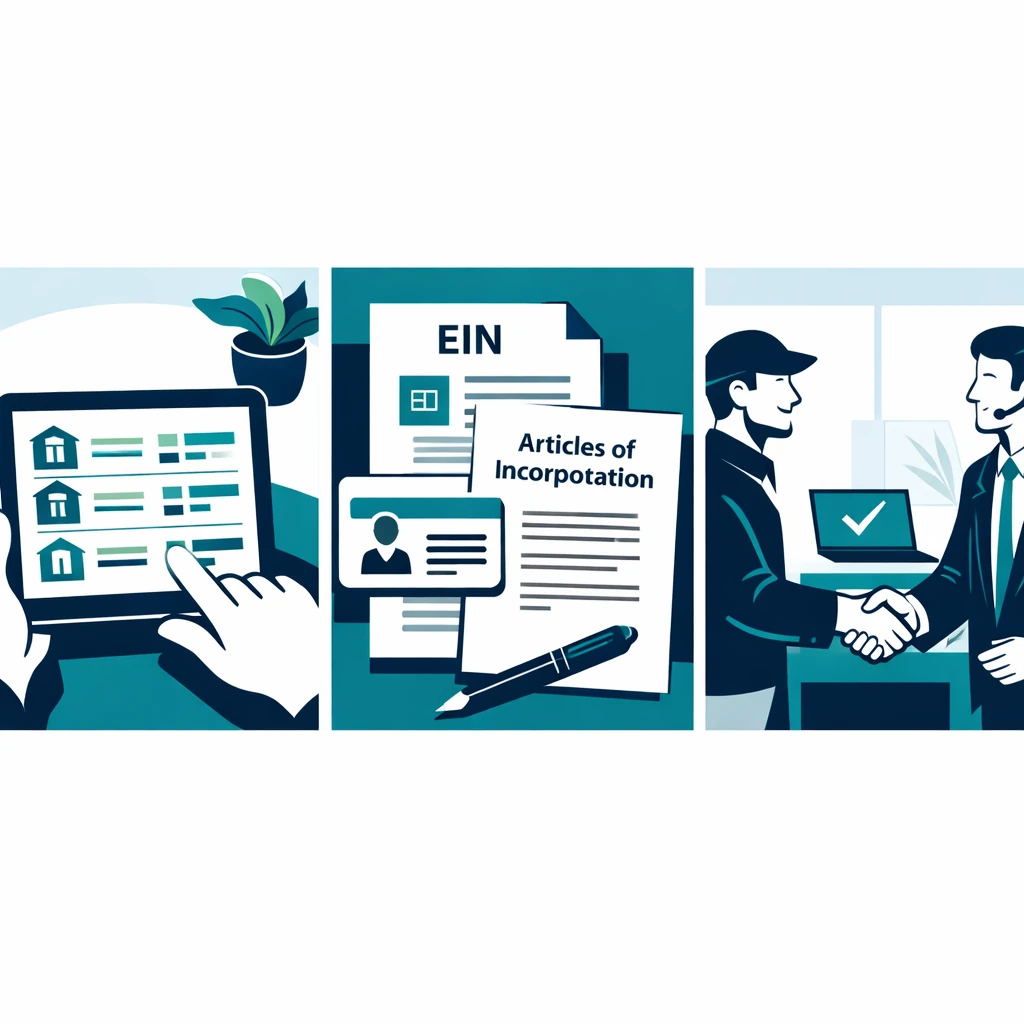
- LLCs and Corporations: You need formal paperwork from your state .
- Partnerships: You need a partnership agreement .
If you try to open an account before your business is officially registered, you’ll hit a wall. The bank needs to verify that your business legally exists .
So step zero: Make sure your business is registered with your state. Got it? Good. Let’s move on.
Pause for a second: Do you know your exact business structure? If not, write it down before you go any further. This one detail determines everything else.
financial checklist for newlyweds
4. The Master Checklist: 7 Things You Need to Open a Business Bank Account in 2026
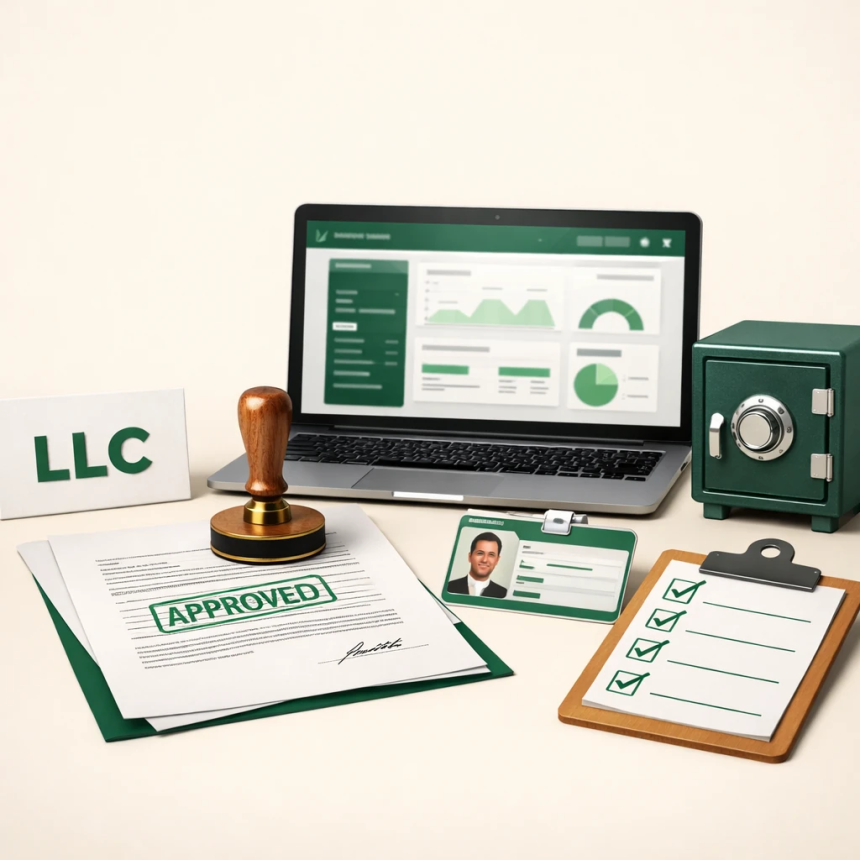
Alright, here’s the good stuff. This is your checklist. Print it, screenshot it, or just memorize it. If you show up with these seven things, you will walk out with an account .
1. Government-Issued Photo ID
- Driver’s license
- State ID
- Passport
Pro tip: Make sure it’s not expired. Expired ID = rejected application .
2. Your Social Security Number (SSN) or Employer Identification Number (EIN)
- Sole proprietors: SSN usually works .
- LLCs, corporations, partnerships: You NEED an EIN .
3. Business Formation Documents
This depends on your structure :
| Business Type | What You Need |
|---|---|
| Sole Proprietor | DBA certificate (if using a business name) |
| LLC | Articles of Organization |
| Corporation | Articles of Incorporation |
| Partnership | Partnership Agreement |
4. Business License or Permit
If your industry requires a license (construction, healthcare, food service, etc.), bring it .
5. Proof of Business Address
A utility bill, lease agreement, or something showing your business lives somewhere . Home-based? Your home address counts.
6. Ownership Information
Banks are required by federal law to identify anyone who owns 25% or more of the business . Have their names, addresses, and ownership percentages ready.
7. Initial Deposit
Some banks want $25, $100, or more to open the account. Some (like many online banks) require $0 . Check before you apply.
how to prepare your finances for a recession
5. EIN vs. SSN: The Million-Dollar Question Answered
This confuses everyone. Let me make it simple.
What’s an EIN? It’s like a Social Security number for your business. The IRS gives it to you for free .
Do you need one?
- LLC? Yes.
- Corporation? Yes.
- Partnership? Yes.
- Sole proprietor? You can use your SSN. BUT—and this is important—many experts recommend getting an EIN anyway because it protects your personal SSN and makes you look more professional .
How do you get one? Go to the IRS website. It takes 15 minutes. It’s free. You get it instantly .
Think about this for a second: Your SSN is one of the most valuable numbers you have. Every time you give it out, you risk identity theft. An EIN keeps your SSN private. Worth the 15 minutes? I think so.
what is a fiduciary financial advisor and do I need one?
6. Step-by-Step: How to Actually Open the Account
Okay, you’ve got your documents. Let’s walk through the process.
Step 1: Choose Your Bank (More on This Below)
Don’t just pick the first bank you see. Compare fees, features, and whether they play nice with your accounting software .
Step 2: Gather Your Documents
Use the checklist above. Put everything in a folder—physical or digital.
Step 3: Apply
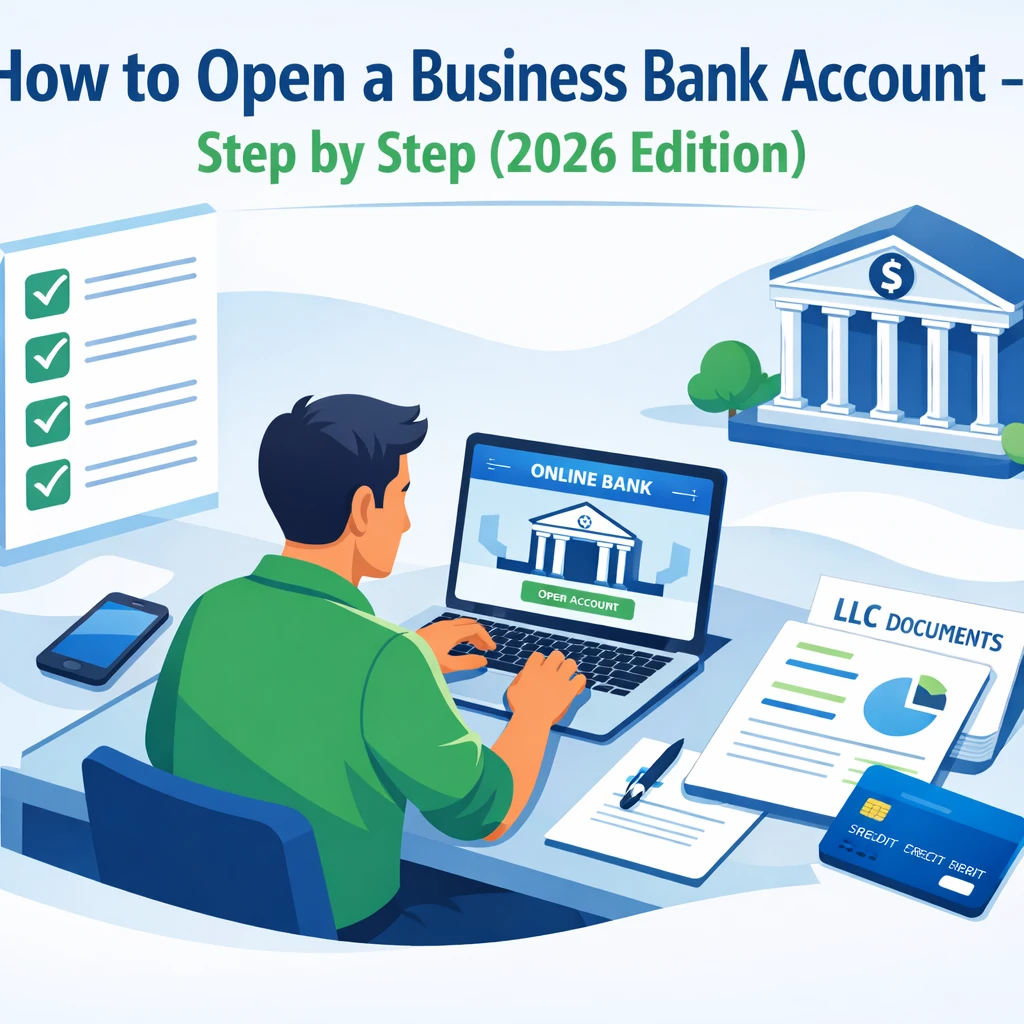
Online: Most banks now let you apply entirely online. You’ll upload photos of your documents and answer some questions . This is fastest—often same-day approval .
In person: If your business structure is complex or you just like talking to humans, schedule an appointment at a branch .
Step 4: Fund the Account
If there’s a minimum deposit requirement, transfer the money now .
Step 5: Set Up Digital Access
Once approved, immediately:
- Set up online banking
- Enable two-factor authentication
- Download the mobile app
- Order checks if you need them
That’s it. You’re done. You officially have a business bank account.
should I pay off debt or save for an emergency fund first?
7. Traditional Bank vs. Online Bank: The 2026 Reality Check
You’ve got options. Let’s break them down so you can choose what’s right for YOU .
Traditional Banks (Chase, Bank of America, Wells Fargo, local credit unions)
Best for:
- Businesses that handle a lot of cash
- People who want to walk into a branch and talk to someone
- Companies needing lots of services in one place (loans, merchant services, etc.)
Watch out for:
- Monthly fees (often $10-$25)
- Minimum balance requirements
- Slower account opening
Online Banks (Bluevine, Mercury, Novo, Ramp)
Best for:
- Freelancers, consultants, e-commerce businesses
- People who never touch cash
- Anyone who wants lower fees and higher interest rates
Watch out for:
- No physical branches (hard to deposit cash)
- Some have transaction limits
Platform-Based Banking (like Ramp, Brex)
These are newer. They partner with real banks but provide the software themselves .
Best for:
- Tech-savvy teams
- Businesses wanting expense management built-in
- Startups that want automation
Watch out for:
- Not ideal for cash-heavy businesses
- Eligibility varies by industry
teaching kids about money: age-appropriate activities
8. What Happens After You Open? (Don’t Skip This)
Opening the account is step one. Here’s what you need to do next to actually make it work for you .
Connect Your Accounting Software
QuickBooks, Xero, FreshBooks—whatever you use. Link it to your bank account so transactions flow in automatically . This saves HOURS every month.
Set Up Alerts
Low balance alerts. Large transaction alerts. Fraud alerts. Your bank’s app can do this. Turn them on .
Reconcile Weekly
I know, “reconcile” sounds like accountant-speak. It just means: check that your bank balance matches what you think you have. Do this weekly, not monthly. It takes 10 minutes .
Stop Using Personal Accounts for Business
This is the hard part. From now on, every business expense comes out of THIS account. Every payment goes into THIS account. No exceptions .
how to talk to your partner about money without fighting
9. Why Applications Get Rejected (And How to Make Sure Yours Isn’t)
Nobody talks about this, but applications DO get rejected. Here’s why—and how to avoid it .
Reason 1: Incomplete Documentation
Missing one document can delay you by days or weeks. Use the checklist. Make sure your business name matches EXACTLY across all documents. If your EIN says “Smith Consulting LLC” and your application says “Smith Consulting,” that mismatch can trigger a manual review .
Fix it: Triple-check name consistency.
Reason 2: Negative Banking History
Banks sometimes check ChexSystems (like a credit report for your banking history). If you’ve bounced checks or owed fees to another bank, it might show up .
Fix it: Online banks and credit unions are often more flexible.
Reason 3: High-Risk Industry
Some industries (CBD, firearms, cryptocurrency, etc.) get extra scrutiny .
Fix it: Be honest. Answer questions clearly. Have documentation ready about your revenue sources.
Reason 4: Ownership Confusion
If multiple people own 25% or more of your business and you don’t have their information ready, the bank can’t complete the application .
Fix it: Get every owner’s name, address, date of birth, and SSN before you start.
financial milestones you should hit by age 25, 30, 40
10. Frequently Asked Questions
Q: How long does it take to open a business bank account?
A: Online banks: sometimes same-day or within 24 hours. Traditional banks: 3-5 days if everything’s in order .
Q: Can I open a business bank account online?
A: Yes! Most banks now offer fully online applications. You’ll upload your documents and verify your identity digitally .
Q: Do I need a business license to open an account?
A: It depends on your industry and the bank. Some require it, some don’t. Check with your specific bank .
Q: Can I open an account if I’m a sole proprietor?
A: Absolutely. You’ll typically just need your ID, SSN, and maybe a DBA certificate if you’re using a business name .
Q: What’s the minimum balance requirement?
A: Varies wildly. Some accounts require $0. Some want $1,000 or more to avoid fees. Read the fine print .
Q: Can I open a business bank account with bad personal credit?
A: Usually yes. Most business accounts don’t check personal credit—they check ChexSystems (banking history) .
Q: What’s a DBA and do I need one?
A: DBA stands for “Doing Business As.” If your business name is different from your personal name (like “John’s Plumbing” instead of “John Smith”), you need one. You get it from your county or state .
Q: How much does it cost to open a business bank account?
A: Opening itself is usually free. But there may be monthly fees ($10-$25) unless you maintain a minimum balance .
net worth calculator for millennials
11. The Bottom Line: You’re Ready
Remember that overwhelmed feeling from the beginning? The one that kept putting this off week after week?
It’s gone now. Because you know exactly what to do.
You know what documents to grab. You know whether you need an EIN. You know the difference between a traditional bank and an online bank. You know why applications get rejected—and how to make sure yours sails through.
Here’s the truth: Most entrepreneurs never get around to this. They keep mixing money, keep risking their liability protection, keep making tax season miserable. They know they should do it, but “someday” never comes.
You’re not them anymore.
You’re the entrepreneur who took 20 minutes to read this guide and decided to actually DO something about it. That puts you ahead of half the business owners out there .
So here’s your mission: Pick a bank this week. Gather your documents this weekend. Apply by next Friday.
Your future self—the one with clean books, protected assets, and stress-free tax seasons—will thank you.
You’ve got this.